The Book: A Photographic Anthology of Five Decades of Conflict
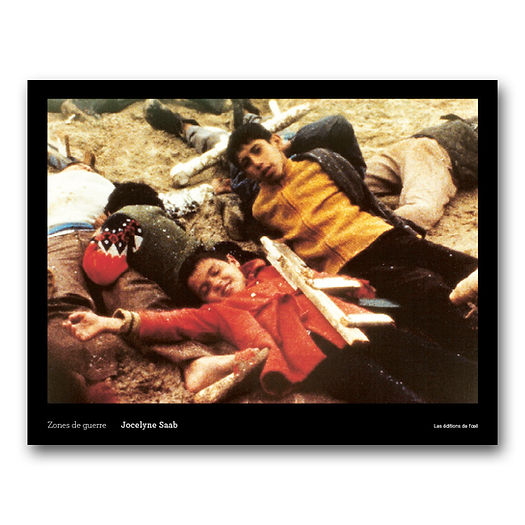
Published in December 2018 by Les Éditions de l'Œil,Zones de guerre is the first photography book by Jocelyne Saab. It was published shortly before her death in January 2019 and serves as a powerful retrospective of her life's work.
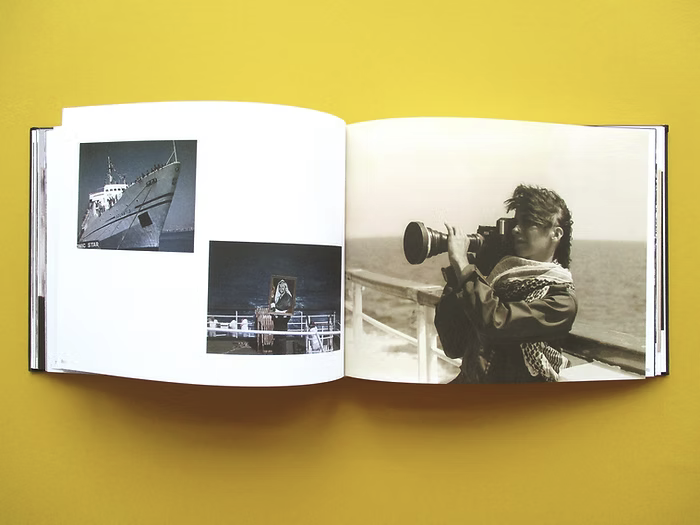
The book brings together a selection of photograms from her films and previously unpublished photographs, documenting five decades of conflicts in the Third World and, more specifically, the Middle East. It offers a panoramic view of contemporary history, covering wars and struggles in Lebanon, Libya, Egypt, Iran, the Western Sahara, Kurdistan, Vietnam, and more. The publication came at a time when Saab, immobilized by illness, found "creative salvation" in collecting and reflecting on her archives.
A Narrative, Not Just an Illustrative, Work
The book is conceived as a narrative that tells the story of a region, rather than a mere collection of images. The book aims to retrace Saab's career in a unified form, while also bringing to light a part of her hidden work and unrealized projects from her final years.
The images are selected to document not just wars, but also the people who lived through them. Strikingly, few political figures appear in Saab's choices, with the notable exception of Yasser Arafat. Her focus remains on civilians and militiamen, the people who populate her world, but her "favorite character remains Beirut, damaged and ravaged, but for her still the garden of her childhood". The book's cover image, showing children lying on the sand in brightly colored sweaters, is a perfect example of this approach, challenging the viewer to look closer and see life and humanity amidst the darkness of war.
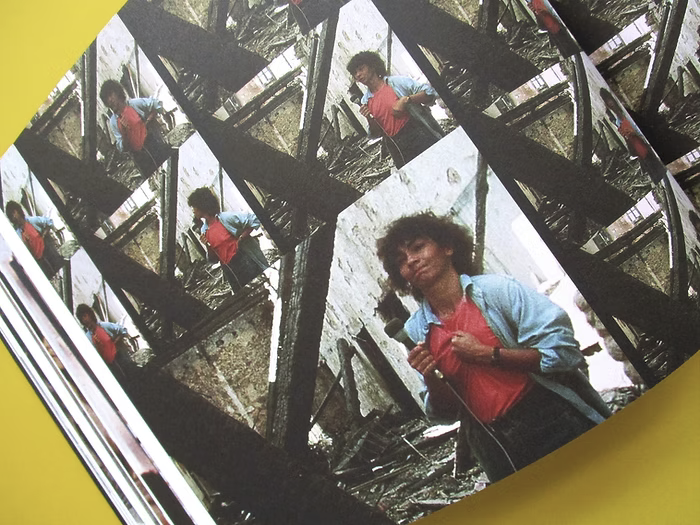
The layout and design ofZones de guerre are essential to the work itself. Saab, who had previously worked on large-format flex prints for her seriesOne Dollar A Day, chose to work in a very small format for this book. The work is both an "exceptional panorama of recent history" and a display of the "analytical and loving gaze" of a committed artist.
An Intimate and Essential Work
The project forZones de guerre began more than three years before its publication, involving a long selection process during which Saab sought images that expressed an "authenticity" about the past 50 years in the Middle East. She chose not to put captions on the photos themselves, to leave people free to interpret them, but detailed descriptions are provided at the end of the book.
The book is a testament to Saab's career, tracing her evolution from a war reporter to a filmmaker and artist. Its publication, less than three weeks before her death, was a final act of courage and a way to ensure her work would be seen and remembered.
Press Coverage
- "Photo / Jocelyne Saab, la guerre durant" –Libération, 18 January 2019. The article presentsZones de guerre as an essential work that restores Saab's "poignant and instinctive, committed and empathetic" gaze through photos and photograms from her films.
🔗 https://www.liberation.fr/cinema/2019/01/18/photo-jocelyne-saab-la-guerre-durant_1703858/ - "L'ultime Zone de guerre de Jocelyn Saab (1948-2019)" –Le Curieux des Arts, 14 February 2019. The article highlights the book as Saab's "last report," emphasizing her unique, human approach to documenting war by showing life rather than just death.
🔗 https://www.lecurieuxdesarts.fr/2019/02/l-ultime-zone-de-guerre-de-jocelyn-saab-1948-2019.html - "Jocelyne Saab: a woman who captured humanity in darkness" –The National, 12 January 2019. This article covers the book's launch in Paris and features Saab's comments on the selection process, explaining that she searched for images that documented "what happened over the past 50 years in the Middle East region."
🔗 https://www.thenationalnews.com/arts-culture/books/jocelyne-saab-a-woman-who-captured-humanity-in-darkness-1.811654 - Presentation of the book on "Être journaliste au Moyen-Orient" –Les clés du Moyen-Orient. A presentation of Saab's career as a war journalist, featuring interviews and extracts from her films, placed in the context of the book's publication.
🔗 https://www.lesclesdumoyenorient.com/Etre-journaliste-au-Moyen-Orient-1-3-questionner-le-reportage-de-guerre.html