The Book: A Multi-Faceted Object in Service of a Resurrected Body of Work
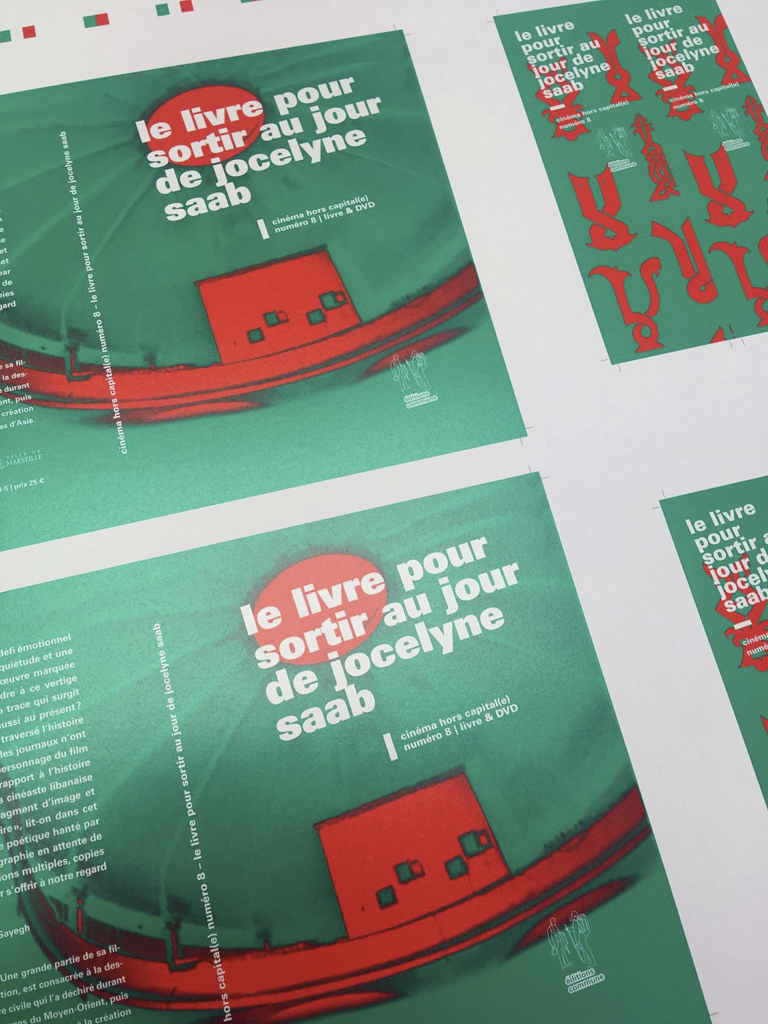
Published in French in April 2023 by éditions commune in Marseille,Le livre pour sortir au jour de Jocelyne Saab is the eighth volume in the collection "Cinéma hors capital(e)". As the publisher Martine Derain notes, it is an opportunity to highlight the "very fine editorial work" carried out around Jocelyne Saab's archives. The book accompanies and extends the restoration work undertaken by the Jocelyne Saab Association, whose mission is to inventory, restore, and promote the work of the filmmaker who passed away in 2019.
The title,sortir au jour (to bring to light), is significant. It evokes what is extracted from the shadows, what memory holds and must be revealed. The book is conceived as a tool to "bring to light" a filmography that long remained awaiting visibility. Its very form – a book accompanied by a DVD – testifies to this ambition: to show and to understand at the same time.
A Protean Approach for a Protean Body of Work
The book brings together contributions from several authors with intersecting perspectives.Mathilde Rouxel, a researcher in film studies and head of the restoration of Saab's films, situates the filmmaker's career historically and politically.Saad Chakali, a film historian, traverses the entire body of work up to the last fictions and opens our gaze to a new reading.Jean-François Neplaz, a filmmaker, contributes an article on the writing of history through cinema. The book also includes texts by poet and painterEtel Adnan (notably her manuscript for the documentaryBeyrouth, jamais plus) and theatre directorRoger Assaf, as well as an unpublished interview with Jocelyne Saab.
The approach is resolutely polyphonic: it does not claim to exhaust the work but to make it resonate through the diversity of voices that engage with it.
The Guiding Thread: History, War, Memory
Jocelyne Saab was born in 1948 in Beirut. A large part of her filmography, in both documentary and fiction, is devoted to the destruction of her country, Lebanon, during the fifteen-year civil war that tore it apart. She covered most of the wars in the Middle East, then turned to Egypt and Vietnam, while working towards the creation of a Lebanese cinematheque and a festival dedicated to Asian cinemas.
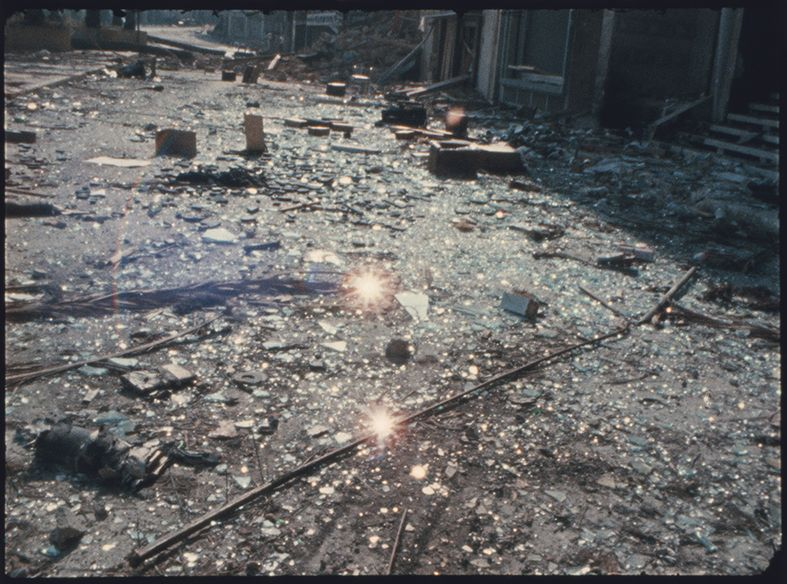
The book revolves around this obsession: images of the Lebanese Civil War reappear from one film to another, transform, and confront the present. The book's catalog mentions eloquent sections:Lebanon in Turmoil,A Cartography of Embers,The Burnt Houses. "I live, I sleep, I dream, the newspapers no longer have dates and my house has burned down," says a character in the filmUne vie suspendue – words that reveal a relationship to history and time conditioned by loss, which the filmmaker never ceased to conjure through every fragment of image and sound.
A Body of Work Awaiting Visibility
The back cover, written by Lebanese researcher and artist Ghada Sayegh, poses a central question: "How can we grasp a protean work that has traversed history to reach us?" The book highlights both the poetic gesture of Jocelyne Saab, haunted by history and its transmission, and a filmography awaiting visibility. Draft films, sketches, multiple versions, ruined copies: "every fragment must emerge to offer itself to our anxious gaze."
The book includes a detailed bio-filmography (pages 162-172), as well as 32 photographs from the Jocelyne Saab archives. The accompanying DVD features two films:Beyrouth, jamais plus (1976) in its restored version andUne vie suspendue (1988 version).
Critical Reception
The review inLe Monde diplomatique of July 2024, signed by Marina Da Silva, salutes Jocelyne Saab's considerable contribution to cinema and history, highlighting her commitment alongside the Lebanese left and her coverage of the Palestinian Nakba.
Content
Texts: Contributions by Mathilde Rouxel, Saad Chakali, Jean-François Neplaz, Roger Assaf, and Etel Adnan
Interview: "Archive vive," interview with Mathilde Rouxel
DVD: Two films –Beyrouth, jamais plus (1976) in restored version andUne vie suspendue (1988 version)
Iconography: 32 photographs from the Jocelyne Saab archives
Filmography: Detailed bio-filmography (pages 162-172
Press Articles and Interviews
Press Articles
Marina Da Silva, "Le Livre pour sortir au jour de Jocelyne Saab" –Le Monde diplomatique, July 2024. Review of the book, saluting Jocelyne Saab's considerable contribution to cinema and history, and highlighting her commitment alongside the Lebanese left and her coverage of the Palestinian Nakba. The article also mentions the fifteen-film box set edited by Les Mutins de Pangée.
🔗 https://www.monde-diplomatique.fr/2024/07/DA_SILVA/67197
Sabyl Ghoussoub, "Il était une fois le Beyrouth de Jocelyne Saab" –L'Orient-Le Jour, March 2, 2024. In-depth article on the book, saluting a "fascinating dive into the intimate cinema of Jocelyne Saab which places Beirut at the heart of her work."
Radio and Television Programs
Maghreb-Orient Express – TV5MONDE, November 2023. Program devoted to the release of the book and the box setJocelyne Saab cinéaste, with Suzanne el Kenz, Mathilde Rouxel, and Sabyl Ghoussoub.