The association’s first project was to digitize all of the available video copies of Jocelyne Saab’s films and subtitle them in Arabic, English and French to ensure wider accessibility and better dissemination. However, the poor quality of the copies made it necessary to develop a restoration plan and to look for institutional alternatives to prohibitively expensive private European laboratories.
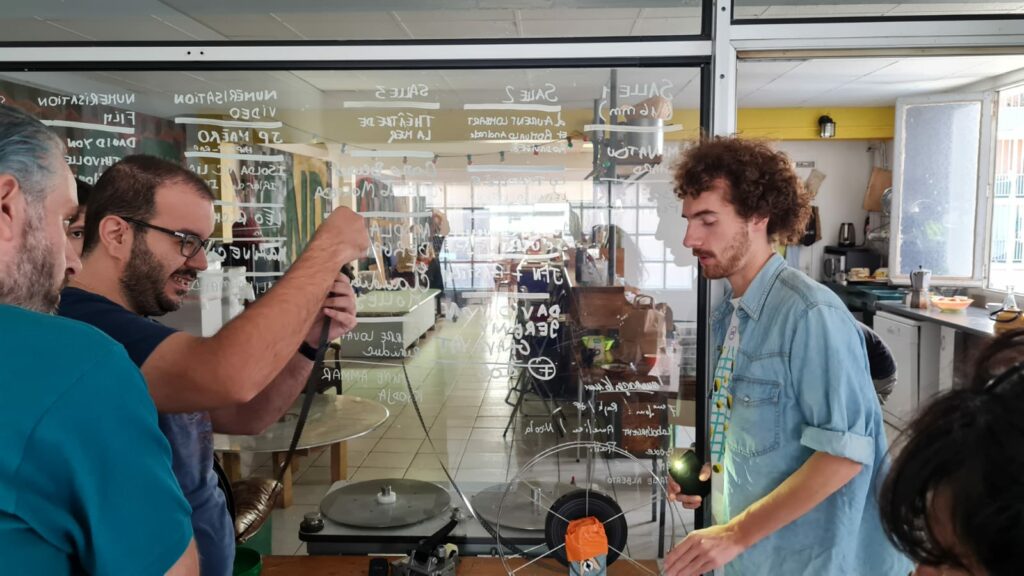
This realization led to the conviction that it was vital to develop a competent restoration chain in Lebanon. The association’s aim therefore became to train local technicians in the ethical principles and practices of film restoration so that they could take charge of restoring Jocelyne Saab’s films. The film copies, preserved at the French Film Archives in Bois d’Arcy, were first subjected to an in‑depth inventory as part of a research project conducted at the KASK art school (Ghent, Belgium) by Mathilde Rouxel and Mohanad Yaqubi in 2021. This program gave rise to a first workshop on mechanical restoration and digitization, run in partnership with the Institut national de l’audiovisuel in the school’s facilities. The films were then digitized at the Polygone étoilé in Marseille. This in turn led the association to organize a training course on digital restoration, in partnership with the FIAF and the Cinémathèque suisse, for technicians who had travelled from Beirut.
 |
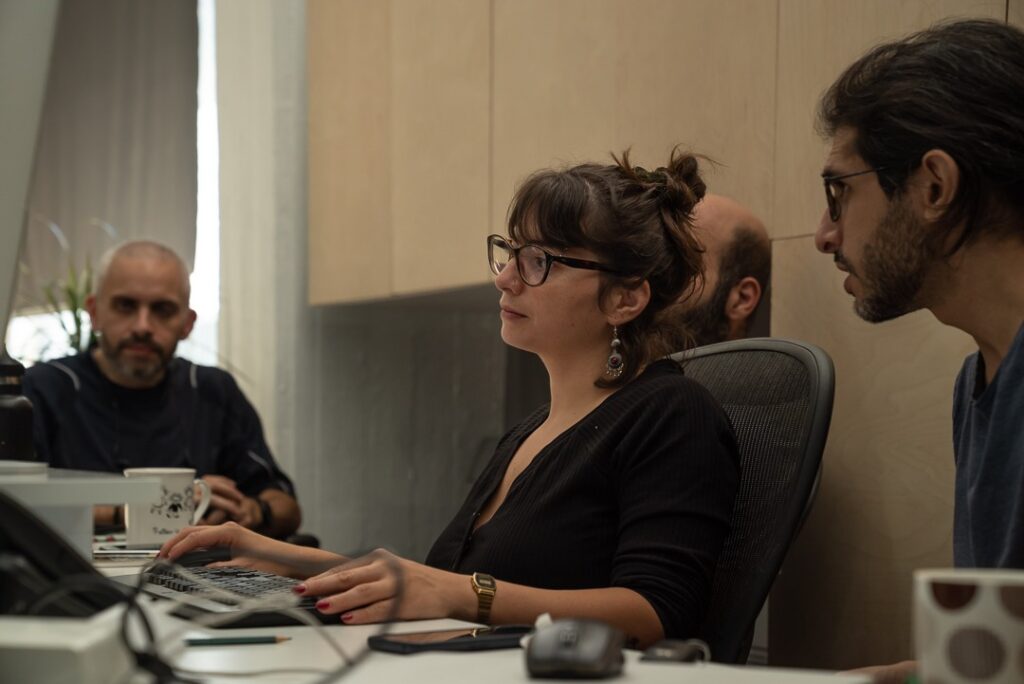 |
| Digital restoration training workshop at the Polygone étoilé (Marseille, August 2021); Digital restoration training workshop at ThePostOffice (Beirut, November 2021). | |
This Marseille workshop was preceded by an online seminar on digital film restoration. Held in partnership with the FIAF and the Cinémathèque suisse, it was open to various partners working on film archives from Arab countries – the Digital Archives of Algerian Cinema, Talitha, the Bouanani Archives (Casablanca), Cimatheque (Cairo), Wekalet Behna (Alexandria), UMAM (Beirut), Nadi Lekol Nas (Beirut), the Arab Image Foundation (Beirut), and others. The seminar was followed by an in‑person workshop in Beirut at the The Post Office post‑production facility in collaboration with the Cinémathèque Beirut project run by Metropolis.
 |
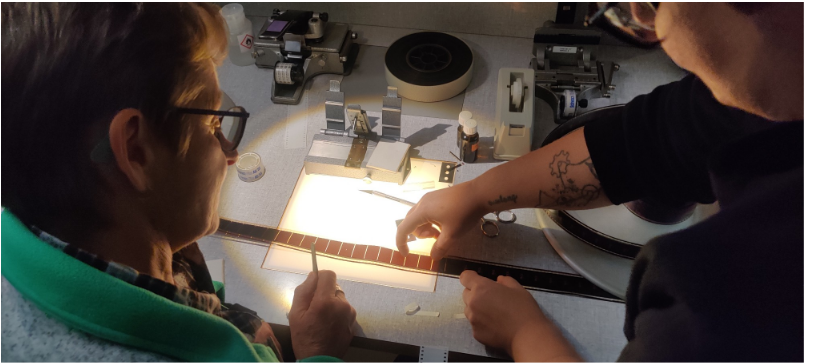 |
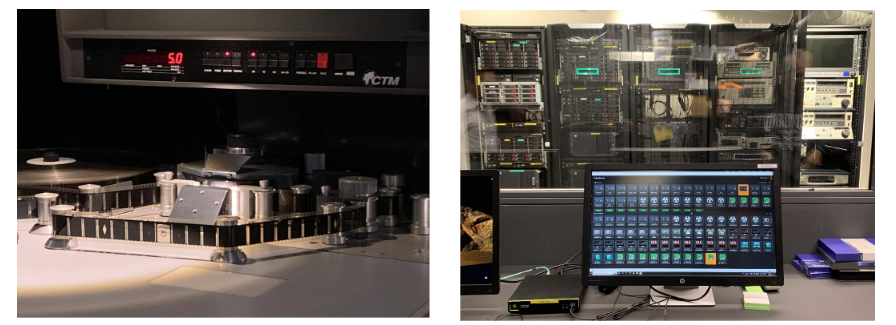
| Equipment from the Cinémathèque suisse in Penthaz. | |
A fourth workshop was organized to deepen the expertise of this nascent team of professionals. Grasping the practical challenges of preserving film heritage was equally essential. In 2022 the association arranged a four‑day visit to the Cinémathèque suisse in Penthaz for the ten technicians involved in the project. They studied the various departments and working methods of this reference institution. The visit enabled the team to evaluate their own work based on expert feedback and to deepen their understanding of digitization issues and the software tools used.
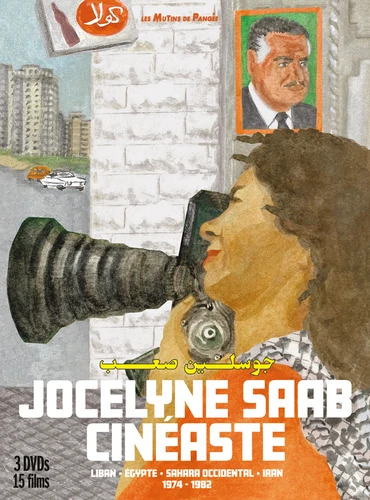
Thanks to these trainings, twelve films were restored in 2022 by a team comprising six image restorers, one sound restorer and one colorist, all based in Lebanon. The equipment and software – although expensive – were acquired by the association to guarantee professional‑level work. The restoration efforts made it possible to organize around ten retrospectives worldwide in 2022 (notably in Beirut in partnership with Metropolis), and to publish a DVD box set with the Mutins de Pangée bringing together the first fifteen documentaries made by Jocelyne Saab between 1974 and 1982.
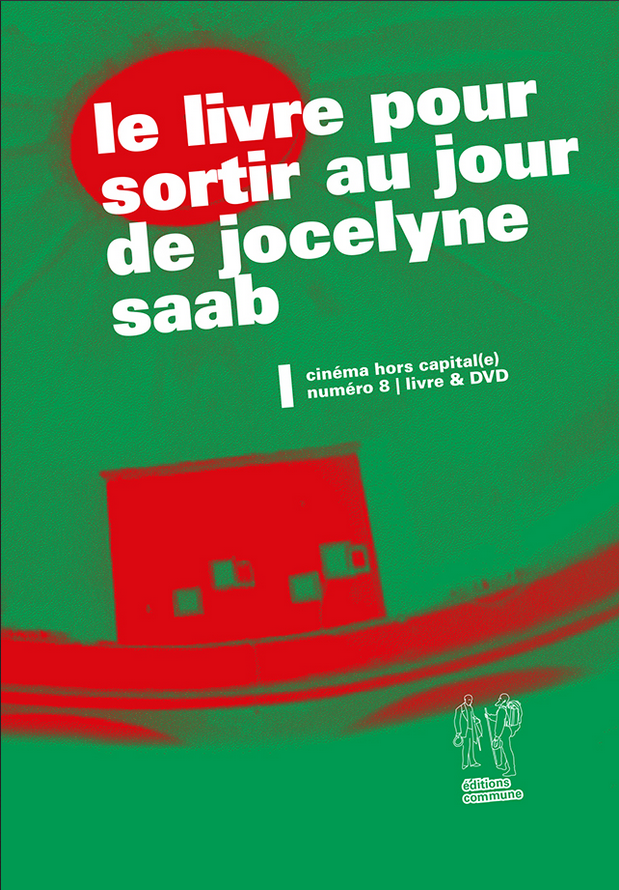
Two books were also produced in collaboration with the association in the wake of the restoration work carried out at the Polygone étoilé and KASK: Le Livre pour sortir au jour de Jocelyne Saab (Editions commune), which brings together texts and a first survey of Jocelyne’s paper archives and includes a DVD with two films; and Jocelyne Saab: Inventory 1973–1983, conceived by the Palestinian artist Mohanad Yaqubi and published by the Sharjah Art Foundation, which reproduces the inventory of the first sixteen films made by Jocelyne Saab during the Lebanese civil war.
 |
 |
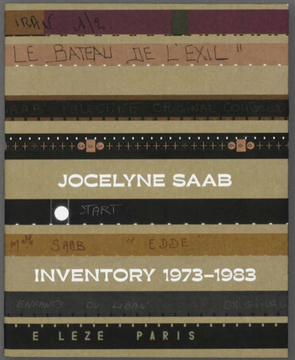 |
| Left: Jocelyne Saab. Inventory 1973-1983, edited by the Sharjah Art Foundation in 2025; middle: Le Livre pour sortir au jour by Jocelyne Saab, published by éditions commune in 2023; right: Box set published by Les Mutins de Pangée in 2024. | ||
The association’s restoration work on the artist’s oeuvre continued through 2024. Today the Jocelyne Saab Association has several digital restoration stations (hardware and software), which has allowed it to restore almost all of Jocelyne Saab’s film heritage – twenty‑one films in total, representing all those whose copies have so far been located.
Saab’s first feature film, Ghazl al‑Banat (1985), was screened in a newly restored version at the prestigious Il Cinema Ritrovato festival in Bologna in June 2025.
After several years of experience in film restoration, the association has developed a solid expertise that enables it to propose an alternative approach to the traditional system and to operate independently and in a unique way in Lebanon.
Another objective of the association was to turn these newly trained digital restoration professionals in Beirut into trainers in their own right. The aim was to welcome participants from all Arab countries or from the diaspora to raise awareness of the neglect and importance of the region’s film heritage – often forgotten or endangered.
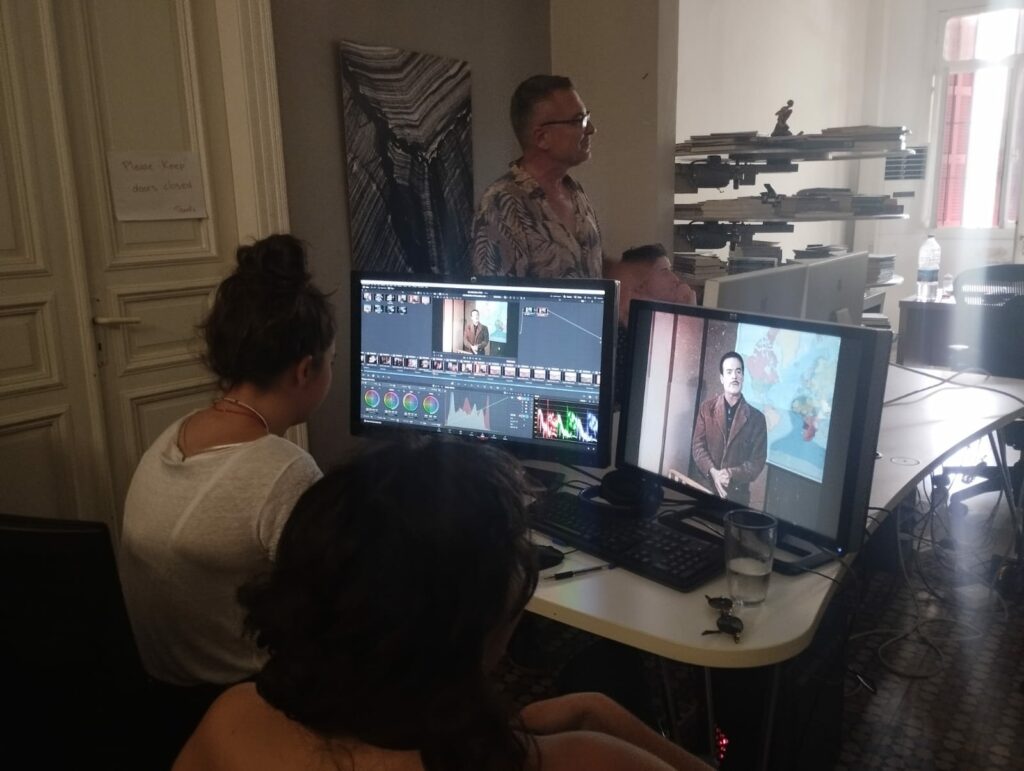
In May 2024, therefore, the association organized in Beirut a major training session in partnership with the Institut des études scéniques, audiovisuelles et cinématographiques (IESAV) of Saint Joseph University, the Académie Libanaise des Beaux‑Arts (ALBA) and the brand‑new Cooperative of the Film Trades.
 |
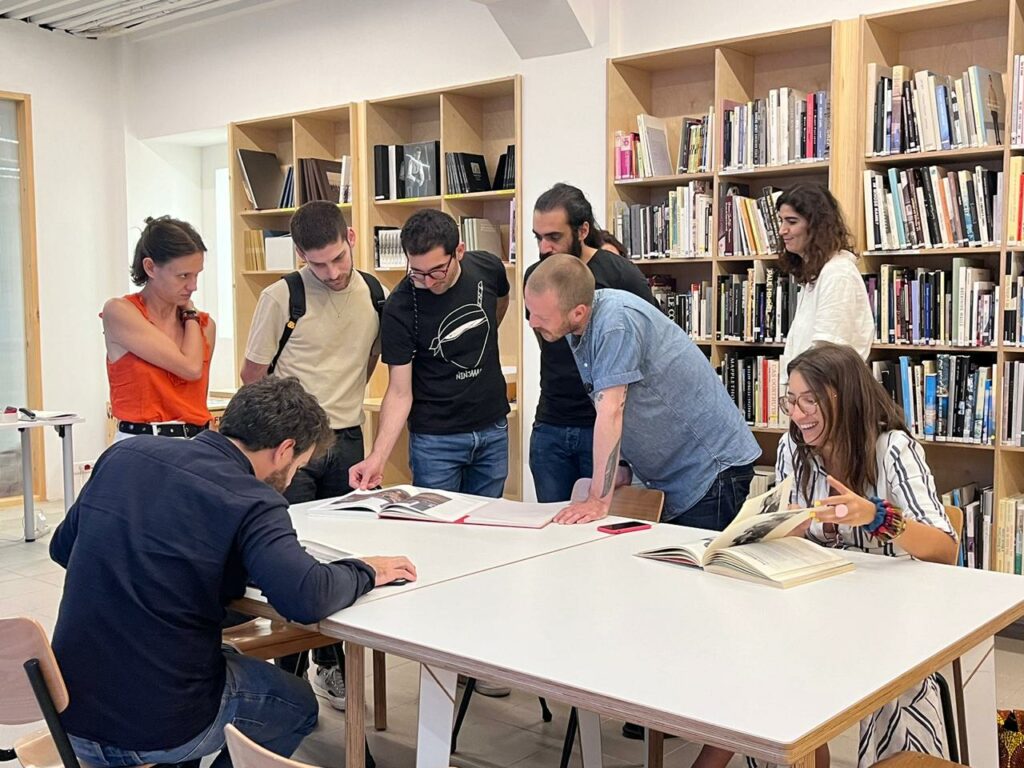 |
| Right: grading training for archives at the Cinema Trades Cooperative; left: visit to the Arab Image Foundation. | |
Planned over ten days, the program included an introduction to the three main digital restoration software packages and visits to institutions involved in the conservation and promotion of heritage and archives (Nadi Lekol Nas, the Arab Image Foundation, the Abboudi poster collection), along with a walking tour devoted to the abandoned cinemas of Tripoli guided by Nathalie Rosa‑Bucher, which highlighted the city’s forgotten cinematic richness.
The training was open to everyone – Lebanese and non‑Lebanese alike – and attracted twenty‑five participants from six countries, mainly Lebanon but also Tunisia, Algeria and Syria. The instructors were professionals who had worked on restoring the Algerian film Les Plongeurs du desert (1959) in collaboration with the Digital Archives of Algerian Cinema, the Lebanese film Une Bédouine à Paris (1964) in collaboration with Nadi Lekol Nas, and a number of Jocelyne Saab’s short documentaries. Following this workshop, the association organized a training session for one of the participants, who held a collection of Super8 and 16 mm home movies. He was trained on the scanner at the Polygone étoilé in Marseille, enabling him not only to learn about mechanical restoration and digitization but also to safeguard digitally his entire collection comprising several hundred reels.
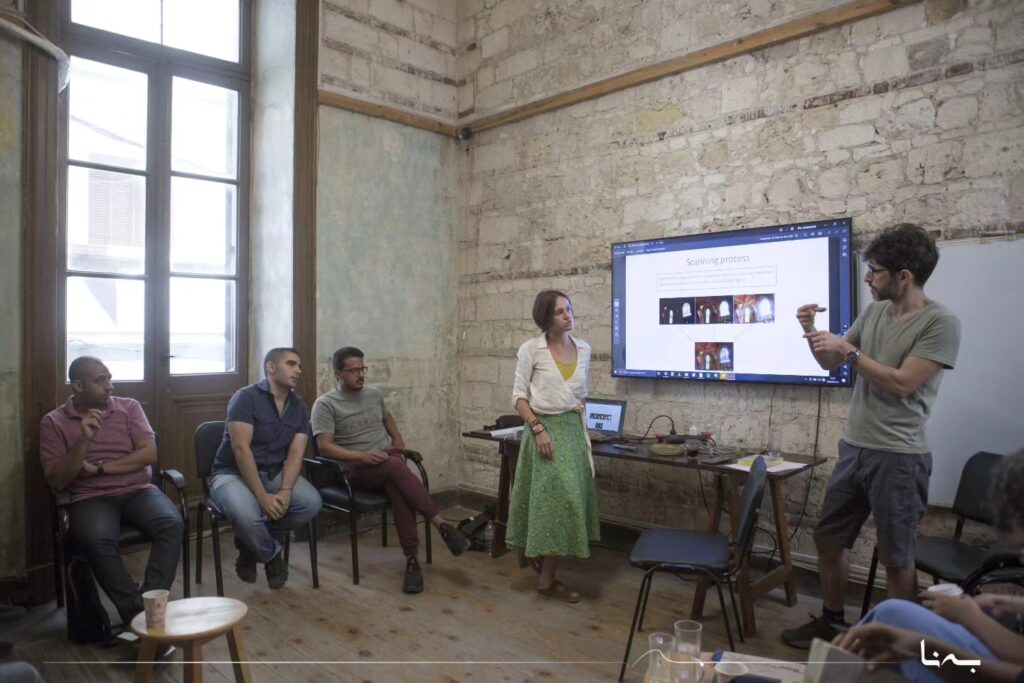
In September 2024 a similar workshop was held at Wekalet Behna in Alexandria, Egypt. The workshop welcomed participants primarily from Egypt and Sudan and again worked on films by Jocelyne Saab as well as a short documentary by Atteyat Al‑Abnoudi, preserved in the collections of the Braquage association in France.
 |
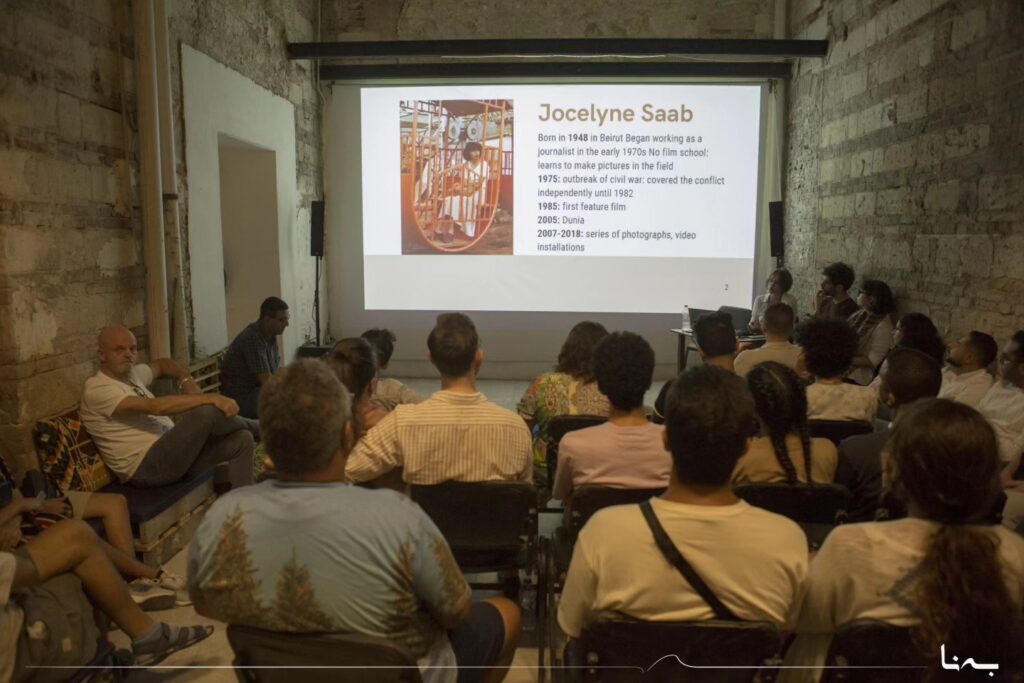 |
| Right and left: introductory presentation of the training program at Wekalet Behna (September 2024). | |
In July 2025 the association continued its training programs at the University of Manouba and at the TACIR Lab in Tunis. This ten‑day training included visits to the premises of SATPEC, a major production company during the early years of the Tunisian film industry, and to the National Archives – spaces usually closed to the public, which hold important film collections. The workshop welcomed participants mainly from Tunisia but also from Iraq, Sudan, Algeria, Lebanon and Egypt. It gave them the opportunity to work on a short film shot collectively in Algeria during the Pan‑African Festival of Algiers in 1969.
This was the first initiative undertaken by the newly formed Archive Circulation Initiative, co‑founded by the Jocelyne Saab Association, the Digital Archives of Algerian Cinema and the Tunisian production company Muja Films.
The aim of this initiative is to structure the long‑standing partnerships with other organizations promoting the film heritage of Arab countries, and to enlarge its network to other archives, as well as to researchers and festivals. In this way it seeks not only to bring to light images that are vital to our present and to the writing of an Arab film history, but also to ensure the genuine circulation of these restored films, some of which are still considered minor despite their historical importance.
More recently two festivals have commissioned digital restoration workshops from the association: the prestigious Cairo International Film Festival, where a partial restoration was carried out on Walidi Ana Fakhour Bik, the first short film by the Lebanese filmmaker Georges Nasser (in collaboration with Cinémathèque Beirut and Katsakh); and the Sharjah Film Platform, where the making‑of for Jocelyne Saab’s film Ghazl al‑Banat was restored. Discussions are under way about pursuing this collaboration by working from the archives proposed by festivals themselves, in order to participate in the digital safeguarding of their collections.