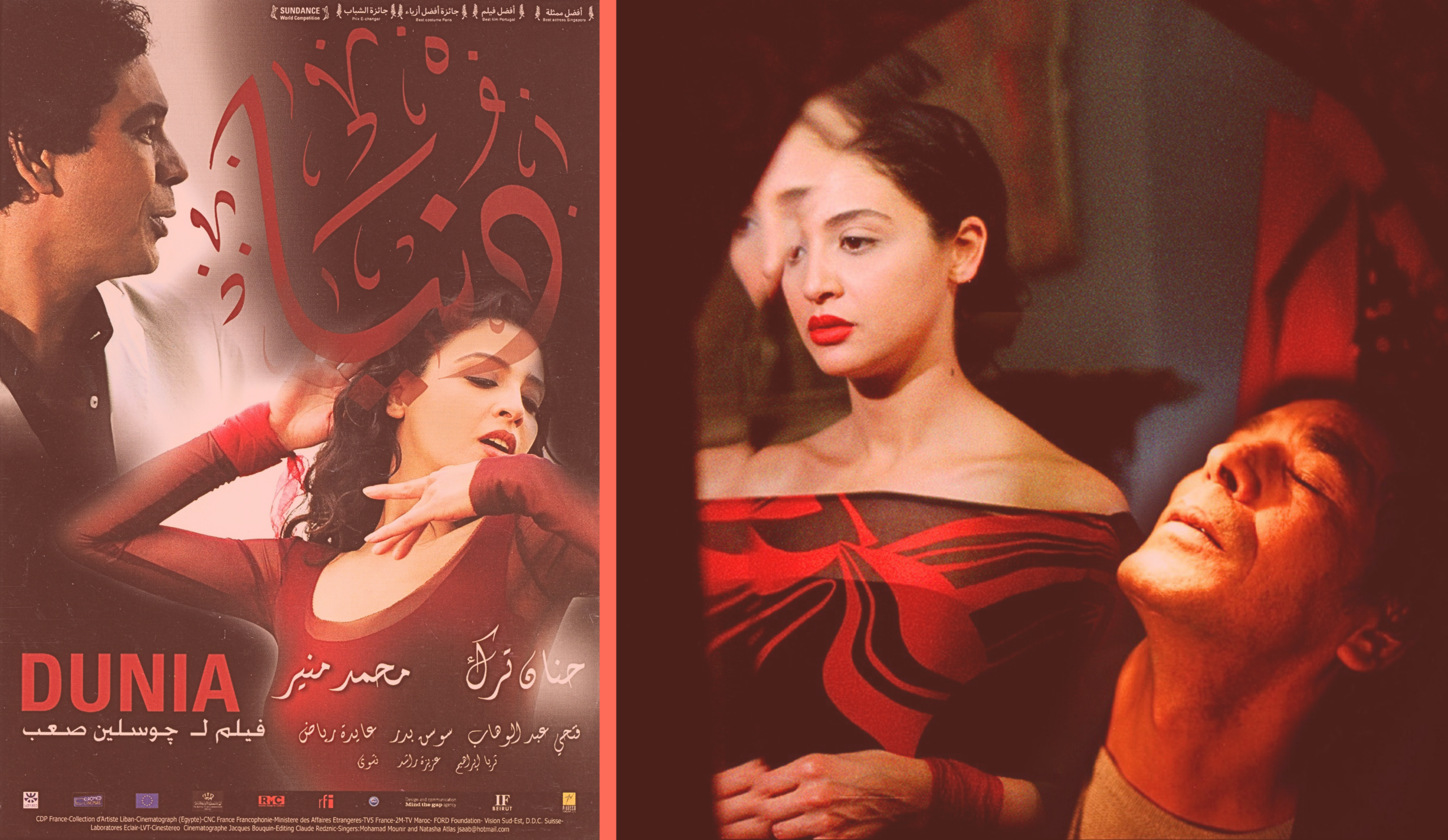
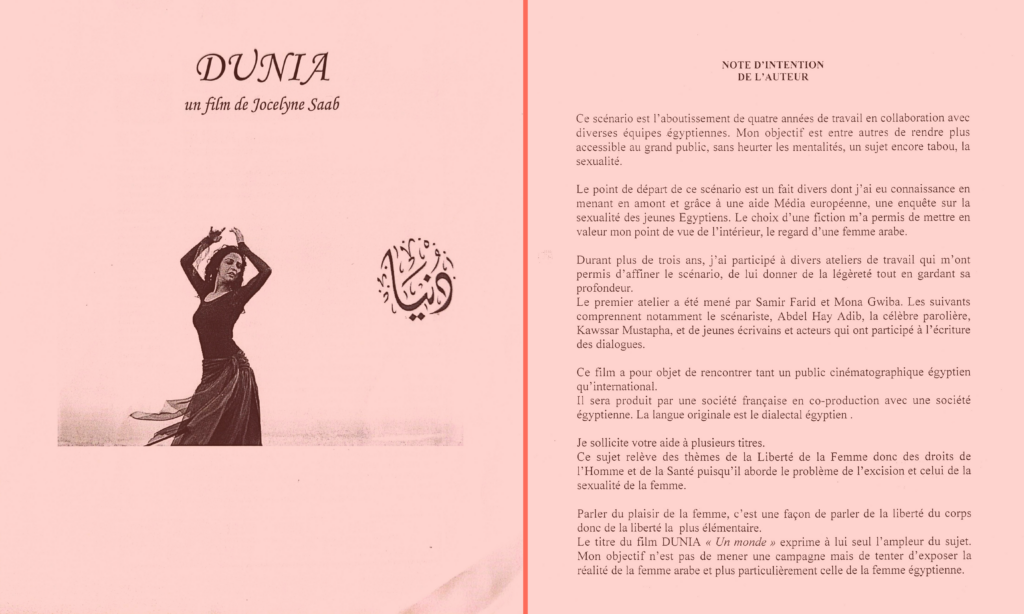
After several years devoted to documentary filmmaking, Jocelyne Saab returns to fiction with Dunia, Kiss me not on the eyes. The screenplay is the result of several years of research, carried out with various Egyptian teams, focusing in particular on young people’s sexuality. Supported by the European MEDIA programme, the project took shape through a series of workshops bringing together Egyptian critics, screenwriters, writers and actors. This collaborative writing process has helped to refine a narrative capable of addressing, in her own words (statement of intent), ‘a subject that remains taboo: sexuality’, whilst remaining ‘accessible to the general public, without offending sensibilities’. Fiction thus becomes a means of expressing ‘an Arab woman’s perspective’ on contemporary Egyptian society.
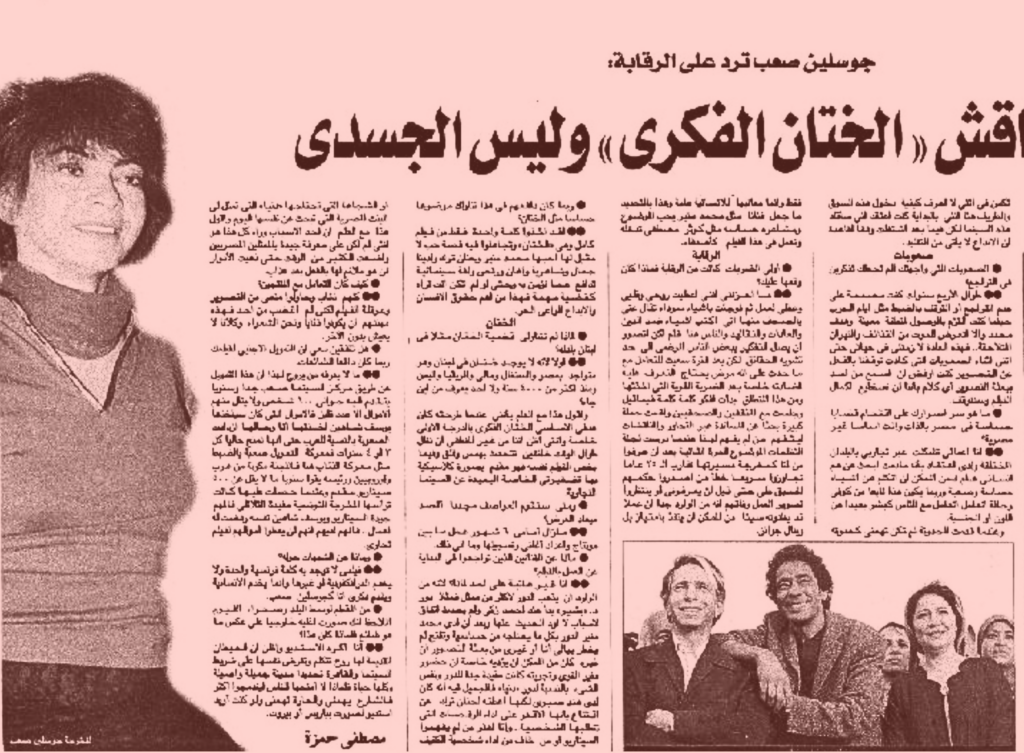
Before filming began, Dunia faced several rejections from the Egyptian censorship board. In 2003, the authorities deemed that the script “undermined Egypt and Islam”, “incited debauchery” and tackled a subject considered sensitive: female genital mutilation. Jocelyne Saab argued that “female genital mutilation is merely a dramatic device” and that her film did not seek to campaign on the issue, but rather to explore, more broadly, freedom, desire and the place of women in a changing society. Following an appeal to the appeals committee, the project was finally granted permission to film, bringing together a prestigious cast, including Hanan Turk, Mohamed Mounir and Ahmed Zaki, and a co-production involving France, Egypt and Lebanon.
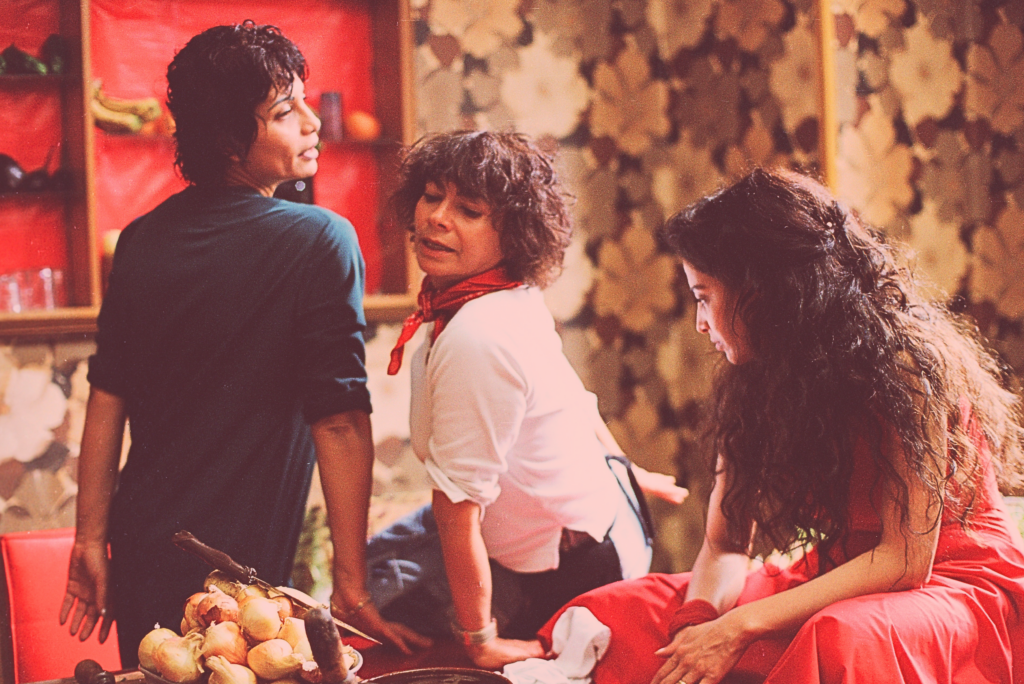
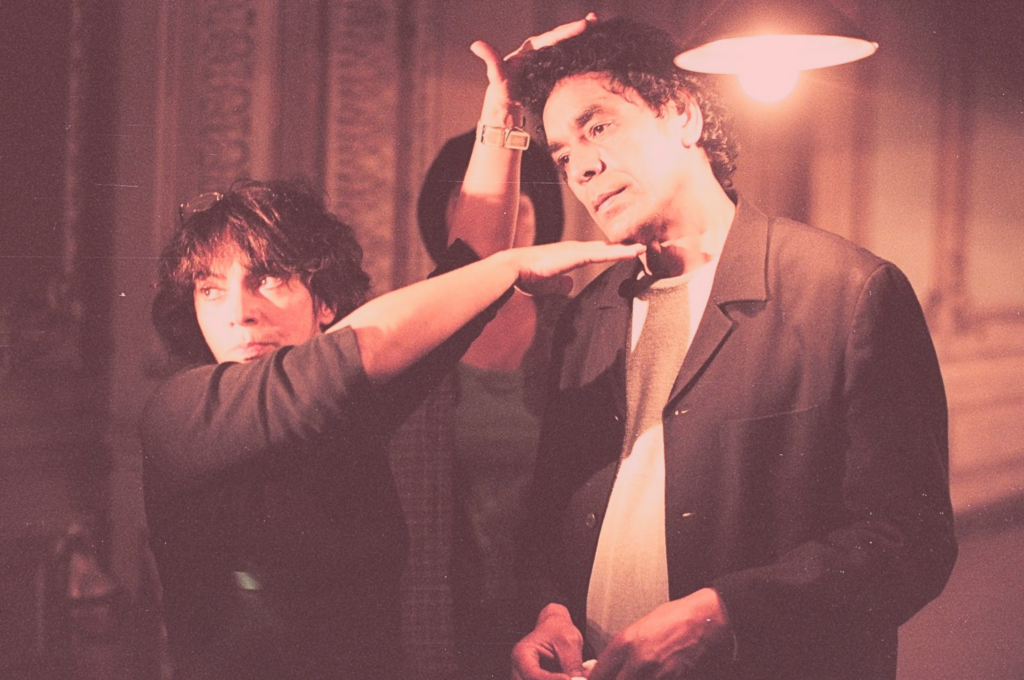
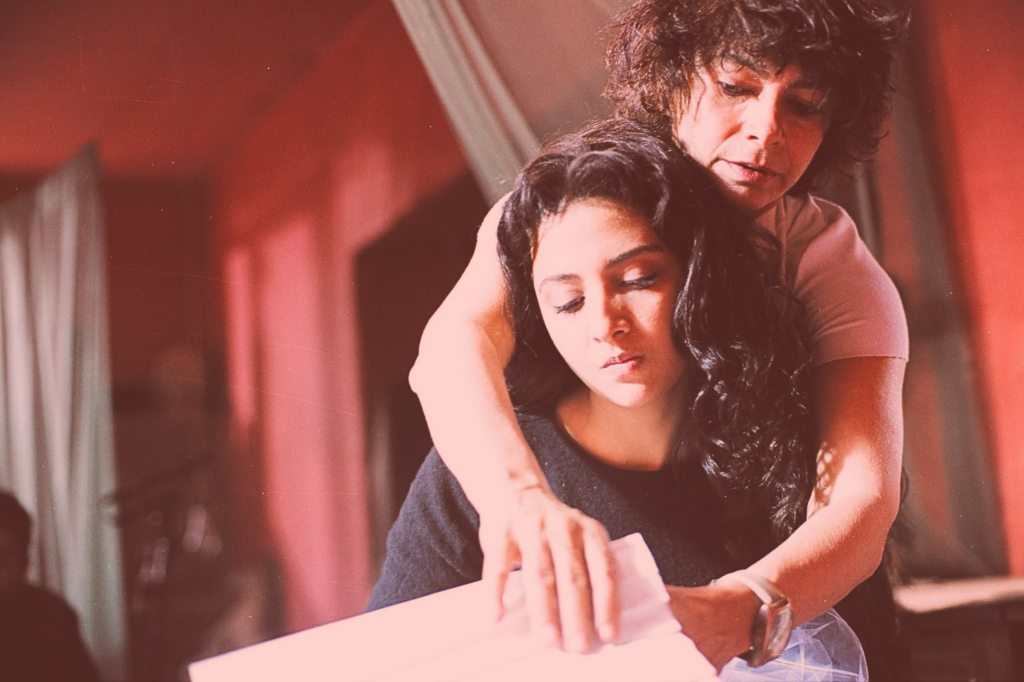
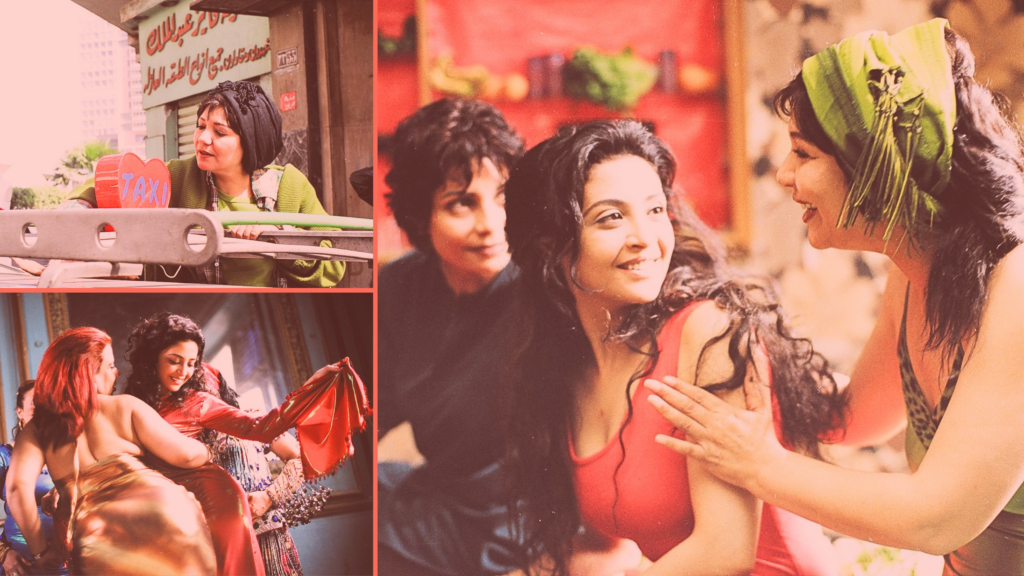
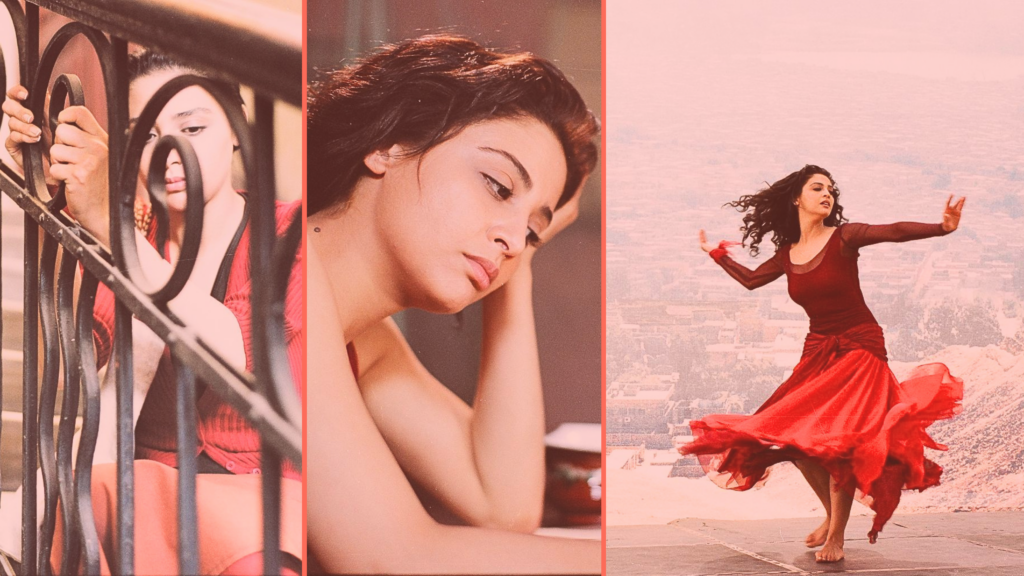
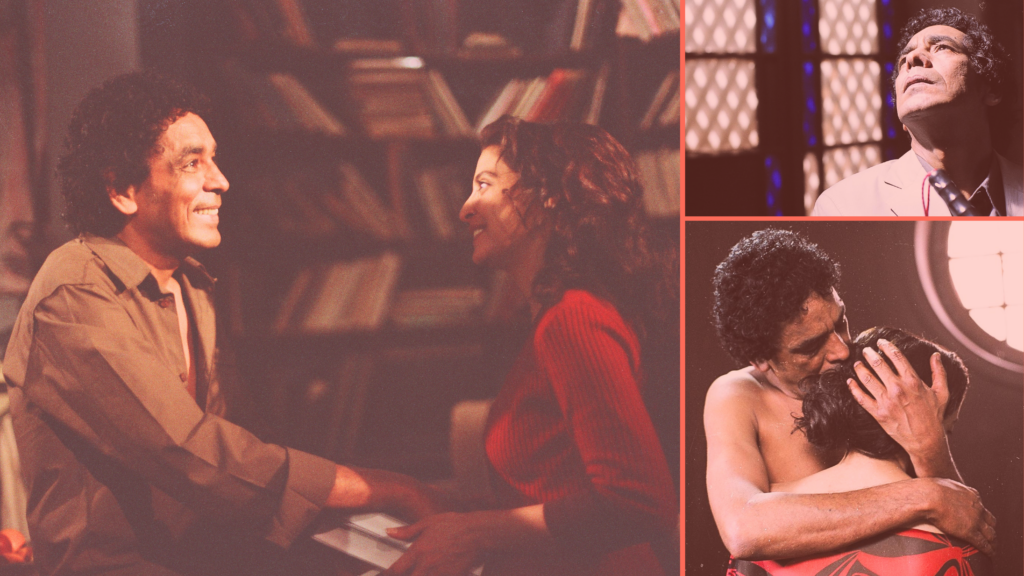
Dunia is a young student from Cairo who divides her time between university, where she studies Sufi poetry, and belly dancing, which she dreams will become her profession. In her director’s statement, Jocelyne Saab explains that the encounter between Dunia and Bachar, her teacher who has lost his sight, takes place within a shared world of passion: that of Sufi love poetry. Their relationship accompanies the journey of self-discovery of a young woman seeking to reclaim her body, her desires and her freedom. Thus, poetry, dance and sensuality are less themes than cinematic languages through which the director explores female emancipation.
Several female characters revolve around Dunia – Inayate, Arwa and Jamalate – and embody the different experiences of women’s lives in Egypt. The sole female taxi driver, the left-wing academic and the lover each offer Dunia a way of coming to terms with social legacies, individual aspirations and societal changes. Female genital mutilation runs through their stories, but Jocelyne Saab offers a broader reflection on ‘freedom of the body’, regarded as ‘the most fundamental freedom’. She thus builds on the research she has been conducting since the 1980s into the female body, artistic practices and popular knowledge.
Before its release in French cinemas in September 2006, Dunia enjoyed a successful international run. After winning the SOPADIN Award for its screenplay in 2003, the film was screened in competition in 2005 at the Cairo International Film Festival (its international premiere) and at the Montreal World Film Festival. In 2006, it went on to screen at the Sundance Film Festival, the Fribourg International Film Festival, the Singapore International Film Festival, the Milan International Film Festival, the Algarve Film Festival, the International Human Rights Film Festival (Switzerland), and the Carthage Film Festival.
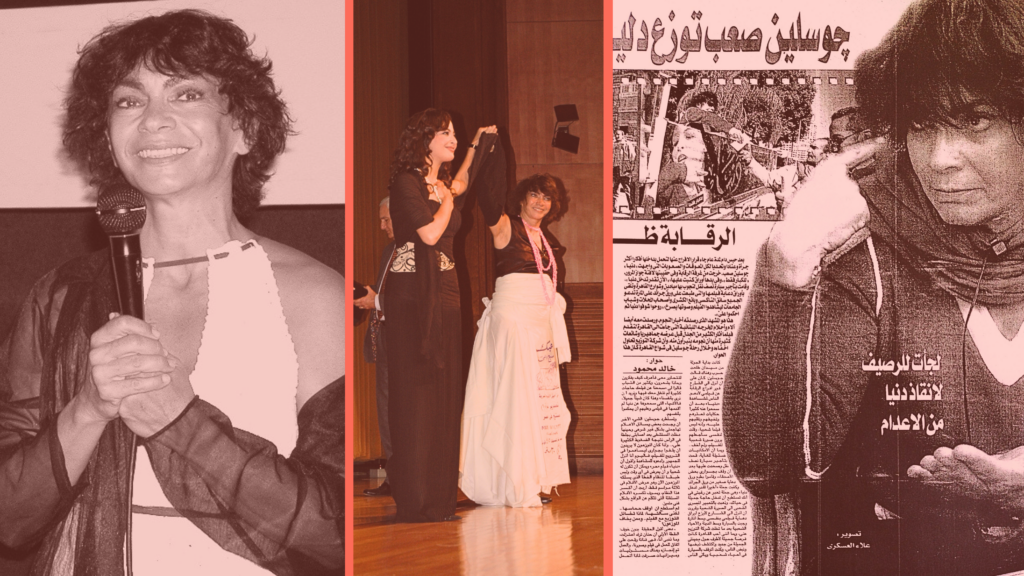
The reception of Dunia in Egypt was marked by fierce controversy. The film came under heavy criticism during its screening at the Cairo Film Festival, and its commercial release was ultimately cancelled. In order to allow the film to be shown, Jocelyne Saab complied with the demands of the Egyptian authorities, who insisted on the removal of a scene depicting female genital mutilation. To “pave the way for young people” by bringing to light issues that had long been ignored, she launched her own campaign on the streets of Cairo: she handed out leaflets, engaged with passers-by and invited the public to see the film, urging them, “Watch Dunia and judge me for yourselves.”