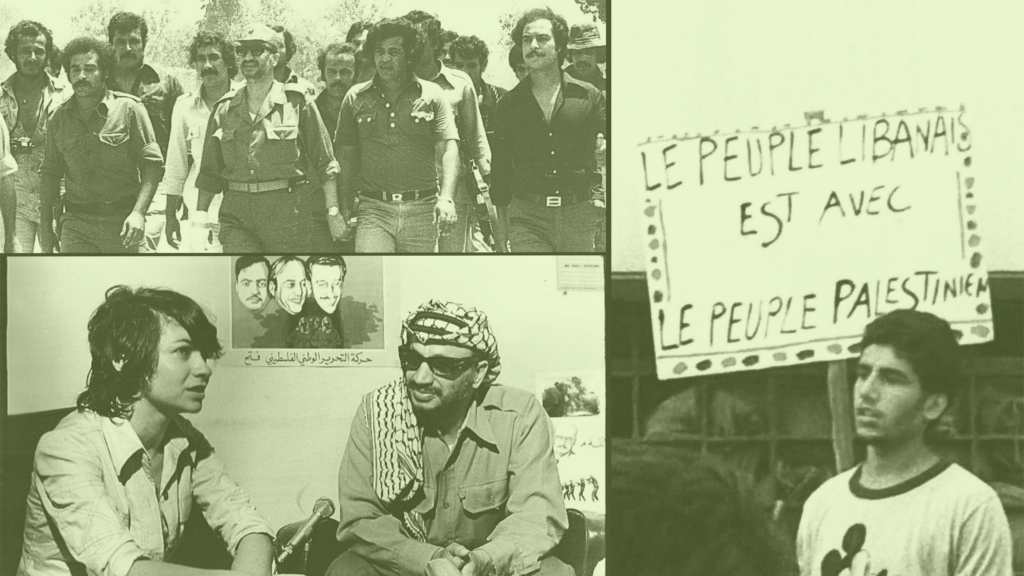
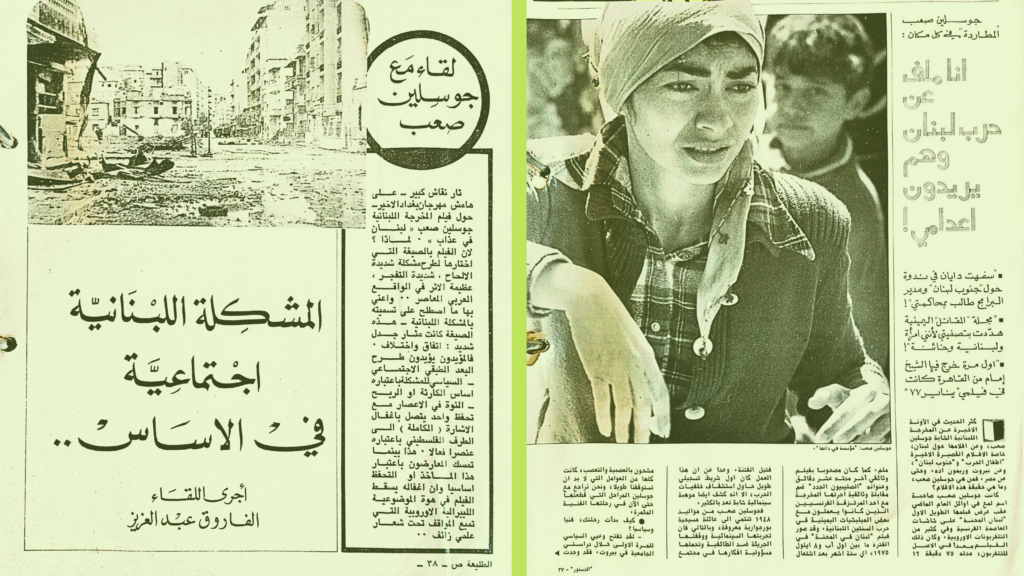
Confronted with the limitations of news reporting, Jocelyne Saab began to view the documentary more as a means of questioning the representation of events and people’s lives. When the civil war broke out in Lebanon in 1975, she returned to film her country and chose to become a freelance journalist. Faced with violence, destruction and the power dynamics influencing the international media, she gradually moved away from television formats, using the image as an act of memory and resistance.
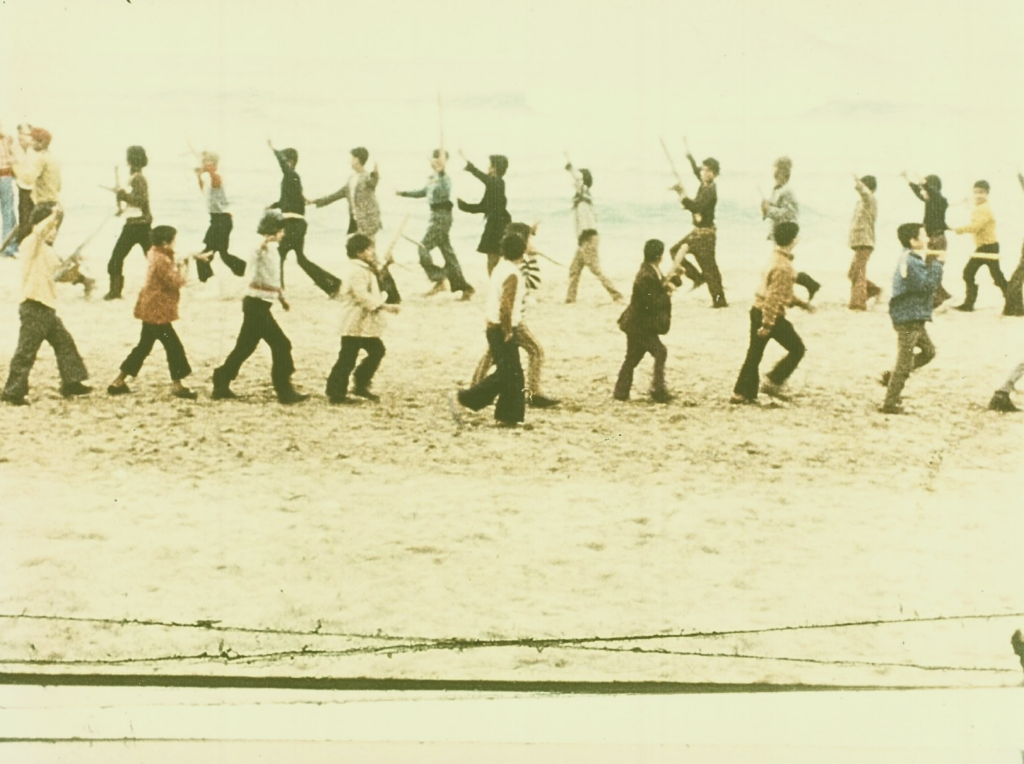
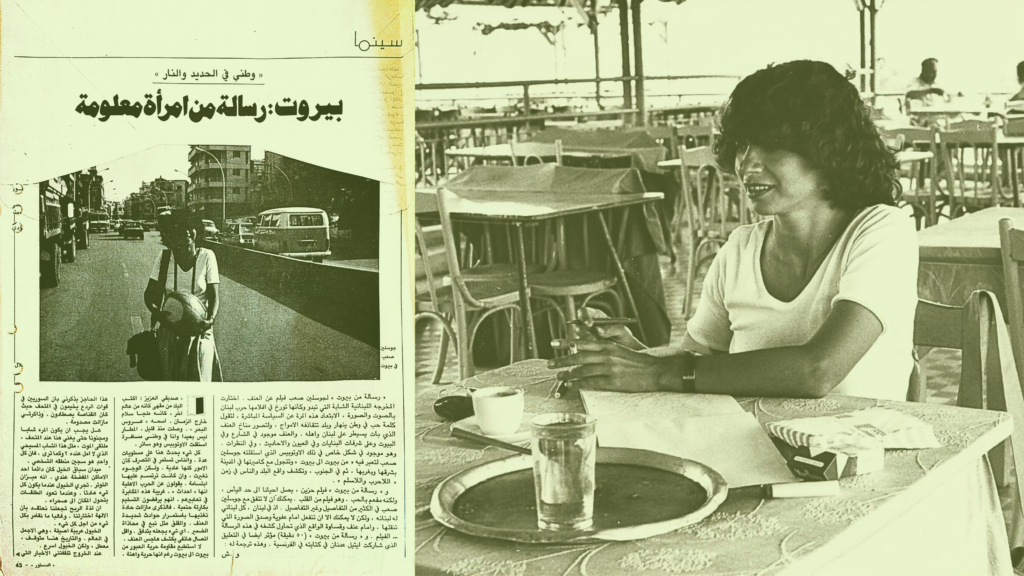
Between 1975 and 1982, Jocelyne Saab made several films documenting the disaster and the struggles that ravaged Lebanon during the war, including Le Liban dans la tourmente (1975), Le front du refus (1975), Les nouveaux croisés d’Orients (1975), Les Enfants de la guerre (1976), Sud-Liban, histoire d’un village assiégé (1976), Pour quelques vies (1976), Beyrouth, jamais plus (1976), or Lettre de Beyrouth (1978). These films also witness the transformation of his approach to image and editing, which increasingly focused on seeking out manifestations of life at the heart of the war.
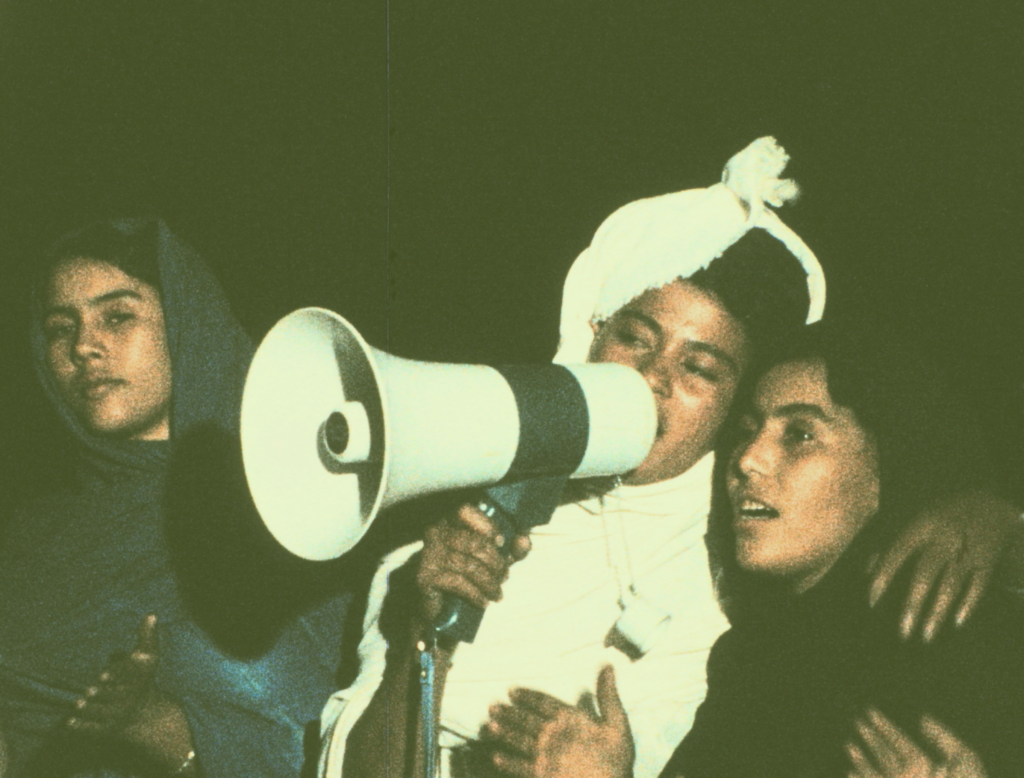
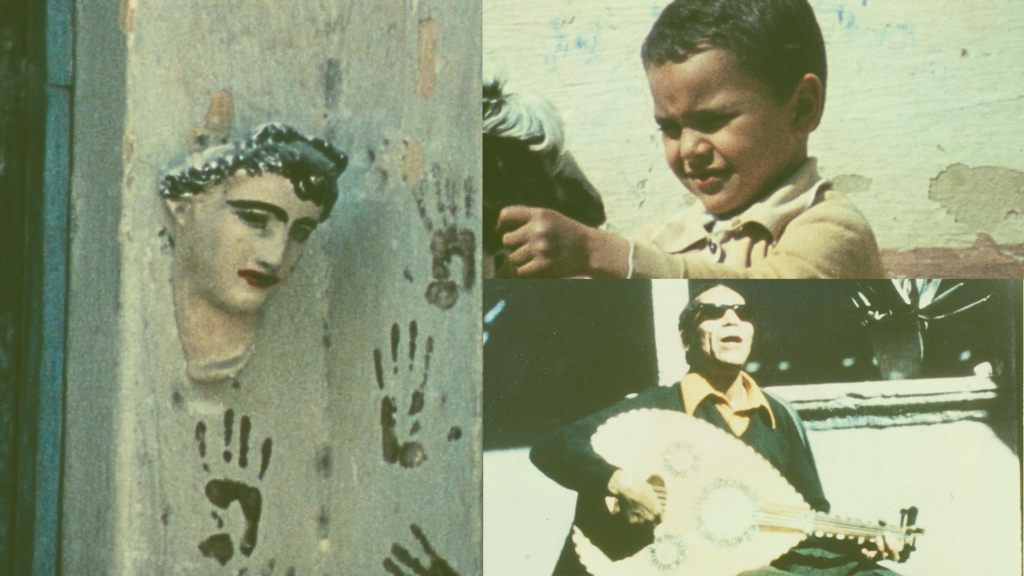
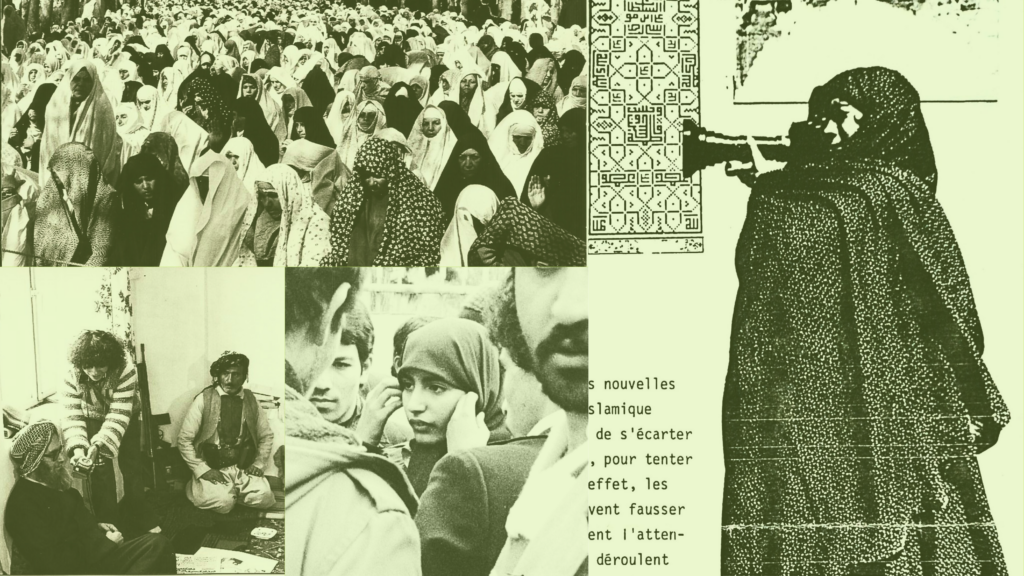
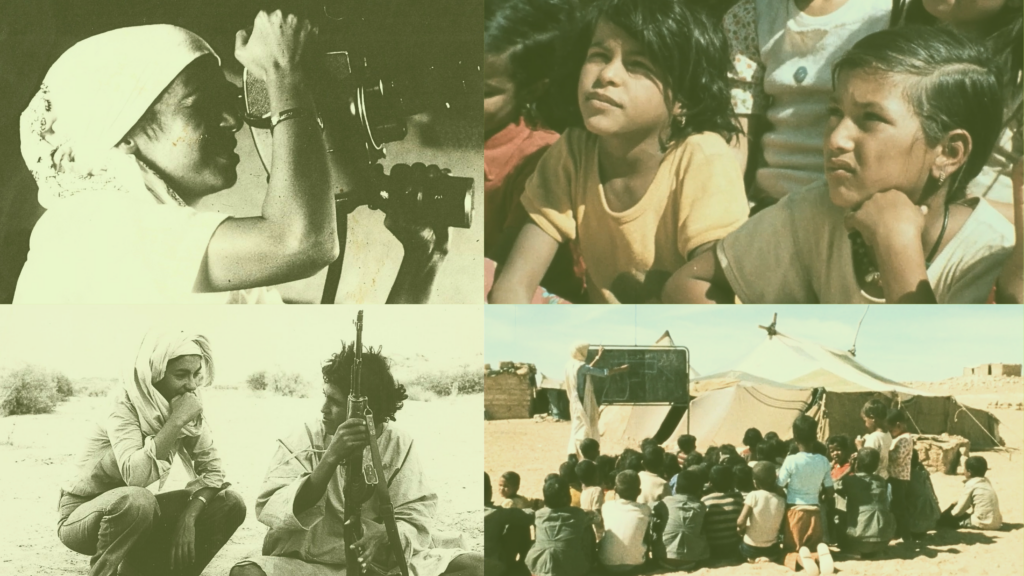
During this same period, Jocelyne Saab reaffirmed her commitment to the Palestinian resistance and the liberation movements emerging across the Arab countries and beyond, by making Egypt, City of the Dead (1977), dedicated to the inhabitants of Cairo, reeling from the consequences of globalisation and poverty; Sahara Is Not for Sale (1977), which highlights the Sahrawi people’s struggle for independence; and Iran, Utopia on the move (1980), filmed during the early months of the Iranian Revolution.
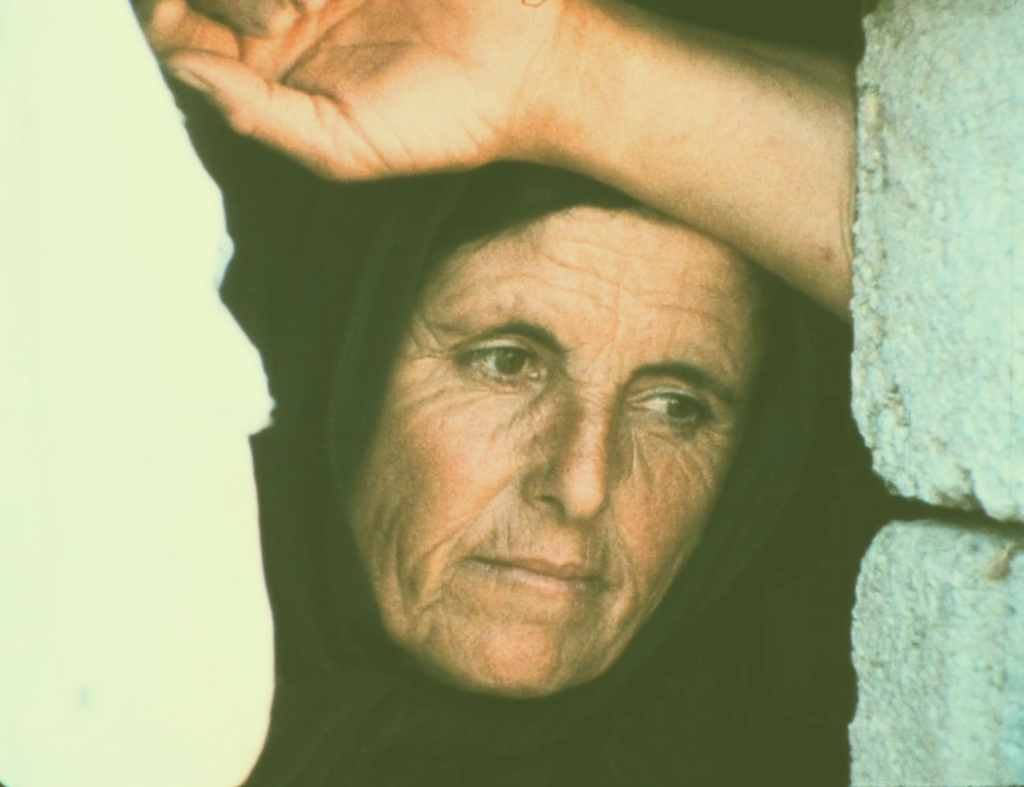
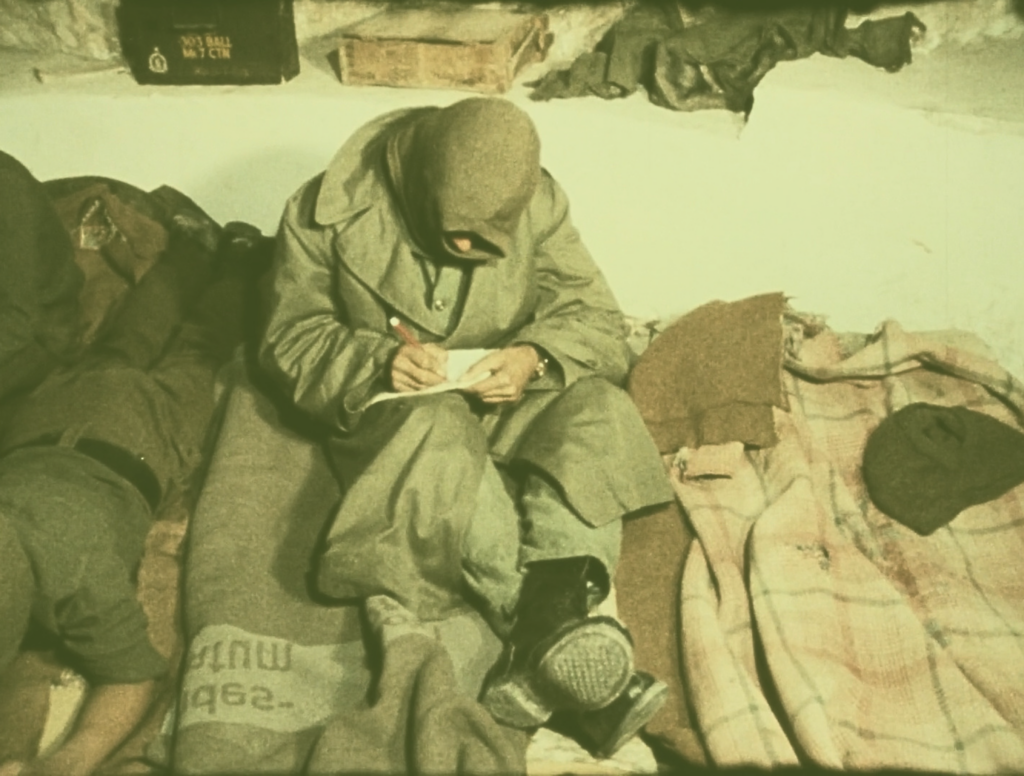
Each of these films supports peoples’ aspirations for self-determination and dignity across borders, by documenting the human consequences of conflicts in various areas. She turns her gaze towards combatants, women, refugees, children and intellectuals, and focuses on their dispossession, their ideas and their dreams of freedom. In this way, Jocelyne Saab’s images create a space for transmission that links local struggles to a wider international history.
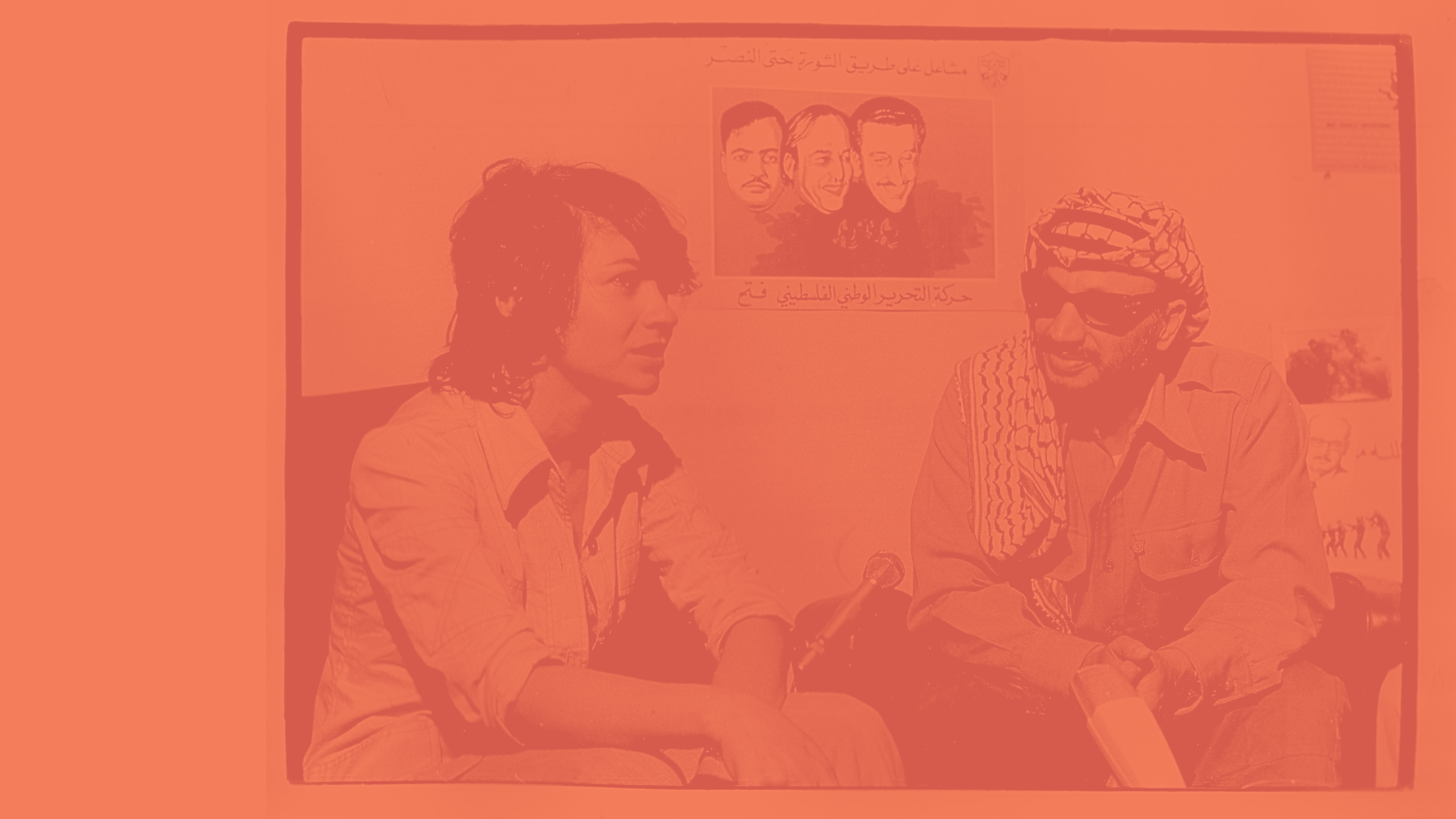
Finally, in 1982, her film The Ship of Exile followed the forced departure of Yasser Arafat and Palestinian fighters leaving Beirut by sea, capturing the end of a chapter in Palestinian and Lebanese history. Then, a few weeks later, she made Beirut, My City: a more personal film in which the destroyed city becomes a mirror of a shattered memory, or even an obliterated memory.
This year marks a real turning point in Jocelyne Saab’s work, after the Israeli invasion of Lebanon, the siege of Beirut, the evacuation of the Palestine Liberation Organisation and the Sabra and Shatila massacres carried out by the Phalangists. More than mere accounts of the war, these two documentaries explore the disappearance of places, the erasure of histories, exile, and the traces of destruction left on the landscape and the human body. They also announce the evolution of Jocelyne Saab’s filmmaking towards images that no longer merely document events, but which also seek to represent and preserve what history risks overlooking.