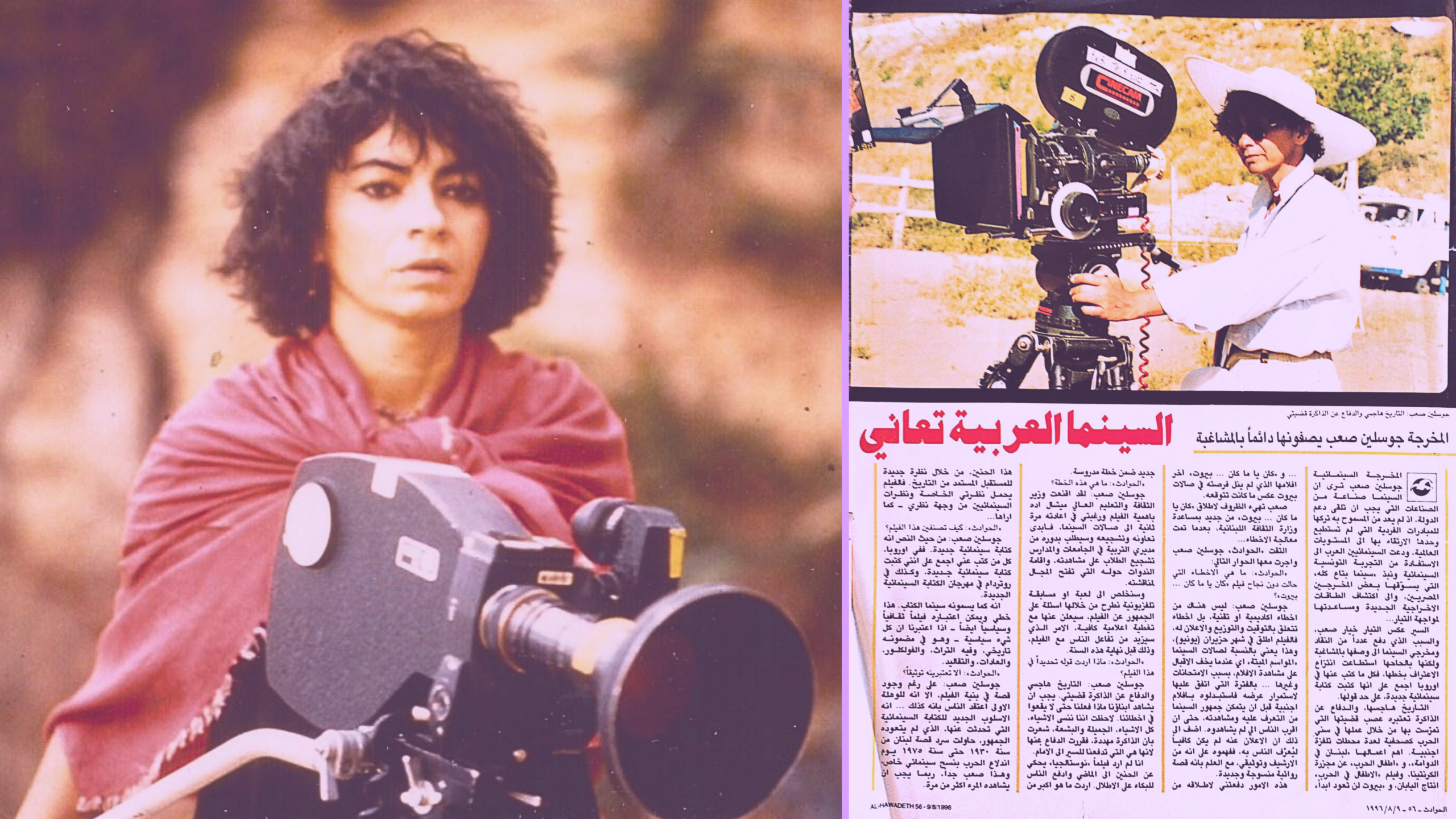
In the late 1980s, as the Taif Accords brought an end to fifteen years of civil war in Lebanon, Jocelyne Saab once again turned her attention to the lingering effects of the conflict: conflicting memories, wounds, societal transformations and the narratives that emerge in the aftermath of conflict. This period thus marked a significant shift in her work, which no longer sought merely to bear witness to history as it was being written, but to understand how it continues to inhabit individuals, bodies and the collective imagination, at a time when reconstruction is not merely a physical endeavour.
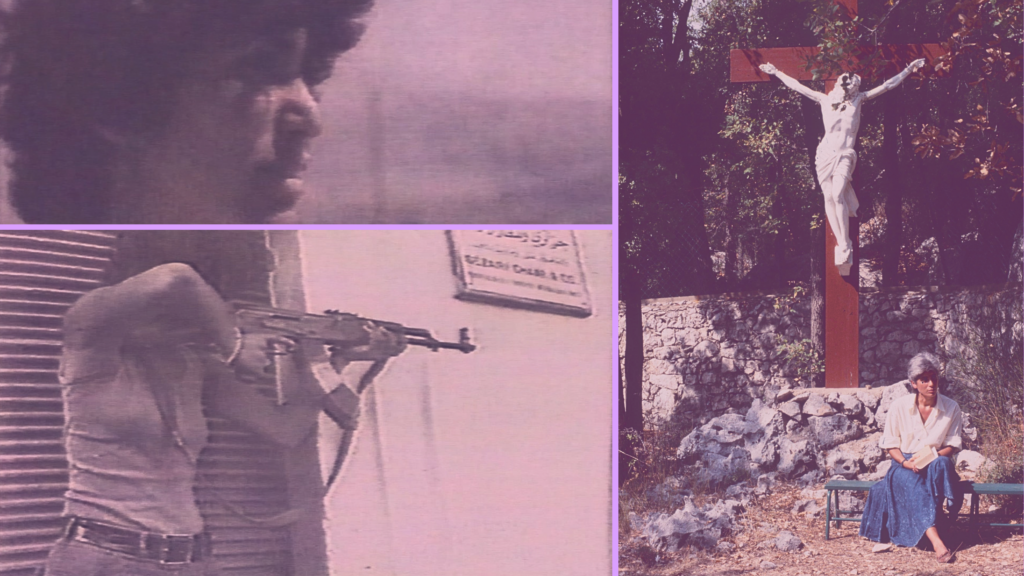
Made in 1988, the documentary La Tueuse paints a portrait of Jocelyne Khoueiry, a former figure in the Christian Phalangist militias, who took part in several armed operations during the civil war before withdrawing from political life to found a religious community. Rather than reconstructing her military trajectory, Jocelyne Saab explores the contradictions faced by a woman confronted with her own past, her convictions and her remorse. By giving a voice to a figure rarely portrayed in Lebanese cinema, she demonstrates that the country’s reconstruction also requires coming to terms with the complexity of individual memories.
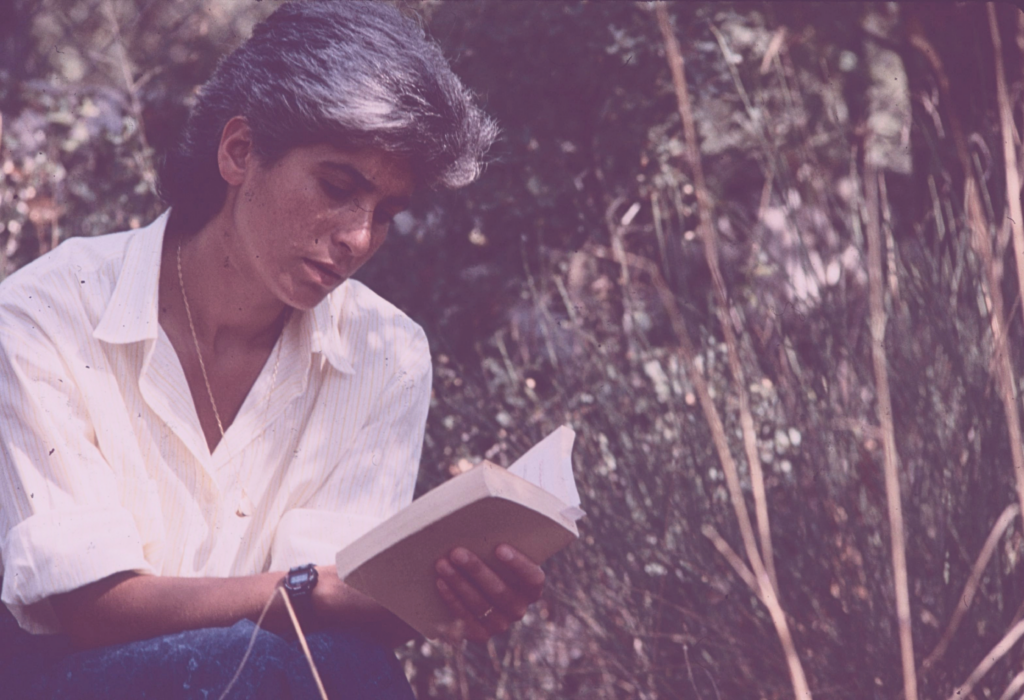
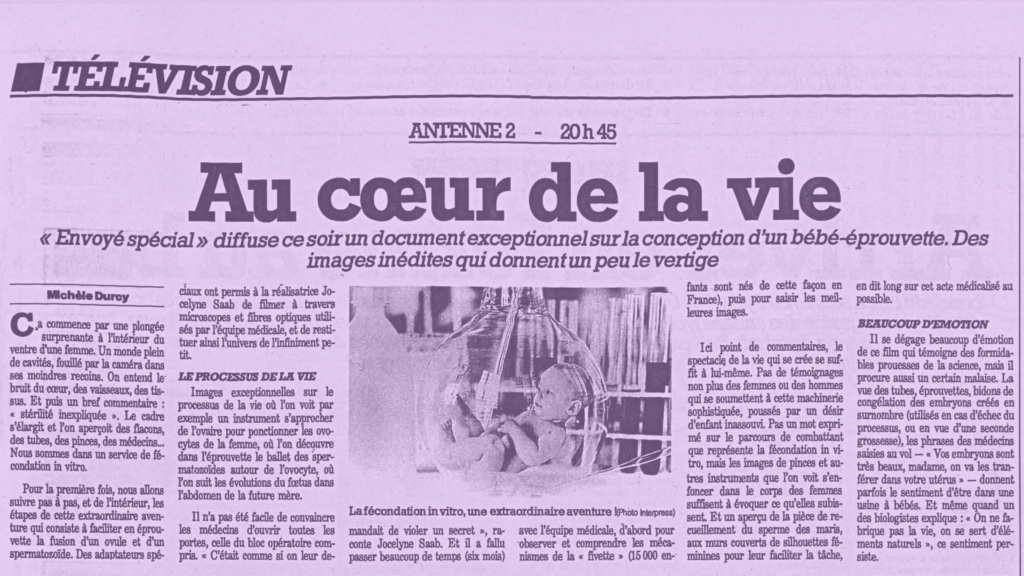
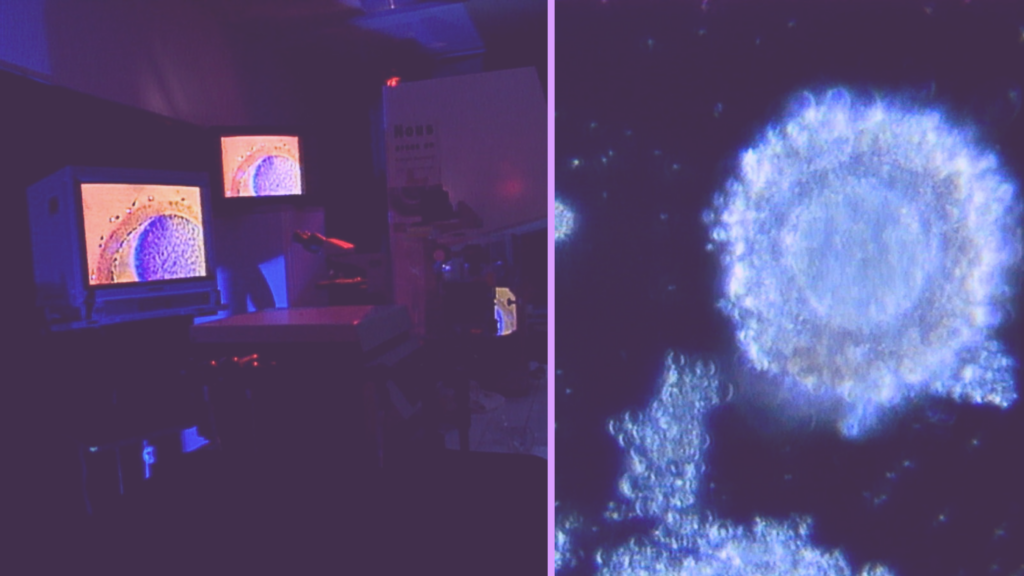
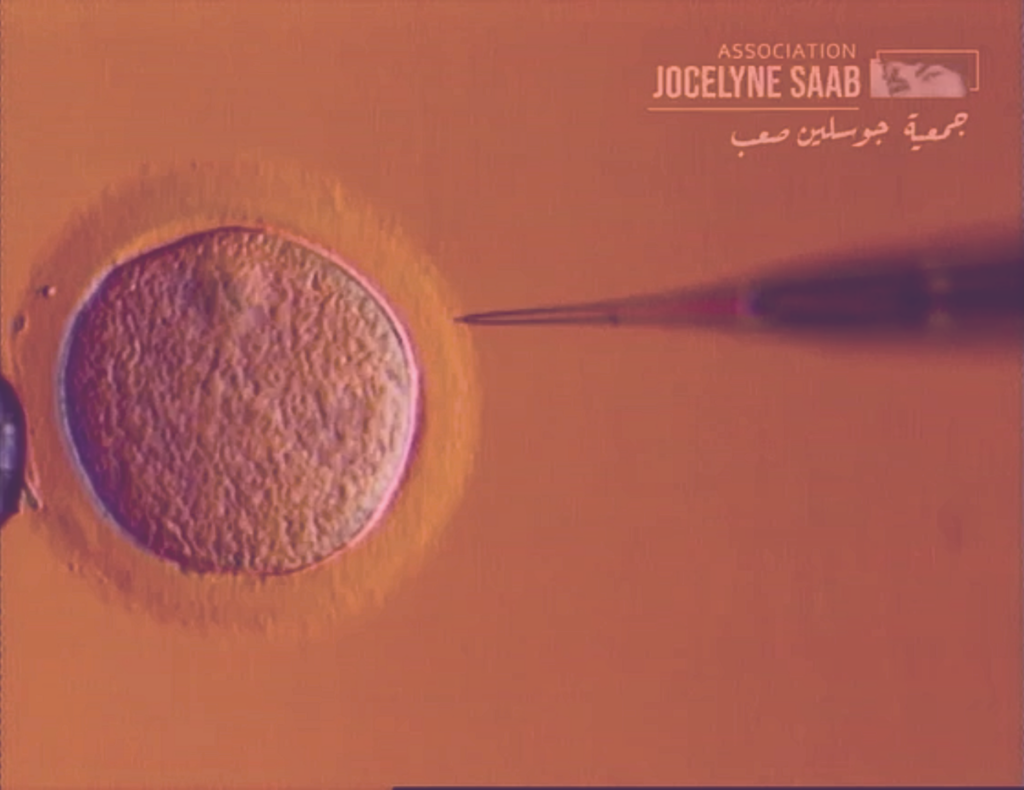
In 1991, Jocelyne Saab continued to broaden the scope of her filmmaking by directing Fecondation in Video. The documentary traces the early developments in assisted reproduction and explores the scientific, medical and ethical upheavals accompanying these new techniques. It gives a voice to doctors, researchers and couples undergoing these treatments, revealing both the hopes and the questions raised by a technology that is redefining our relationship with the body, parenthood and life itself.
Whilst Fecondation in Video may at first glance seem a far cry from her first documentaries, Jocelyne Saab remains attuned to the changes taking place within societies. Having previously filmed the human consequences of conflict, she now observes other forces that upend people’s lives, confirming the gradual broadening of her field of observation beyond war-torn territories.
In the aftermath of the war, Jocelyne Saab was no longer content merely to direct films: she also set about preserving the images that tell the story of Lebanon. Whilst preparing her next feature-length fiction film, she embarked on an extensive research project focusing on films shot in the capital since the dawn of cinema. This work led to the compilation of an initial catalogue of over 250 films and launched the project to re-establish the Lebanese Film Archive, founded in 1961 but interrupted by the war. The preservation, circulation and transmission of films and archives are thus presented as essential conditions for Lebanon’s cultural reconstruction.
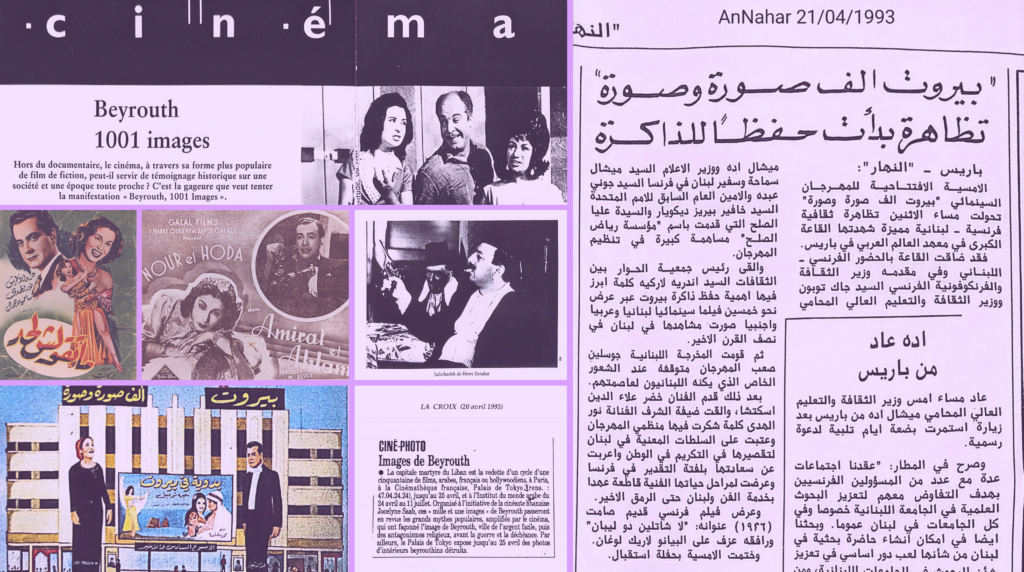
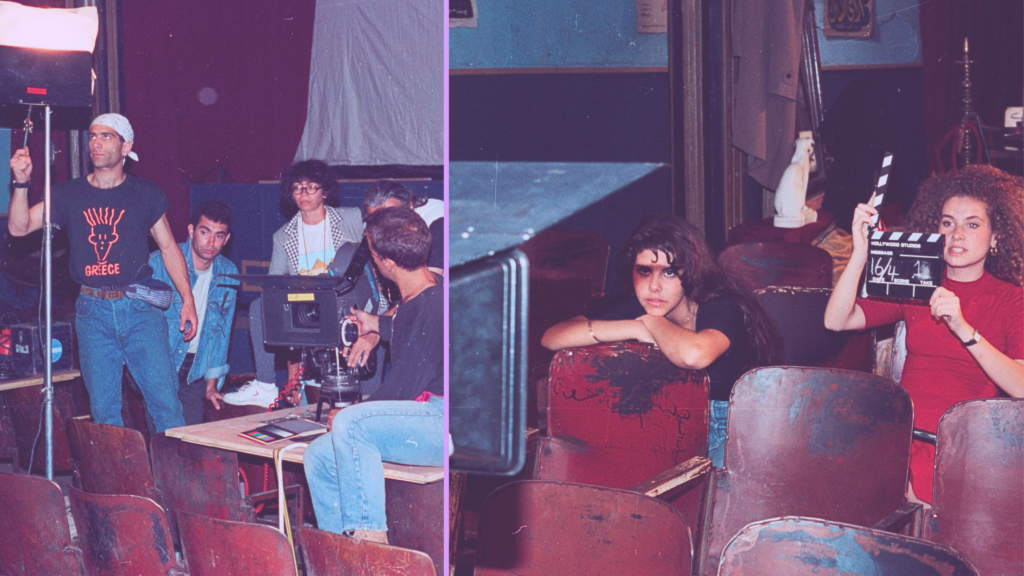
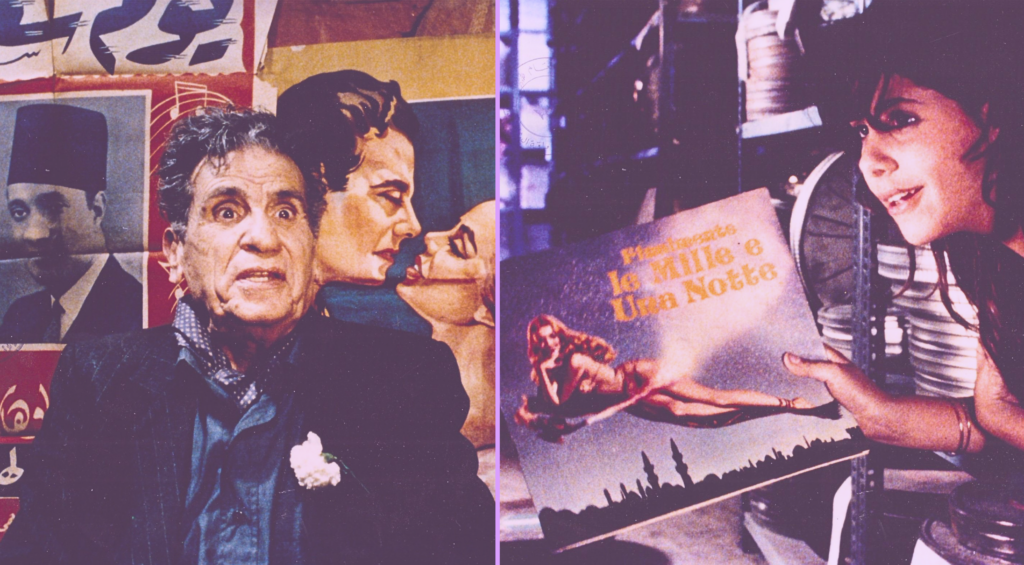
In 1993, Jocelyne Saab presented part of this research under the title Beyrouth, Mille et une images at the Cinémathèque Française and then at the Arab World Institute. This programme brought together around fifty Lebanese, Arab and international films that showcased the many, sometimes contradictory yet complementary, representations of Beirut throughout the 20th century. She then went on to direct Once Upon a Time in Beirut: The Story of a Star in 1994. The film follows two young women as they explore Beirut in search of images of their city, and presents cinema as a tool capable of preserving narratives that official history tends to erase.