1970-1974 1/9
Screenings across the world
Explore the places where Jocelyne Saab's films have been projected around the world.
(1948–2019)
Lebanese reporter, filmmaker, artist, cultural worker
1970-1974 1/9
1970-197401
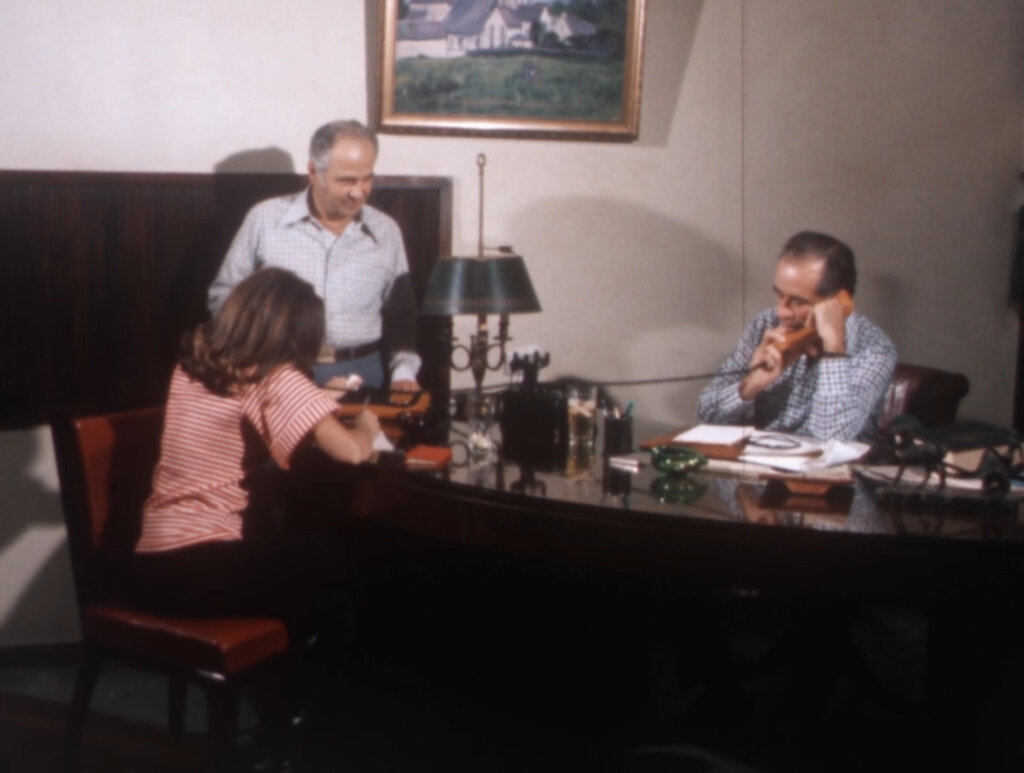
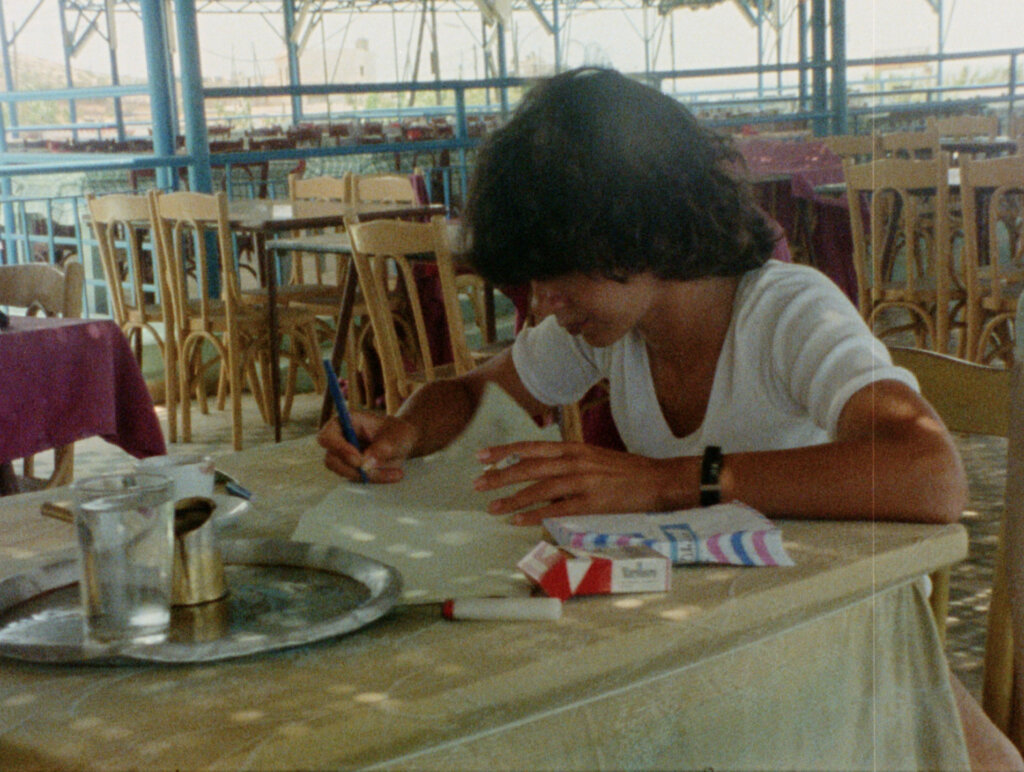
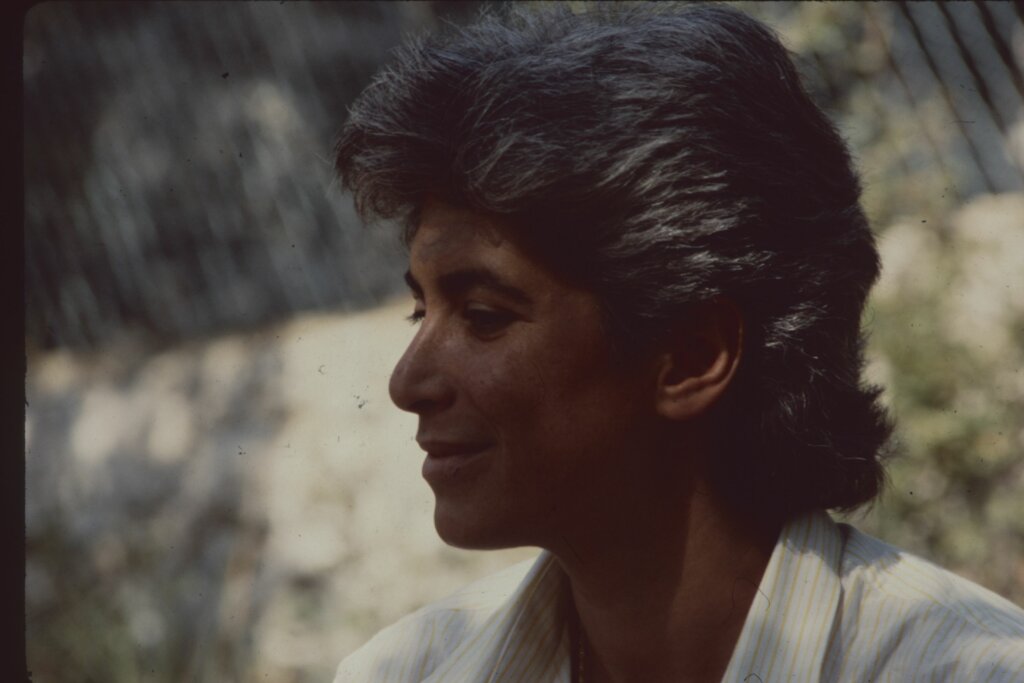
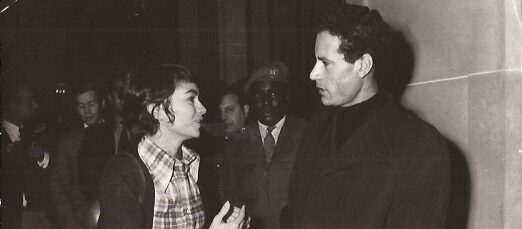
In the early 1970s, Jocelyne Saab entered the world of images through journalism. After studying political economy in Beirut and Paris, she became a journalist for Lebanese radio and television, and then a war reporter for French television. In a regional context marked by Arab independence, the rise of resistance movements and the Cold War, she embraced reporting as a way of observing the profound transformations taking place across the Arab countries..
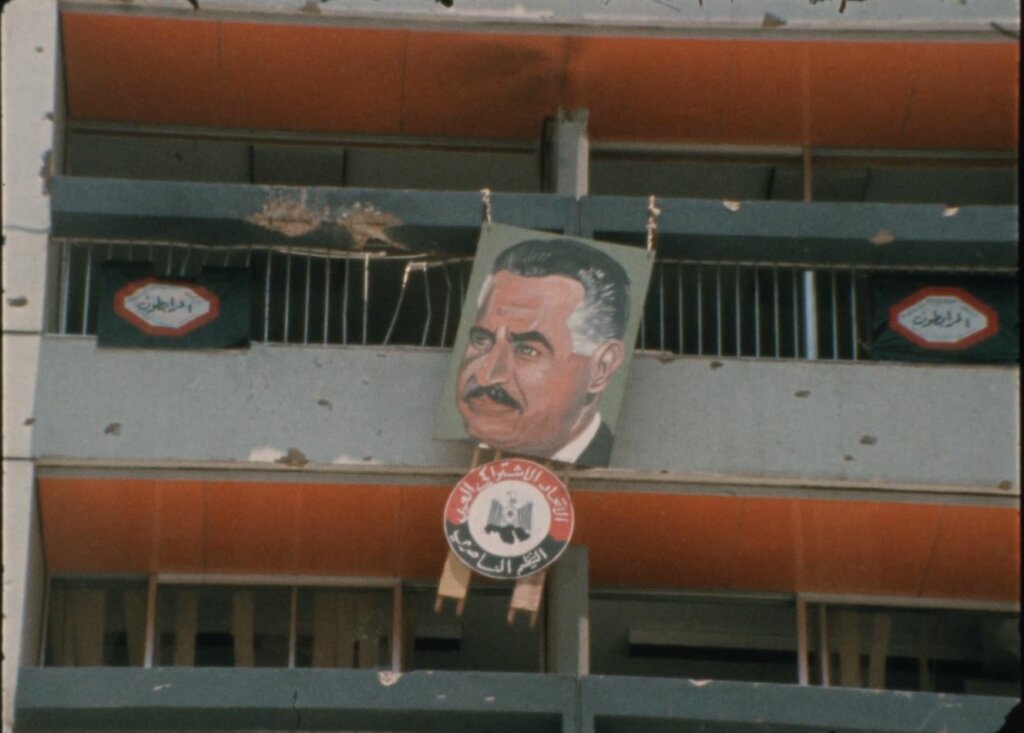
As a native Arabic speaker, Jocelyne Saab was sent by the ORTF to Egypt, Syria, Iraq, Libya and Palestine to cover the conflicts and political crises affecting the region, such as the October 1973 war: this gave her the opportunity to film these events from an insider’s perspective, offering an alternative to the usual Western news coverage. It was during this period that Jocelyne Saab chose to work in direct contact with the situations and communities she was covering. From her very first reports, she aimed not only to report the news, but also to understand the human stories caught up in the upheavals of history.
1970-197402
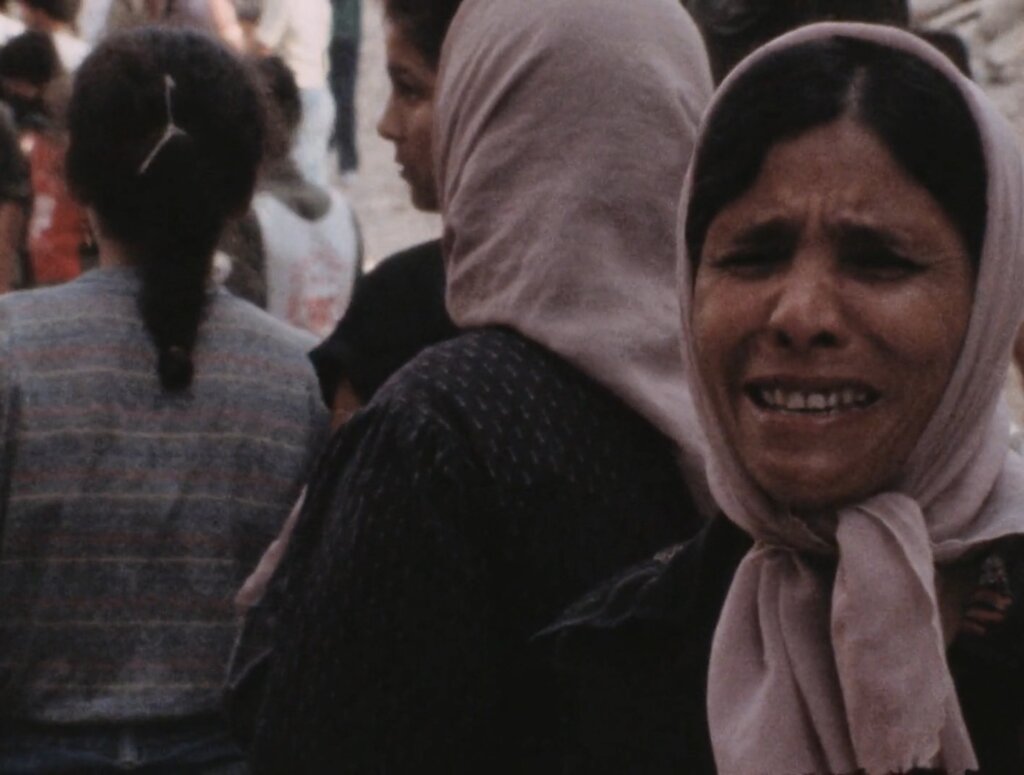
His focus gradually turns to those marginalised by the dominant narratives: refugees, combatants, women, children and civilians. Political events are thus never separated from the everyday experiences of those living through them.
This approach would shape his entire body of documentary work: giving a voice to those who have been forgotten, filming the tangible consequences of conflicts and power relations, and embedding individual stories within a collective memory.
1970-197403
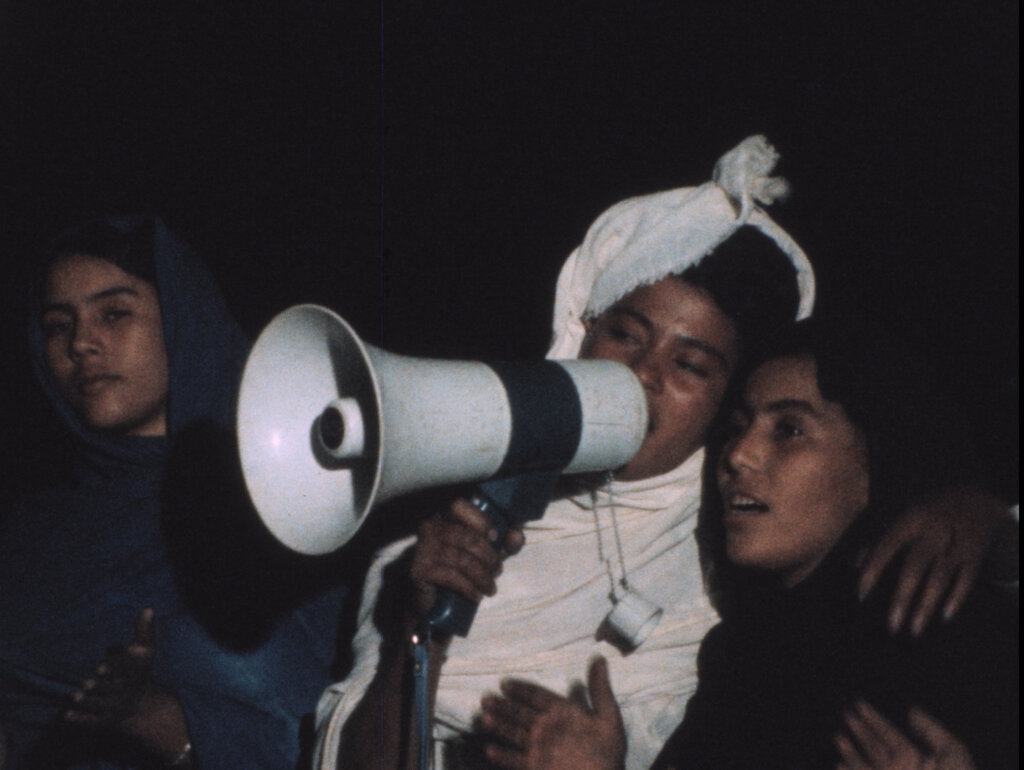
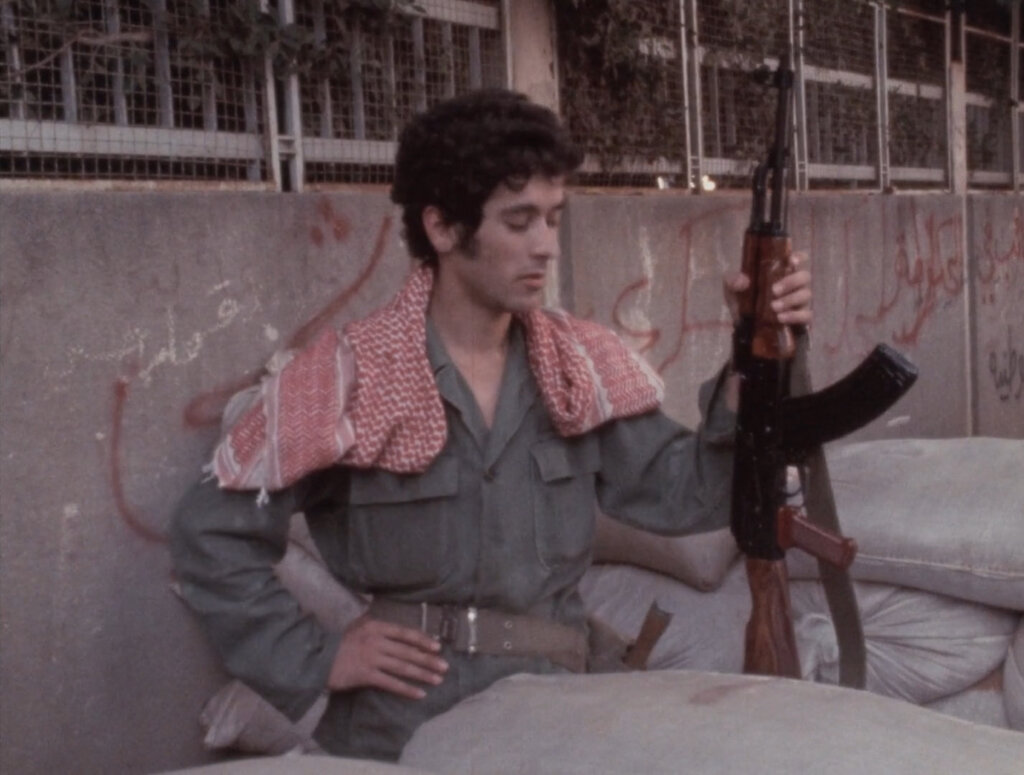
From 1973 onwards, Jocelyne Saab became involved with the Palestinian resistance movements and produced documentaries devoted to them, including Les Palestiniens continuent (1973) and Les Femmes palestiniennes (1974). These films reflect her involvement in the internationalist and emancipatory struggles emerging across the world, as well as her determination to move beyond simplistic portrayals of conflicts. Indeed, she filmed the Palestinian resistance to highlight the lives, aspirations and contradictions that define it.
Although Les Femmes palestiniennes was censored by the ORTF and would never be broadcast during Jocelyne Saab’s lifetime, her early reports quickly circulated through European television networks, and gradually transforming her approach to image and news journalism.
1975-1982 2/9
1975-198201
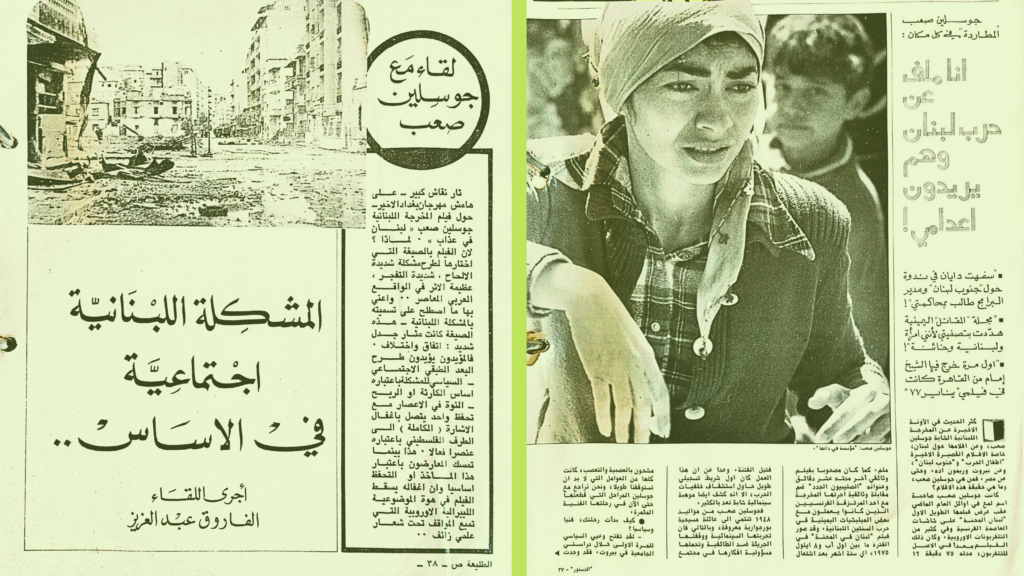
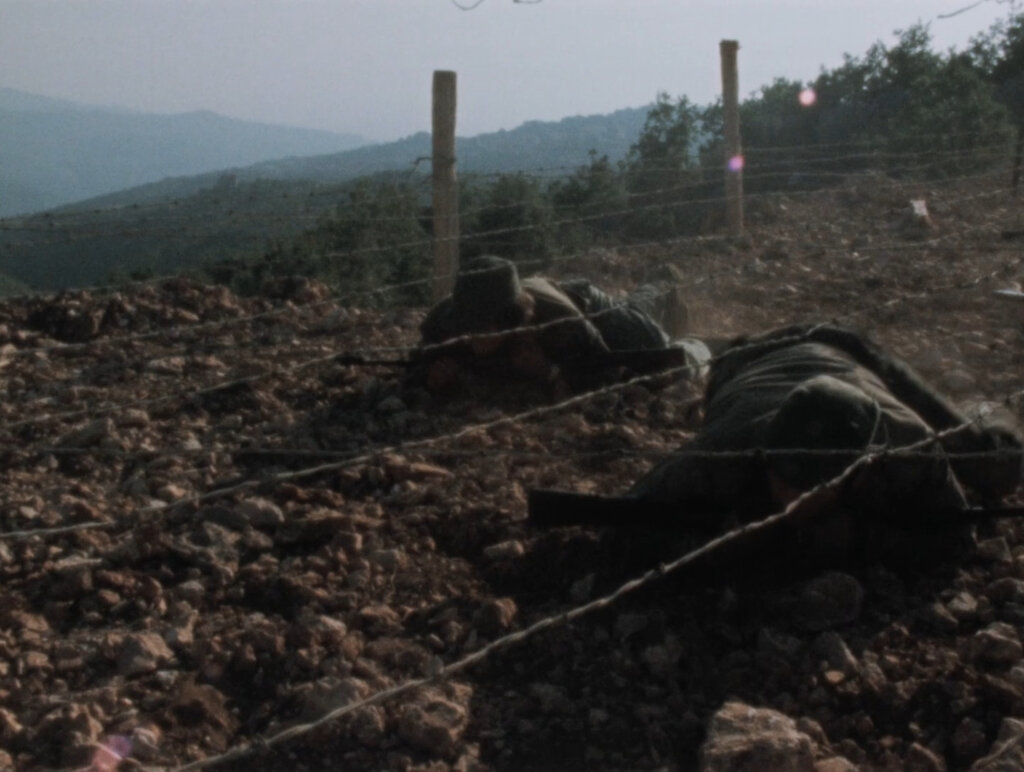
Confronted with the limitations of news reporting, Jocelyne Saab began to view the documentary more as a means of questioning the representation of events and people’s lives. When the civil war broke out in Lebanon in 1975, she returned to film her country and chose to become a freelance journalist. Faced with violence, destruction and the power dynamics influencing the international media, she gradually moved away from television formats, using the image as an act of memory and resistance.
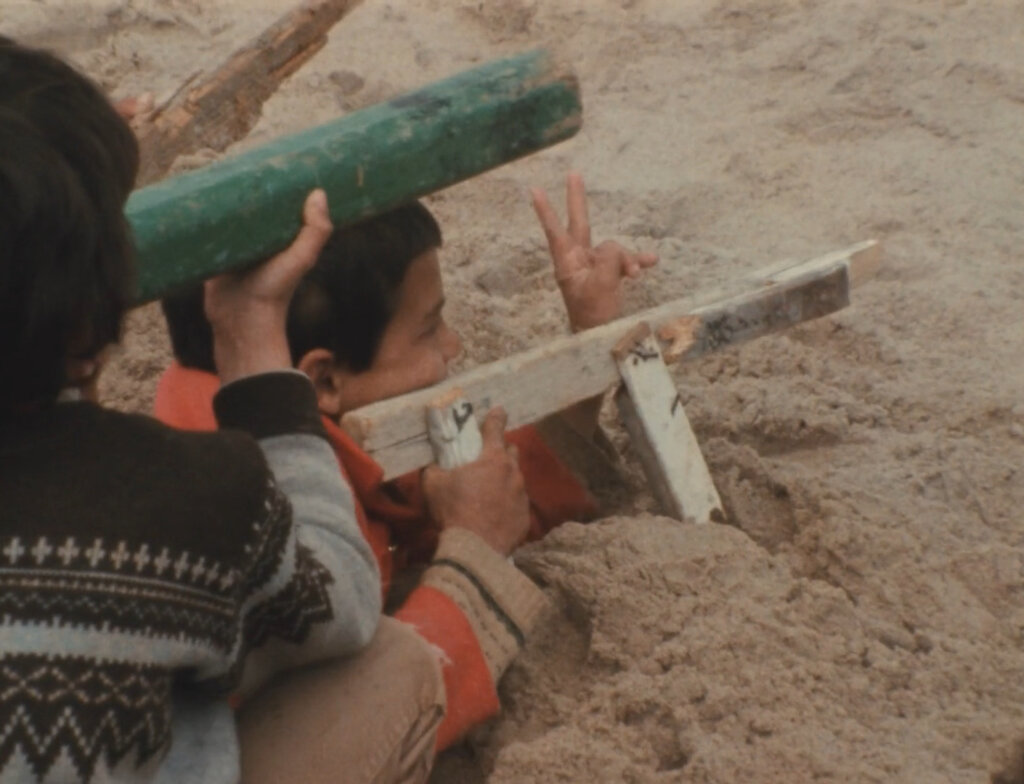
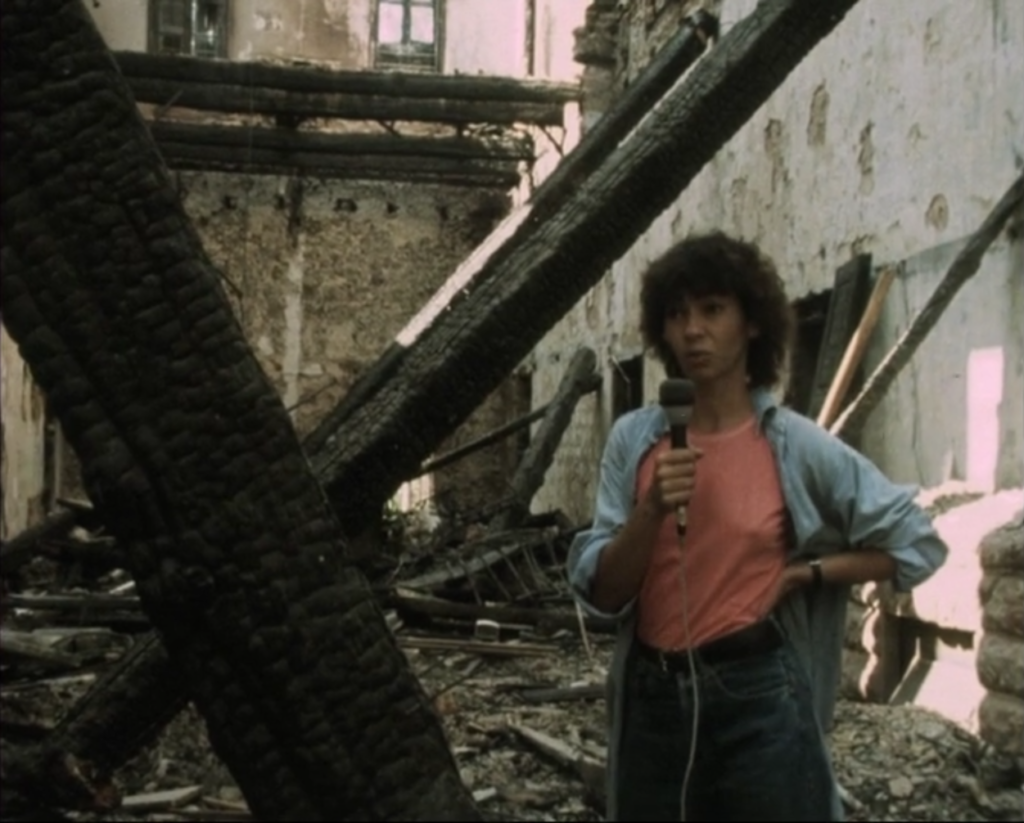
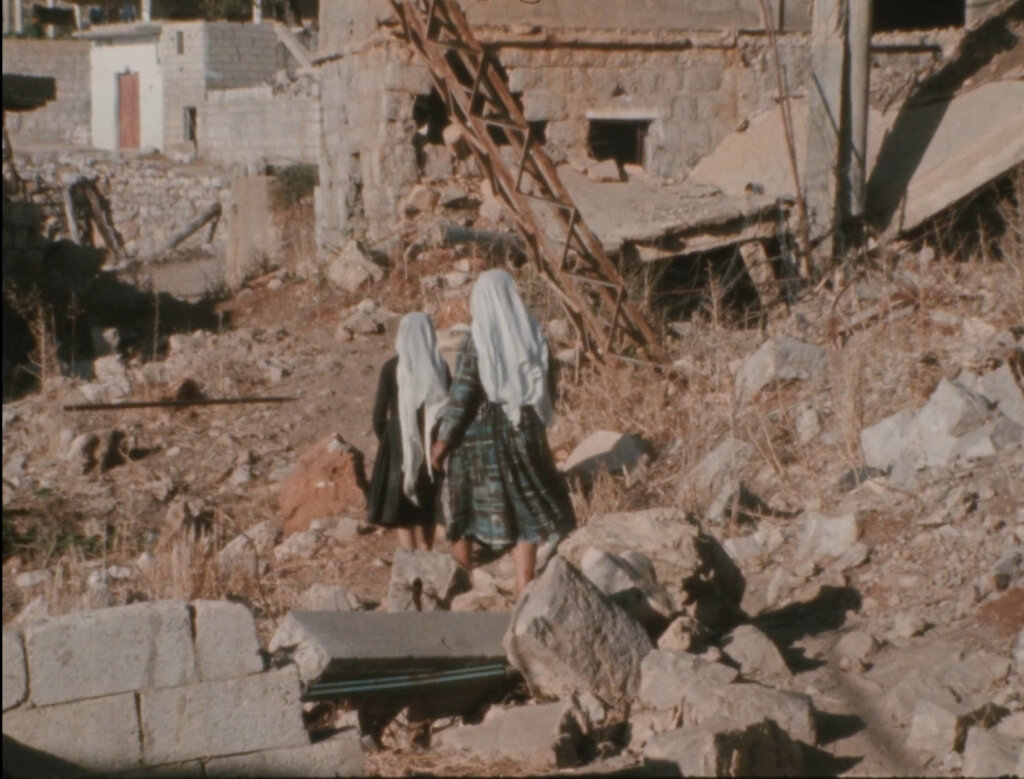
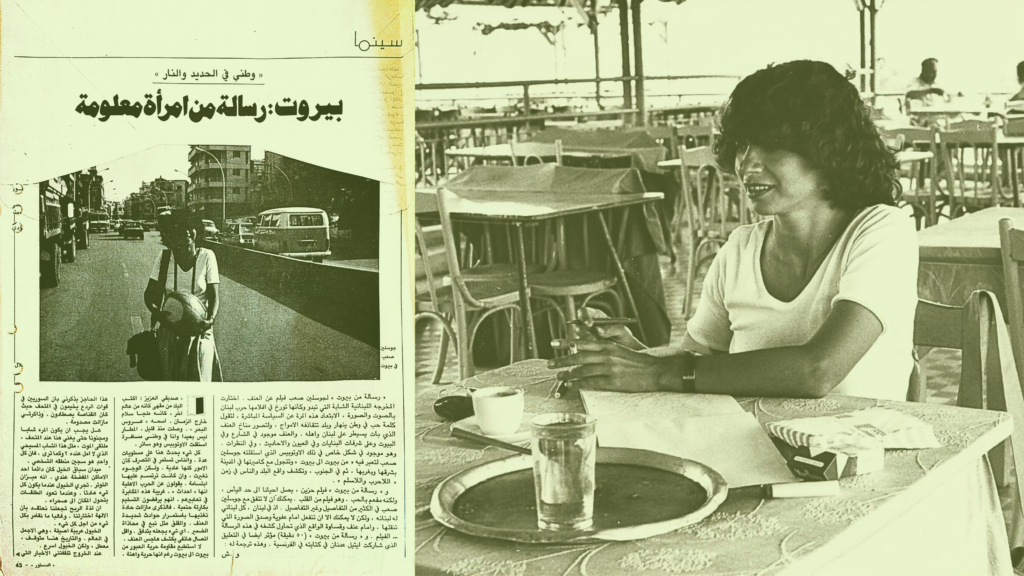
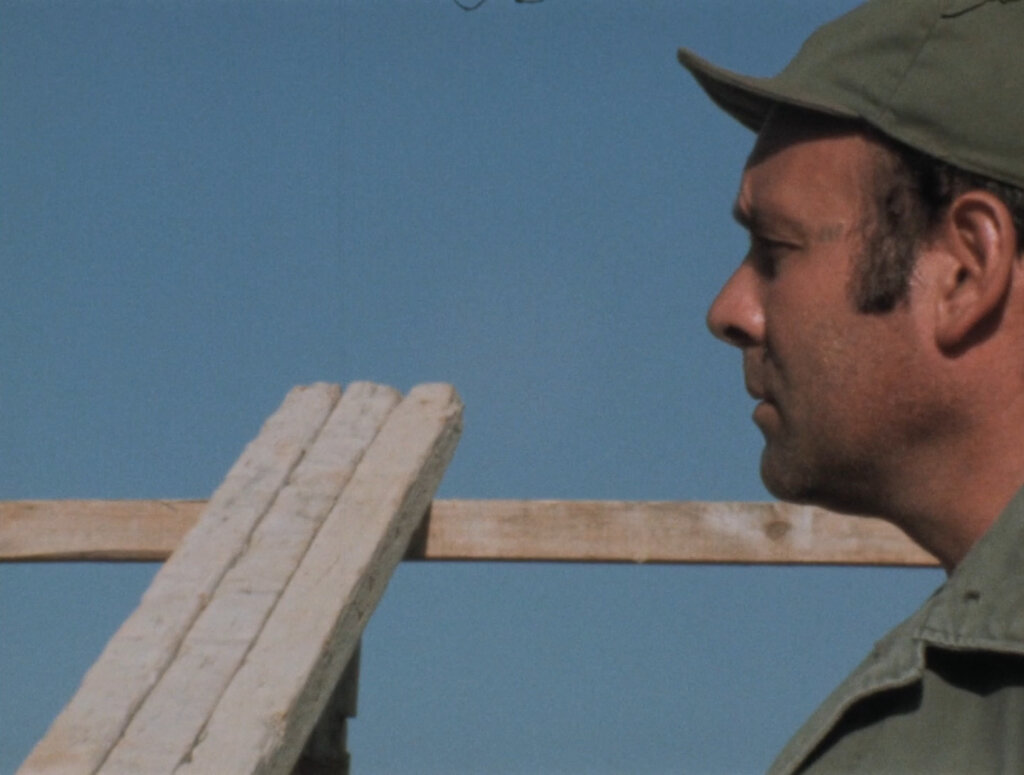
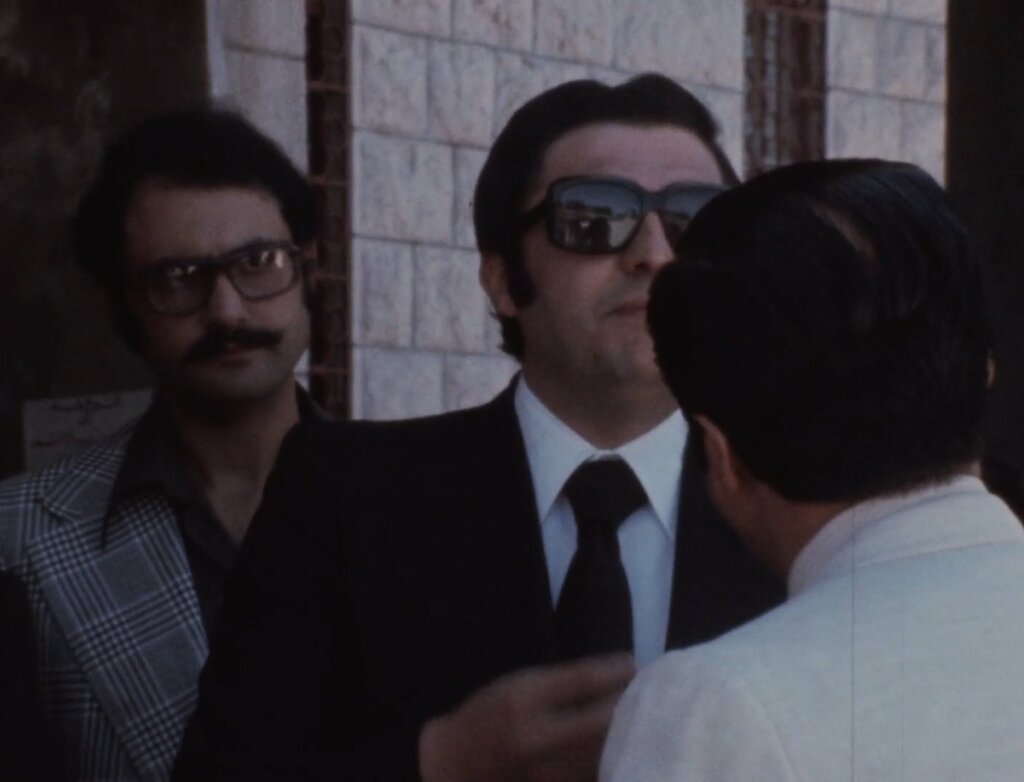
Between 1975 and 1982, Jocelyne Saab made several films documenting the disaster and the struggles that ravaged Lebanon during the war, including Le Liban dans la tourmente (1975), Le front du refus (1975), Les nouveaux croisés d’Orients (1975), Les Enfants de la guerre (1976), Sud-Liban, histoire d’un village assiégé (1976), Pour quelques vies (1976), Beyrouth, jamais plus (1976), or Lettre de Beyrouth (1978). These films also witness the transformation of his approach to image and editing, which increasingly focused on seeking out manifestations of life at the heart of the war.
1975-198202
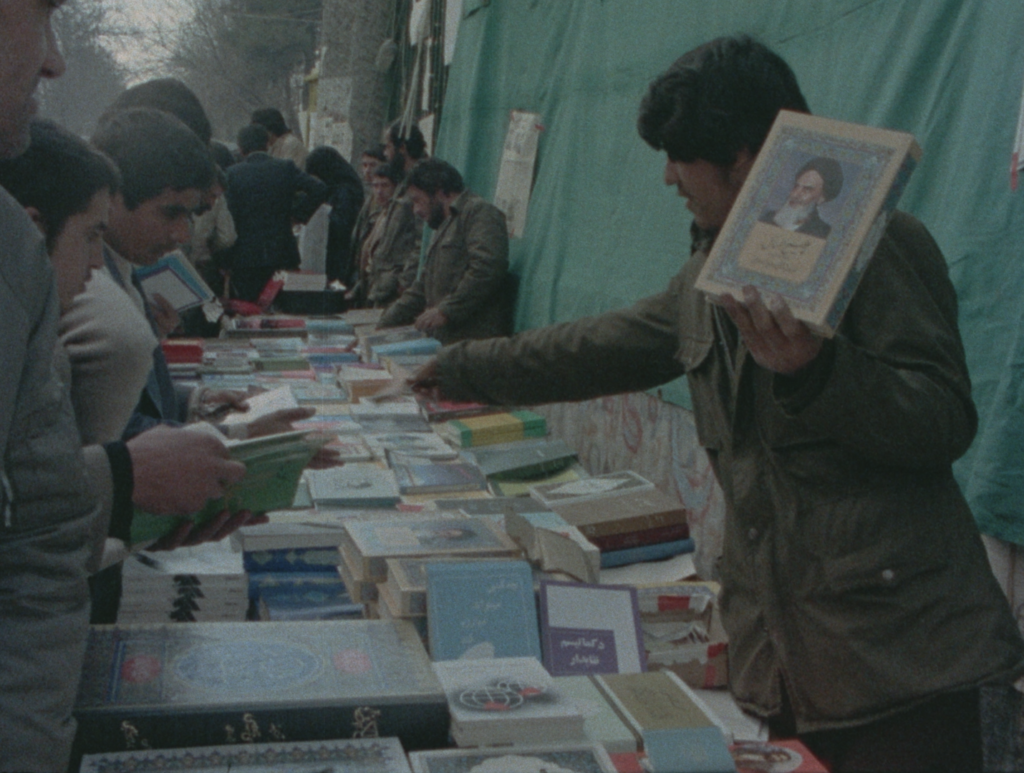
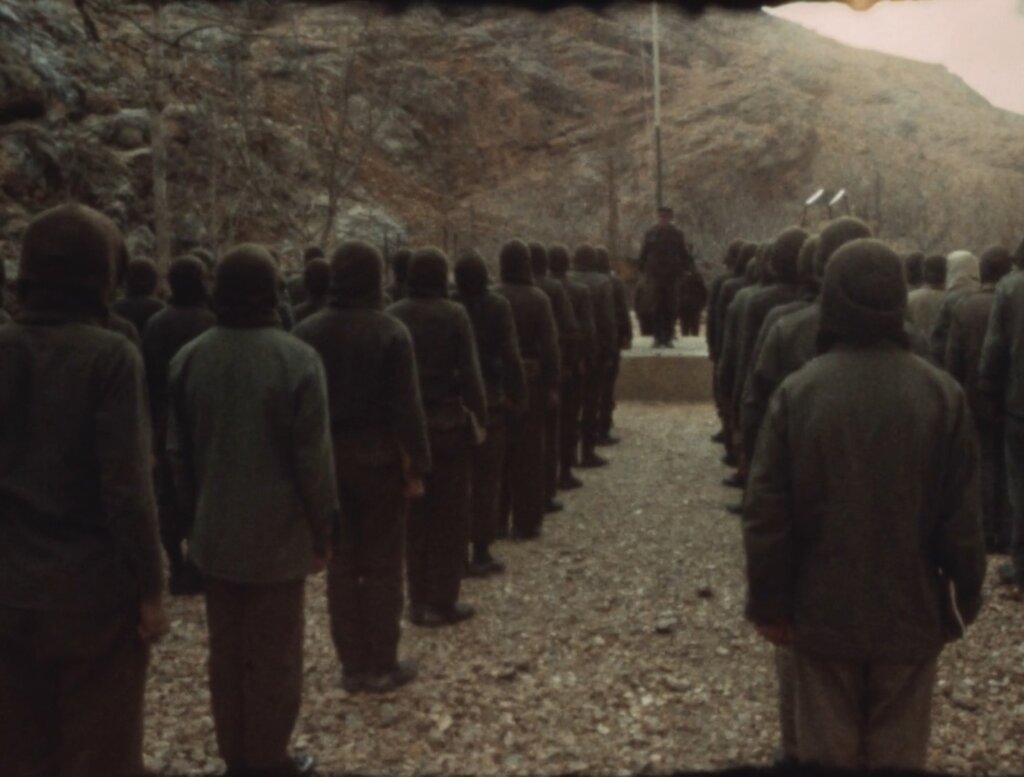
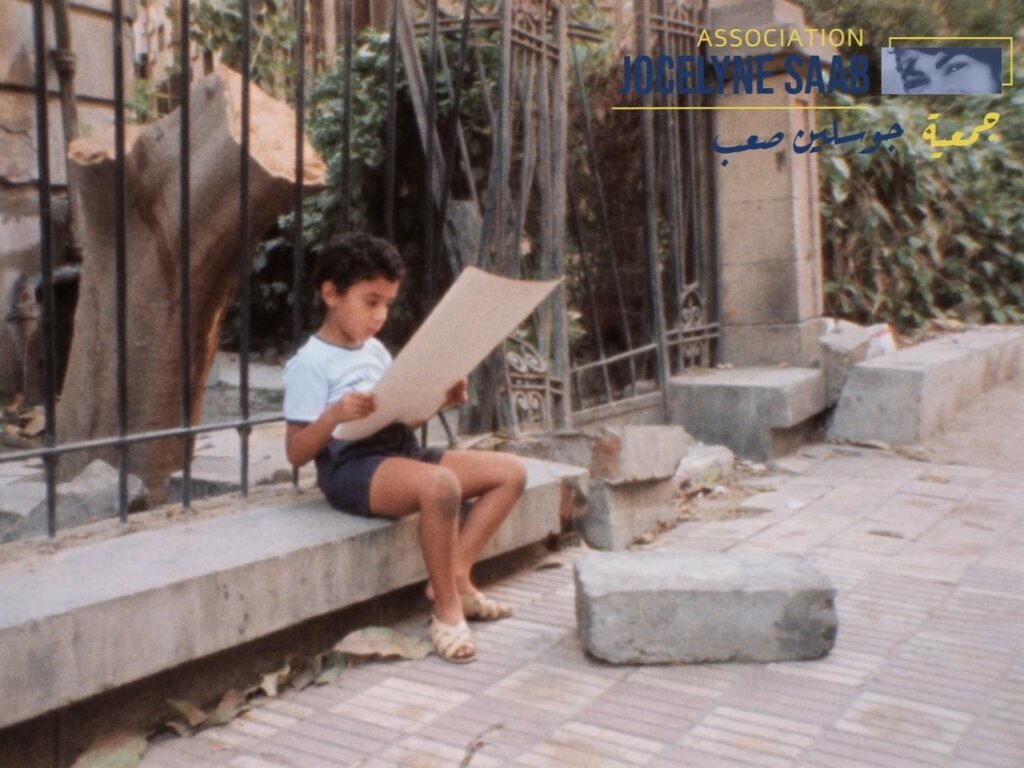
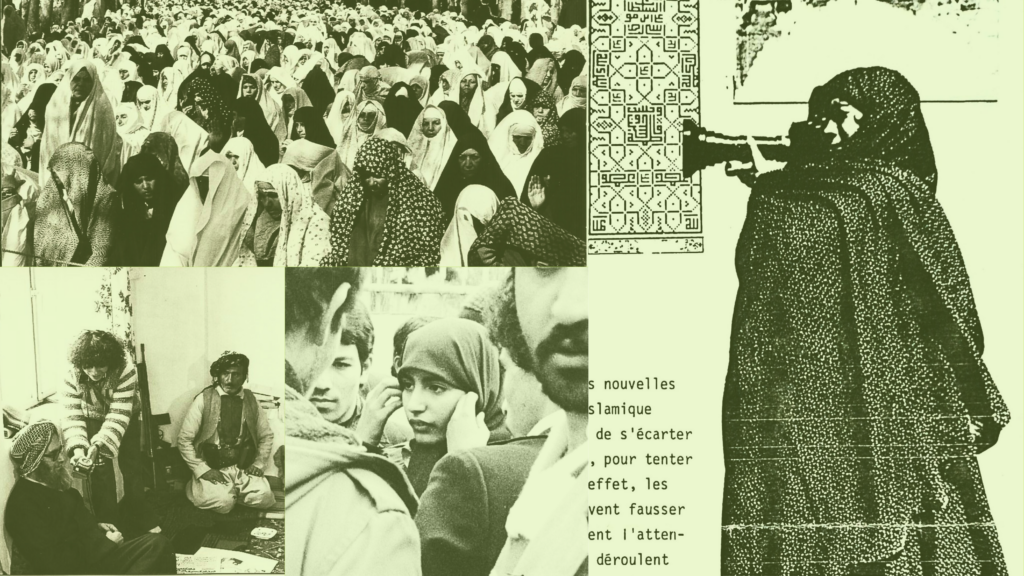
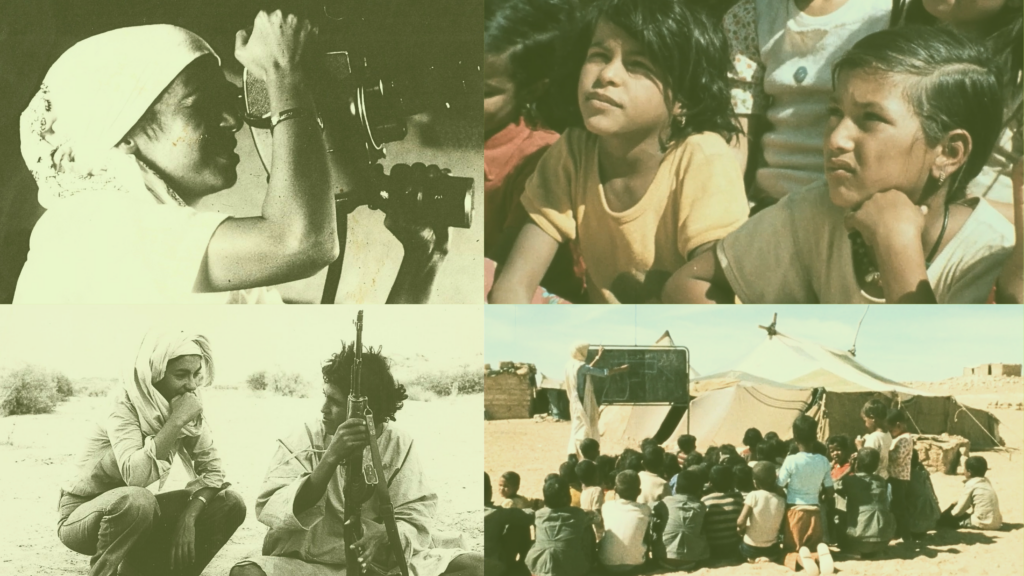
During this same period, Jocelyne Saab reaffirmed her commitment to the Palestinian resistance and the liberation movements emerging across the Arab countries and beyond, by making Egypt, City of the Dead (1977), dedicated to the inhabitants of Cairo, reeling from the consequences of globalisation and poverty; Sahara Is Not for Sale (1977), which highlights the Sahrawi people’s struggle for independence; and Iran, Utopia on the move (1980), filmed during the early months of the Iranian Revolution.
Each of these films supports peoples’ aspirations for self-determination and dignity across borders, by documenting the human consequences of conflicts in various areas. She turns her gaze towards combatants, women, refugees, children and intellectuals, and focuses on their dispossession, their ideas and their dreams of freedom. In this way, Jocelyne Saab’s images create a space for transmission that links local struggles to a wider international history.
1975-198203
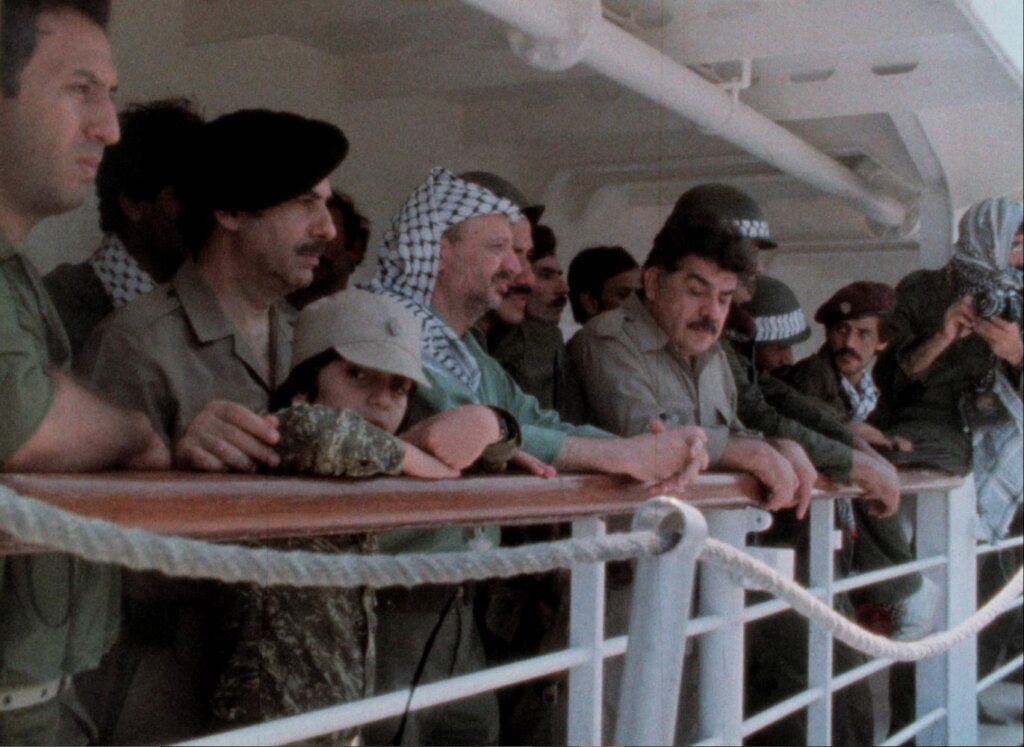
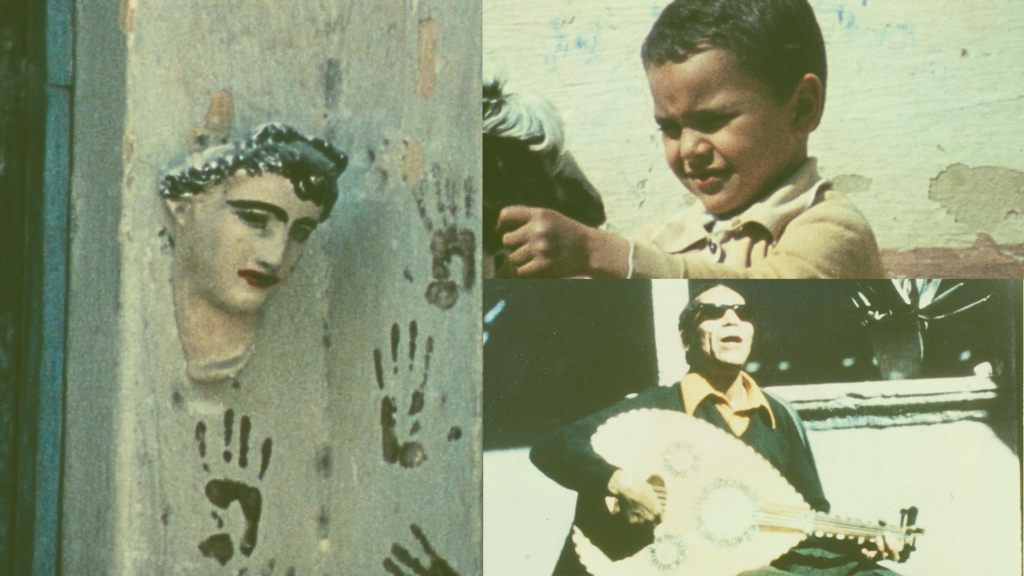
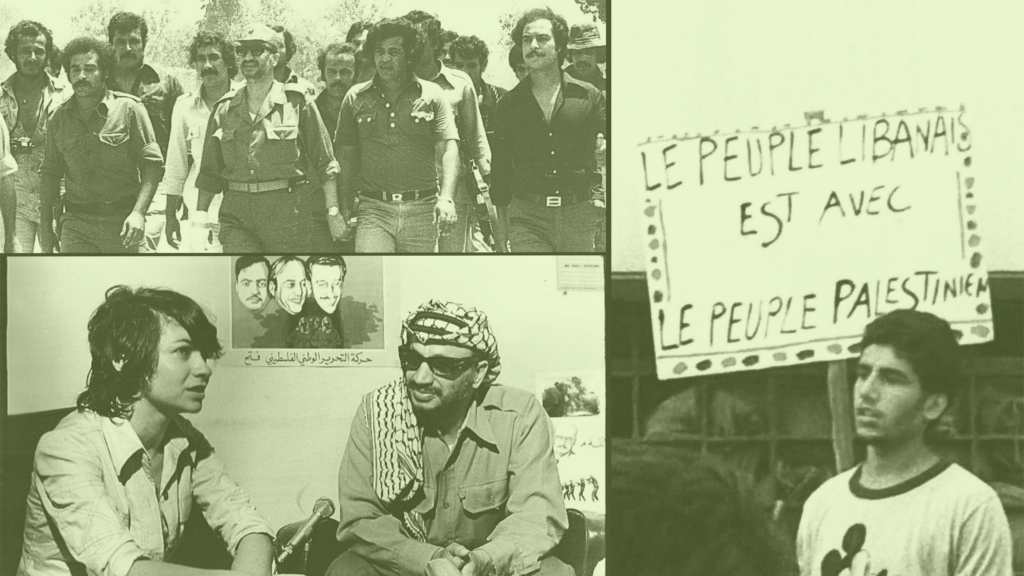
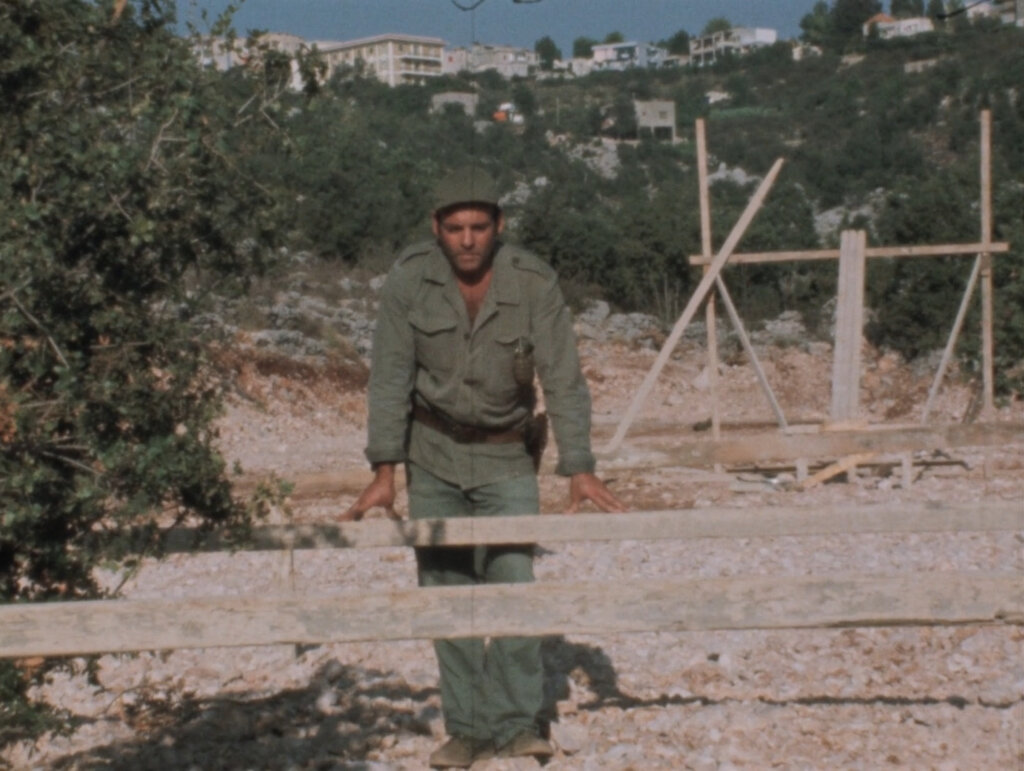
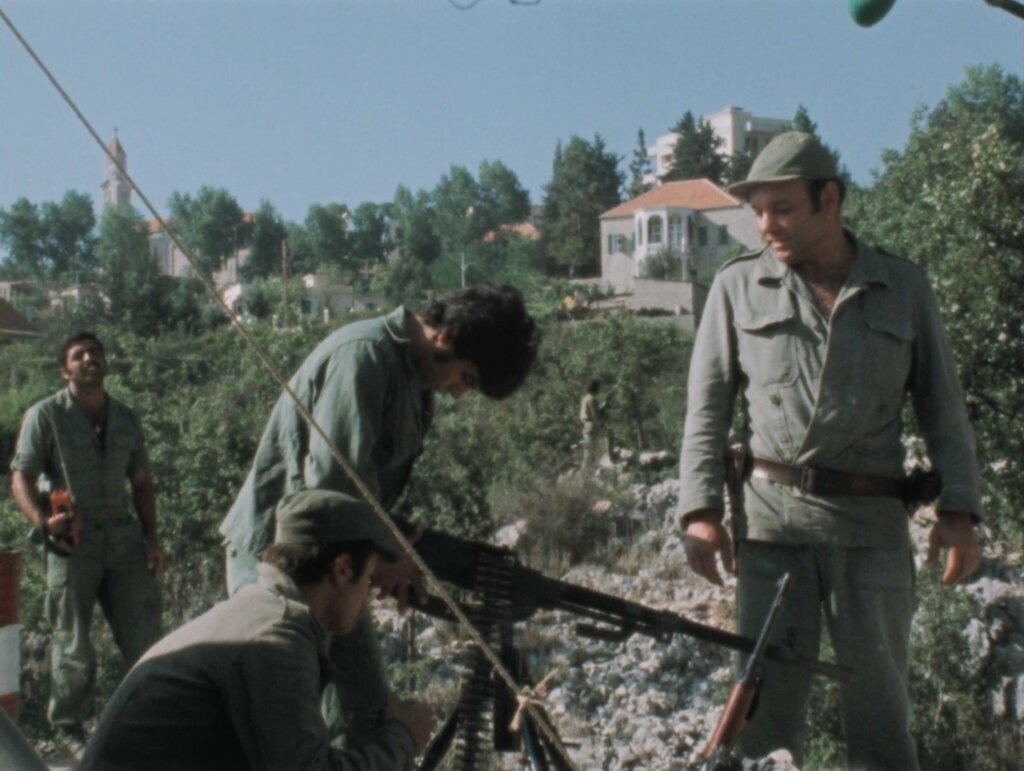
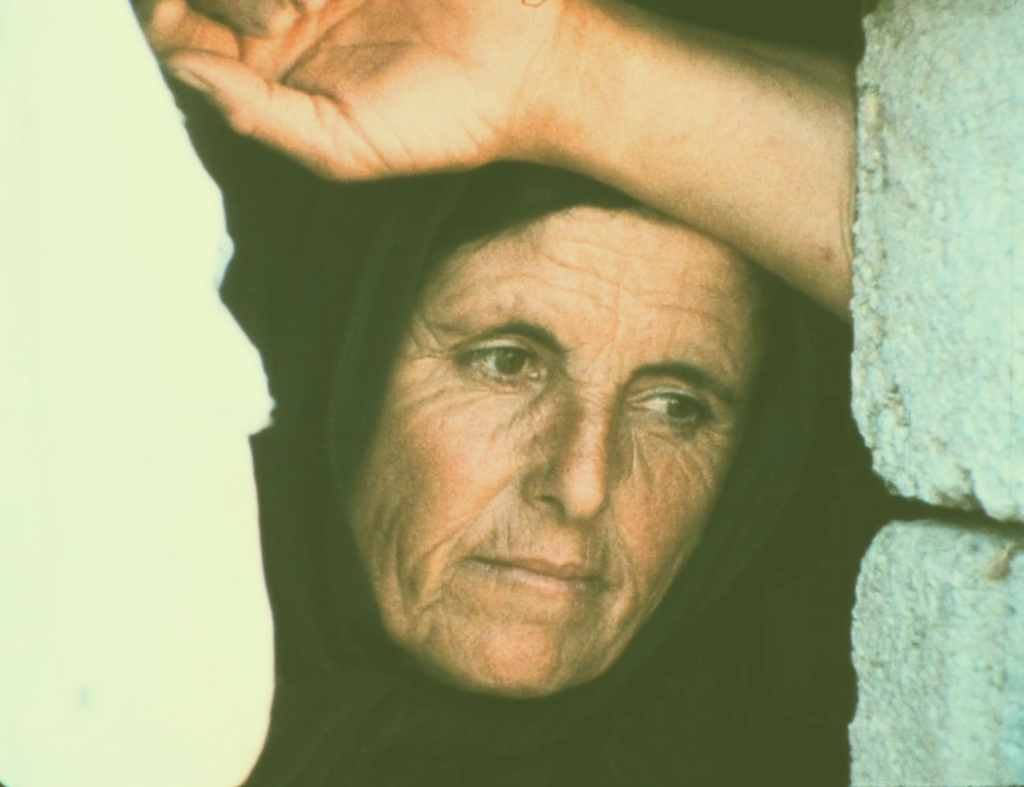
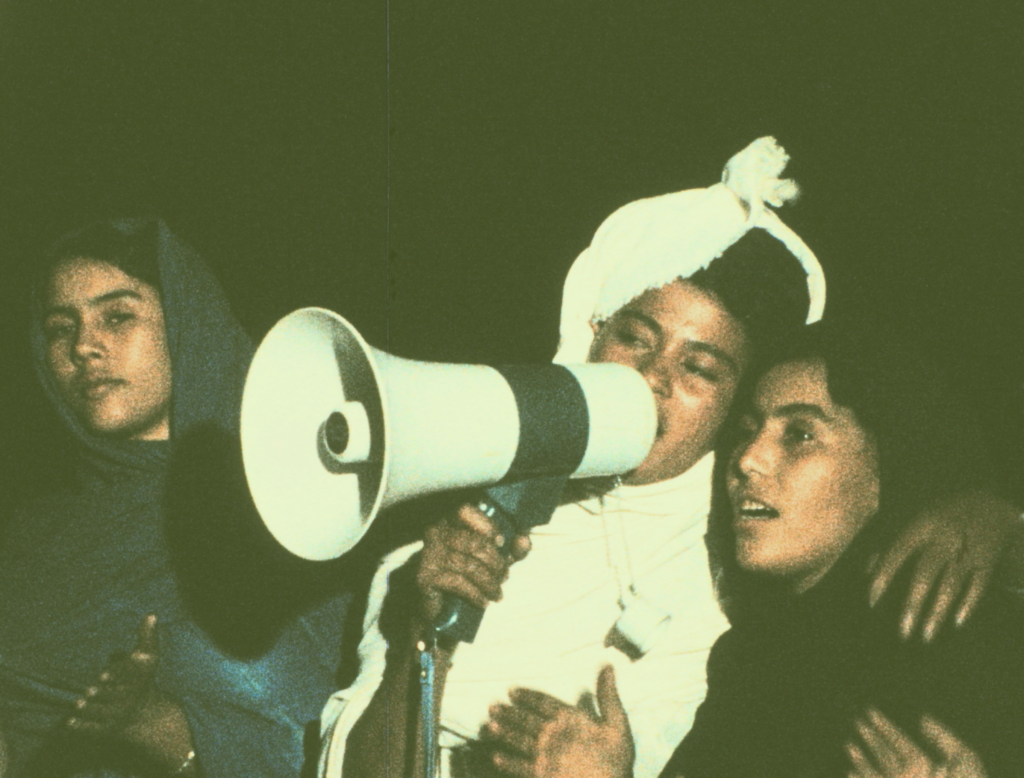
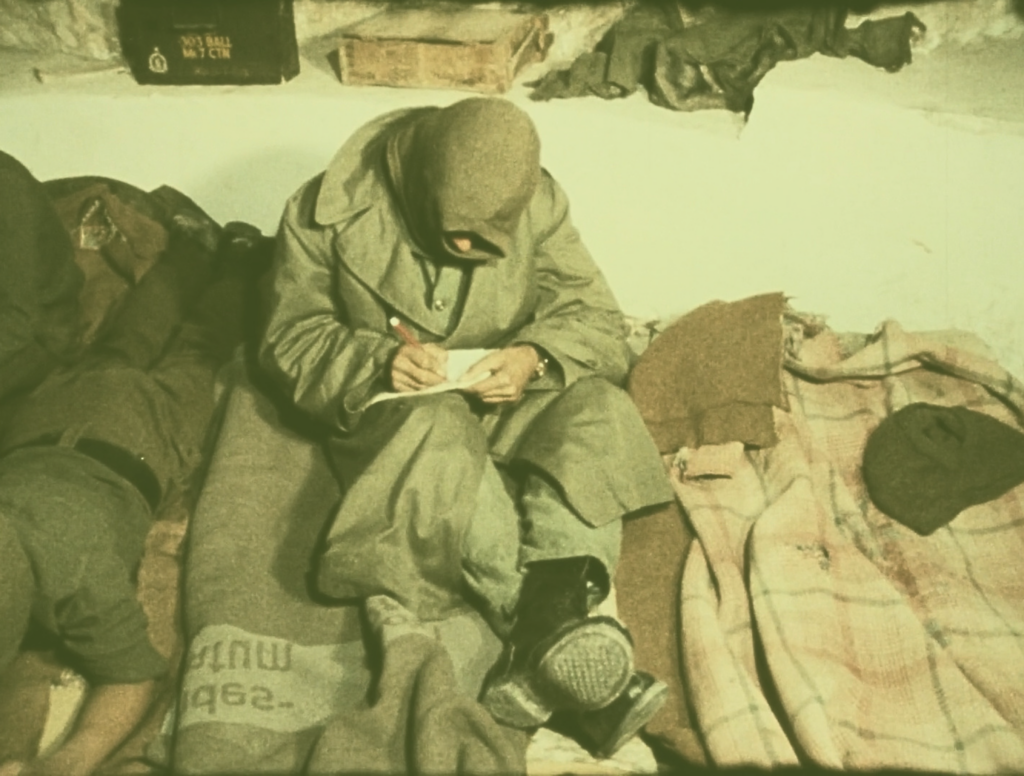
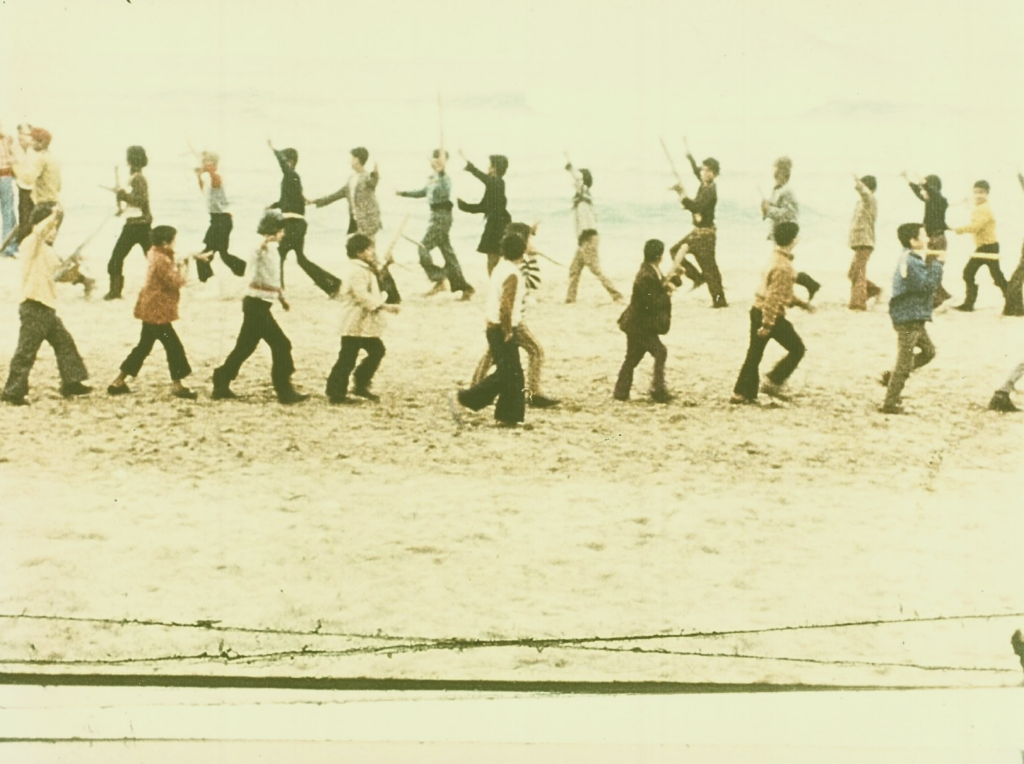
Finally, in 1982, her film The Ship of Exile followed the forced departure of Yasser Arafat and Palestinian fighters leaving Beirut by sea, capturing the end of a chapter in Palestinian and Lebanese history. Then, a few weeks later, she made Beirut, My City: a more personal film in which the destroyed city becomes a mirror of a shattered memory, or even an obliterated memory.
This year marks a real turning point in Jocelyne Saab’s work, after the Israeli invasion of Lebanon, the siege of Beirut, the evacuation of the Palestine Liberation Organisation and the Sabra and Shatila massacres carried out by the Phalangists. More than mere accounts of the war, these two documentaries explore the disappearance of places, the erasure of histories, exile, and the traces of destruction left on the landscape and the human body. They also announce the evolution of Jocelyne Saab’s filmmaking towards images that no longer merely document events, but which also seek to represent and preserve what history risks overlooking.
1975-198204
1985 3/9
198501
After a decade spent documenting conflicts in Lebanon, Syria, Libya, Palestine, Kurdistan, Egypt, Iran and Western Sahara, Jocelyne Saab felt the need to redefine her relationship with the camera. The documentary images accumulated since 1975 have helped to preserve traces of a history in the making, but they also reach their own limits when confronted with the most intimate experiences of war. Having filmed destruction, death and resistance for nearly ten years, Jocelyne Saab now seeks to capture what survives the war: emotions, desires, dreams and the yearning for freedom.
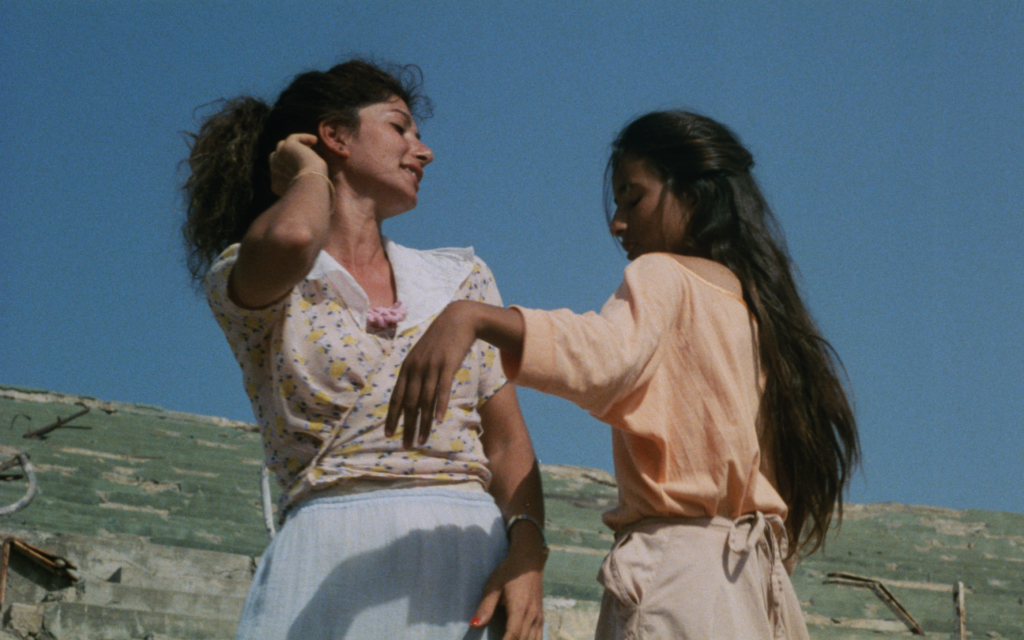
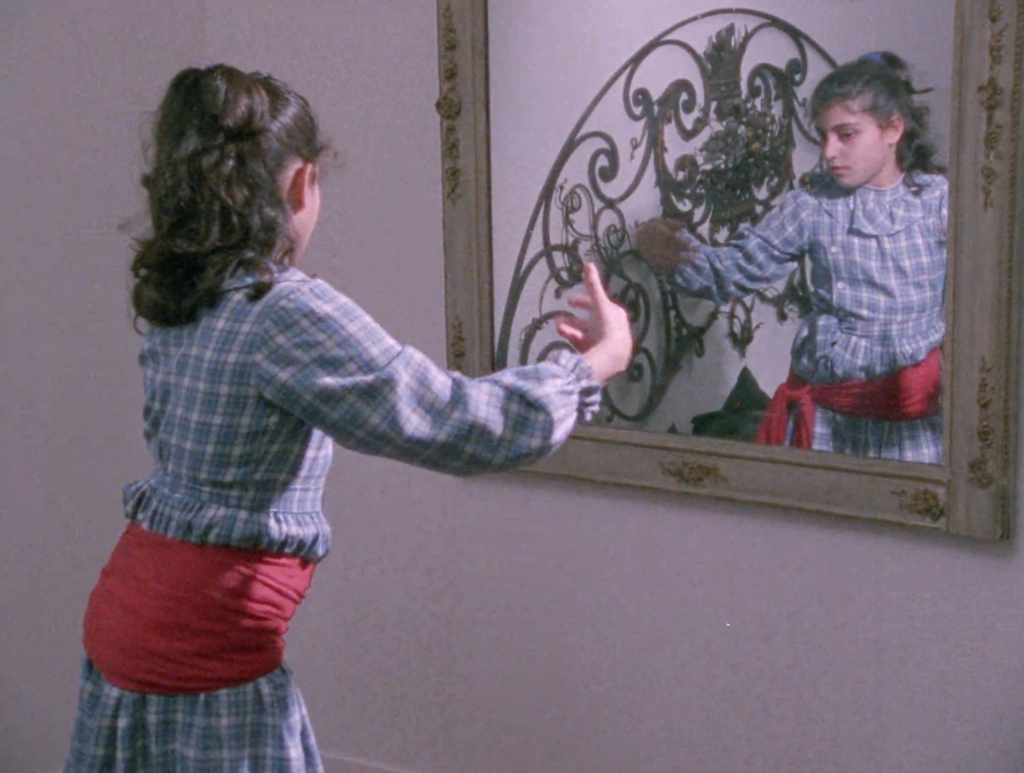
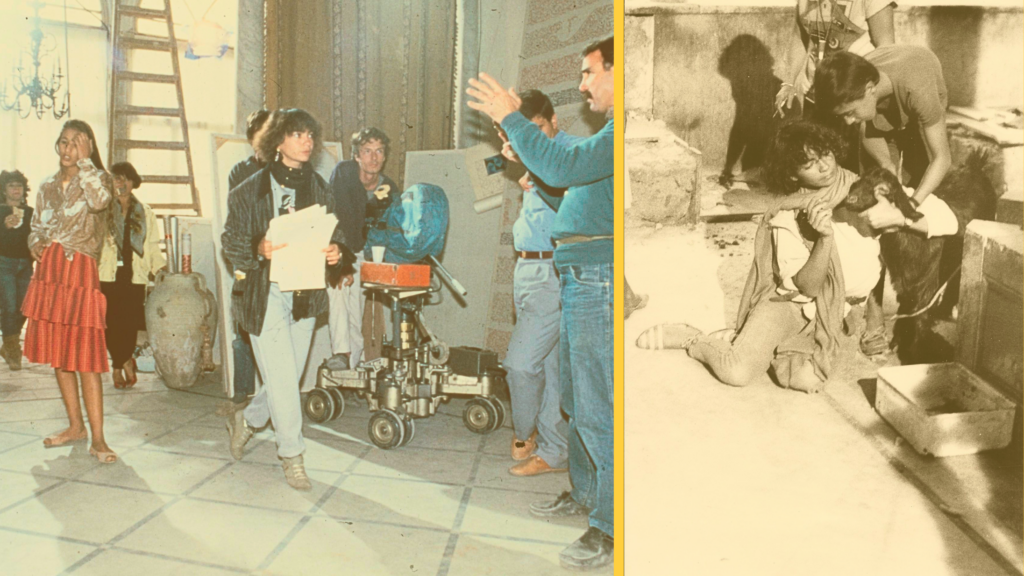
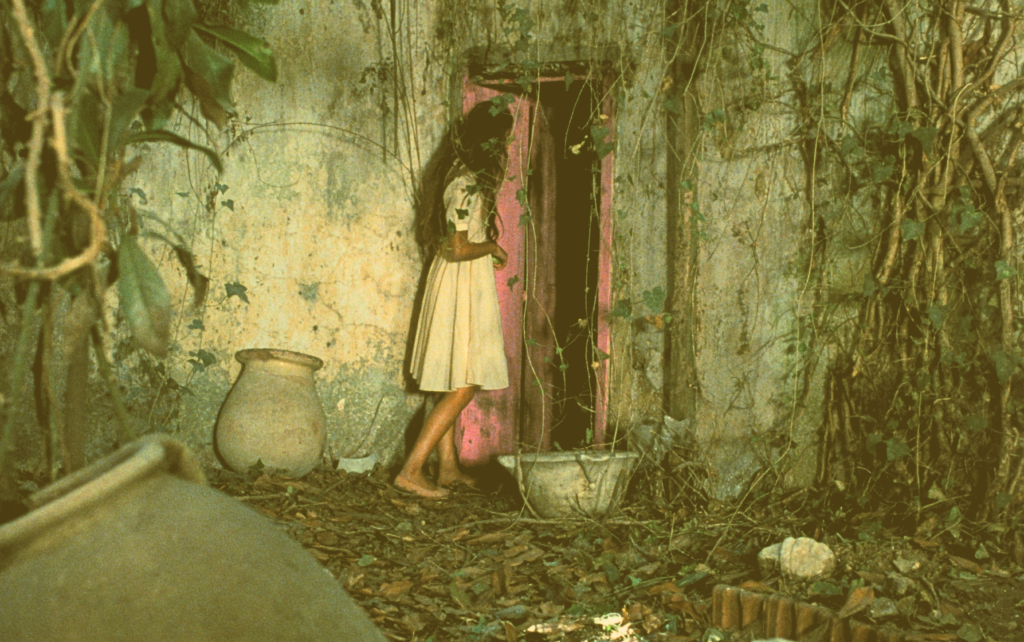
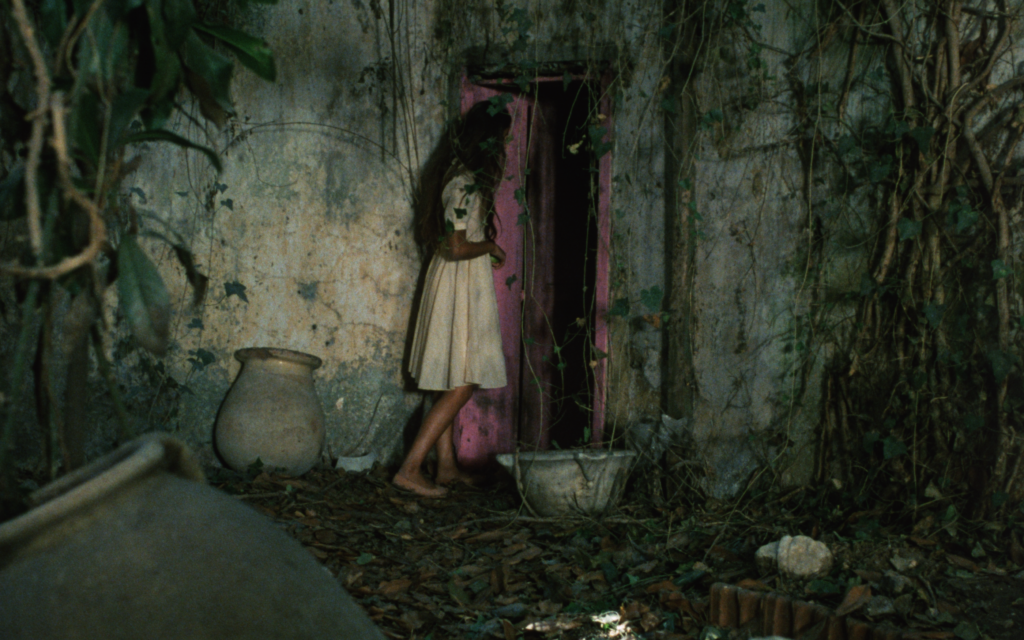
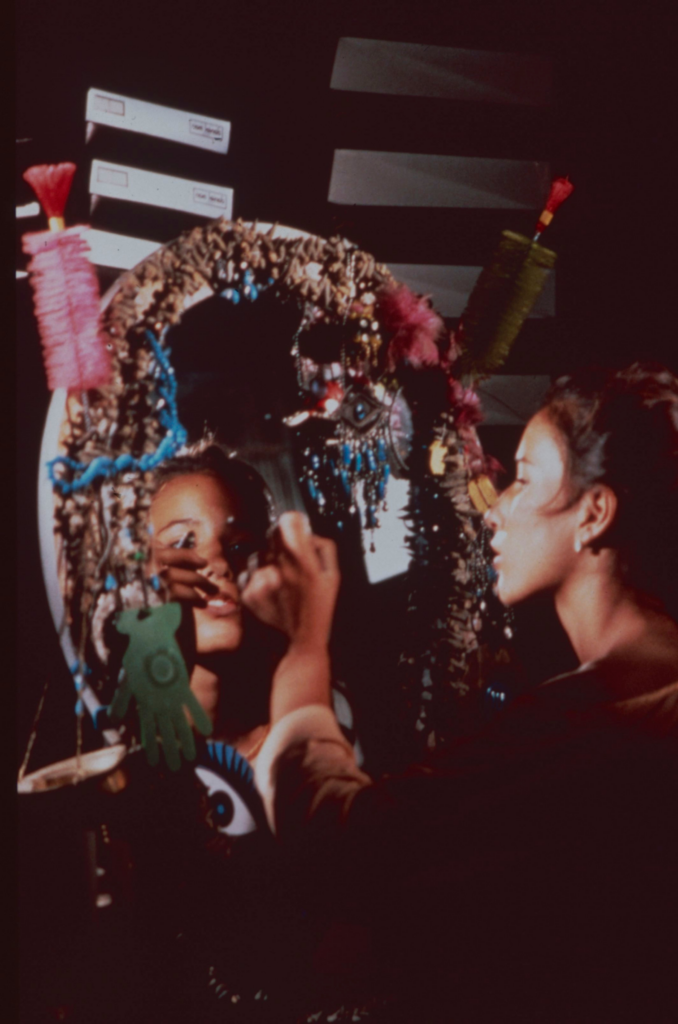
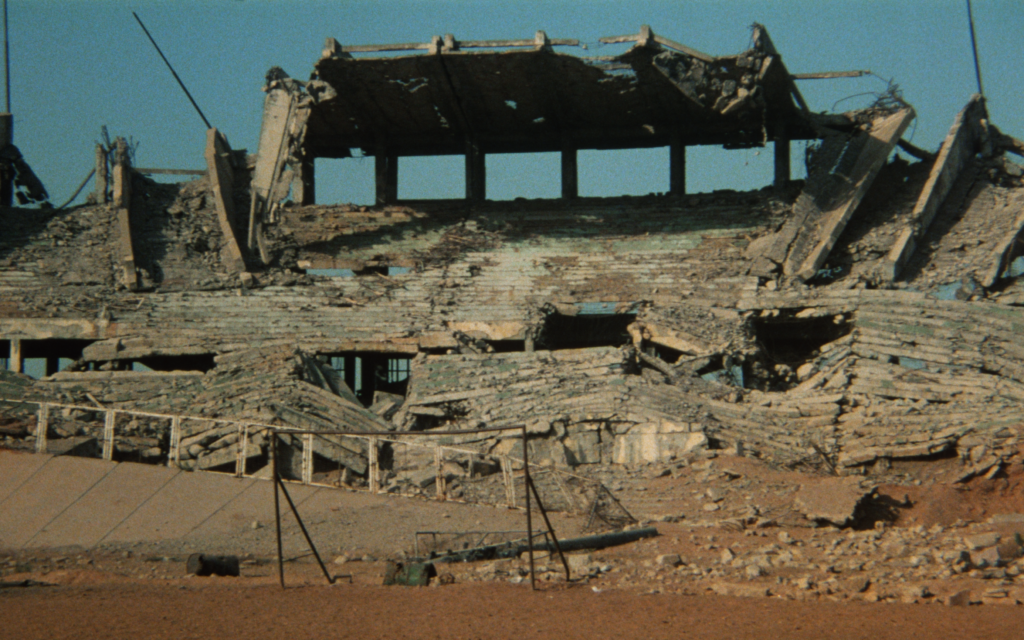
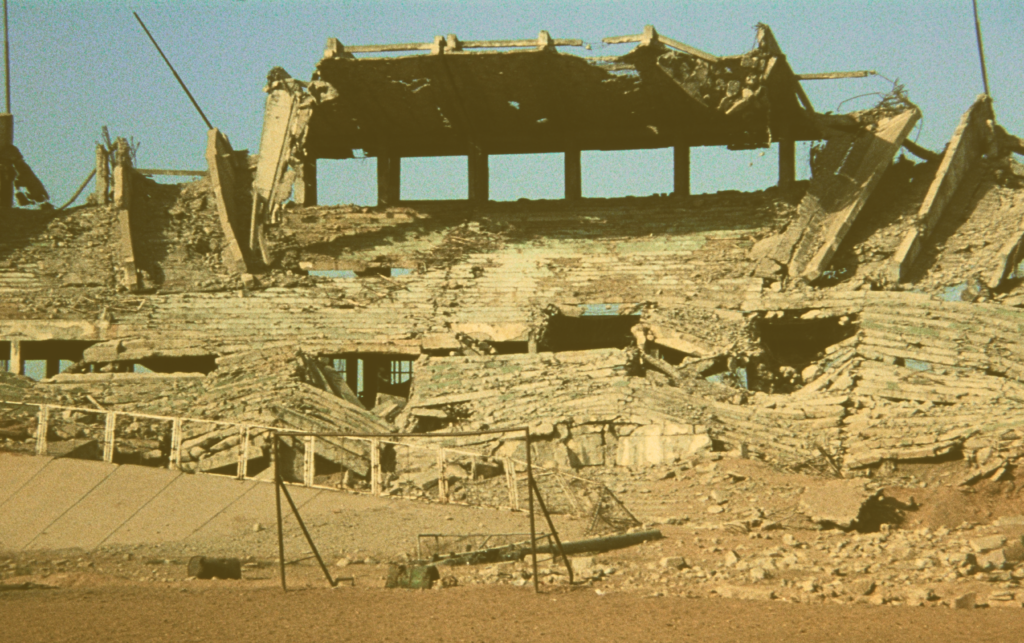
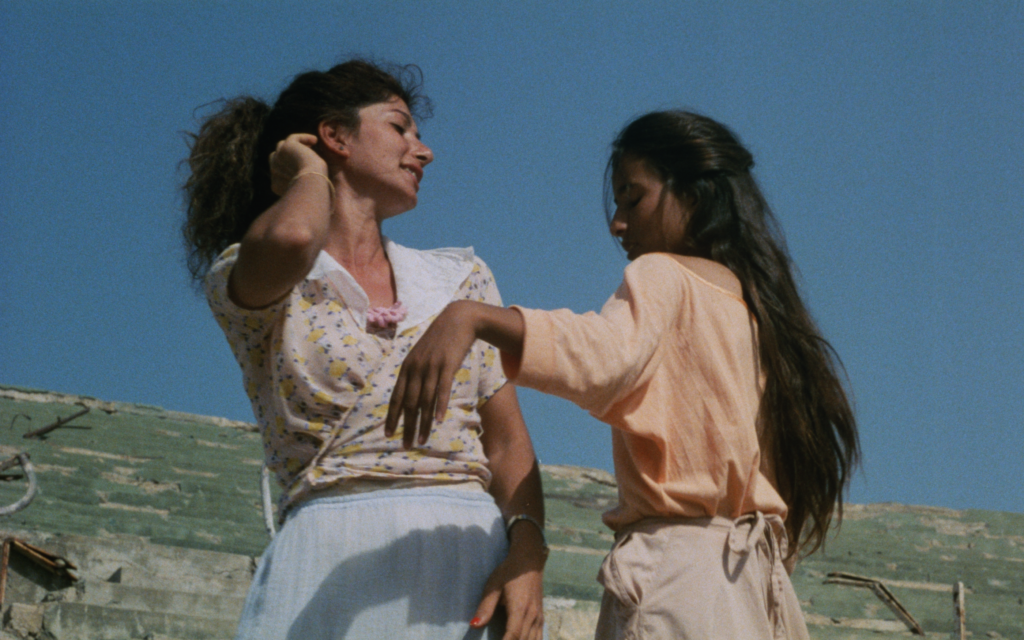
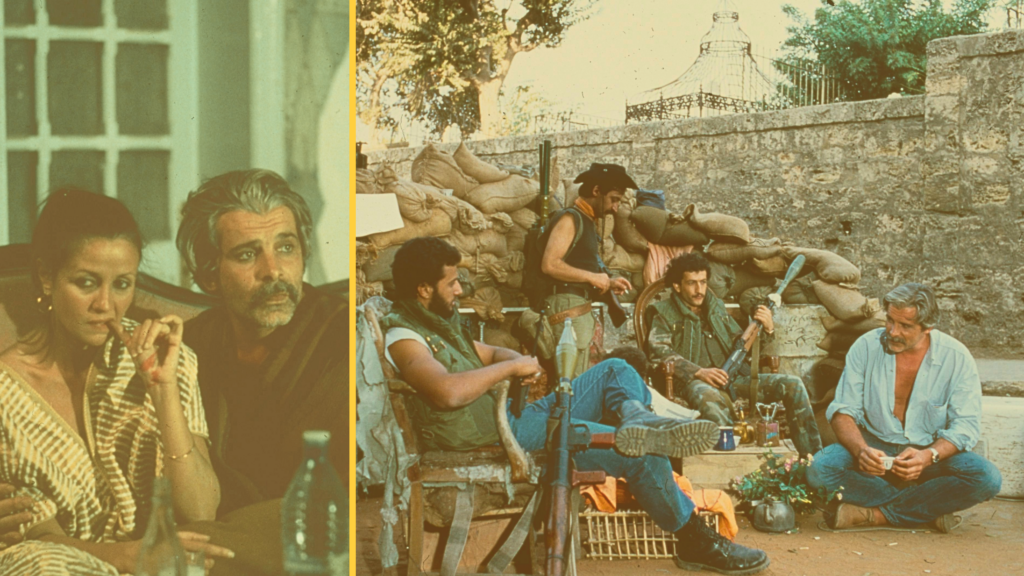
Her first feature-length fiction film Ghazl al-Banat (1985), was shot in Beirut — at a time when the country was still deeply scarred by the civil war — amidst the ruins, making them not a staged set but a testament to a land ravaged by conflict. Thus, Jocelyne Saab does not break with the documentary form; rather, she extends its inquiries by seeking a form that can grasp the sensitive and imaginary dimensions of history; a form that can reconstruct memory through the image.
198502
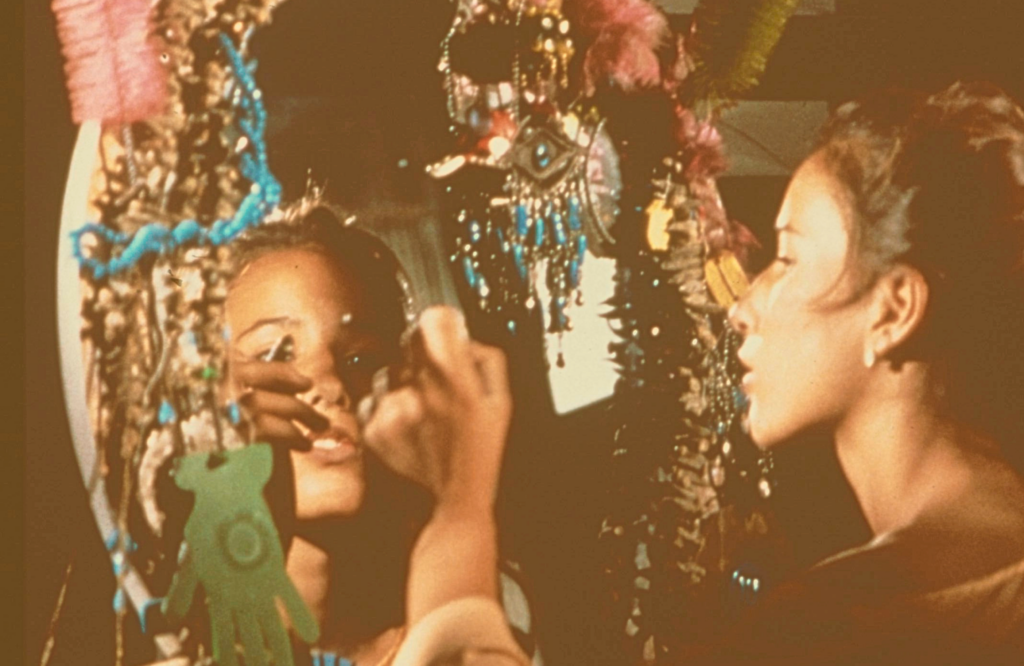
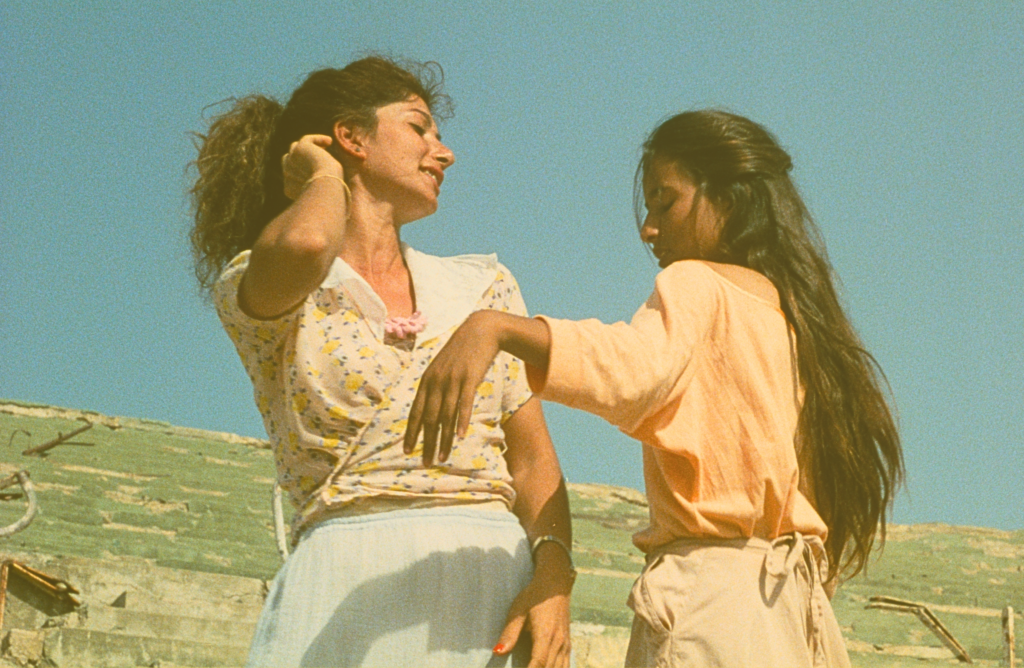
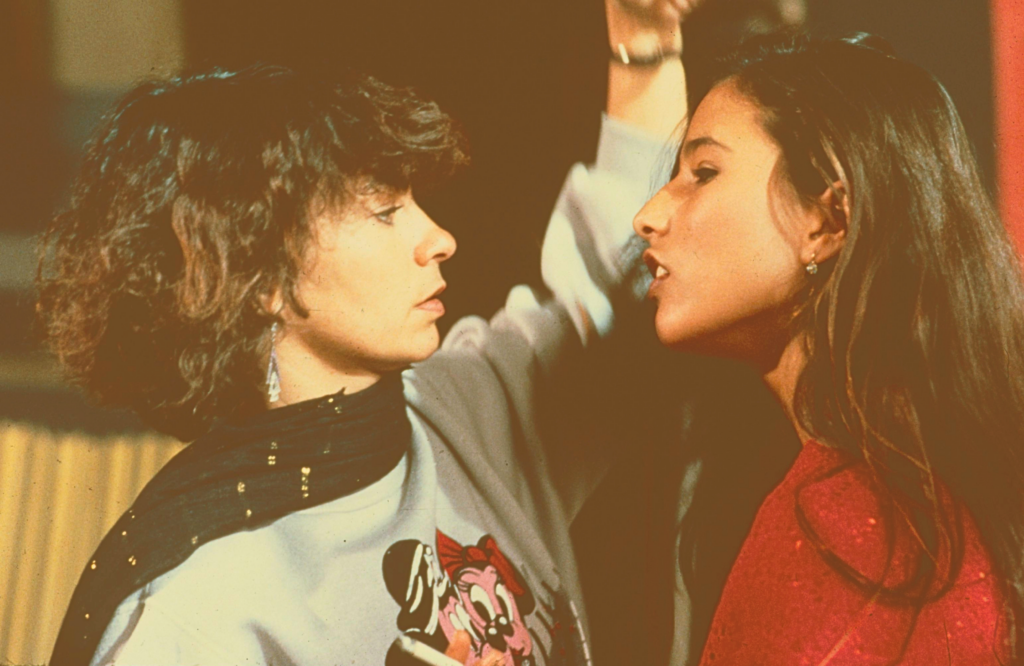
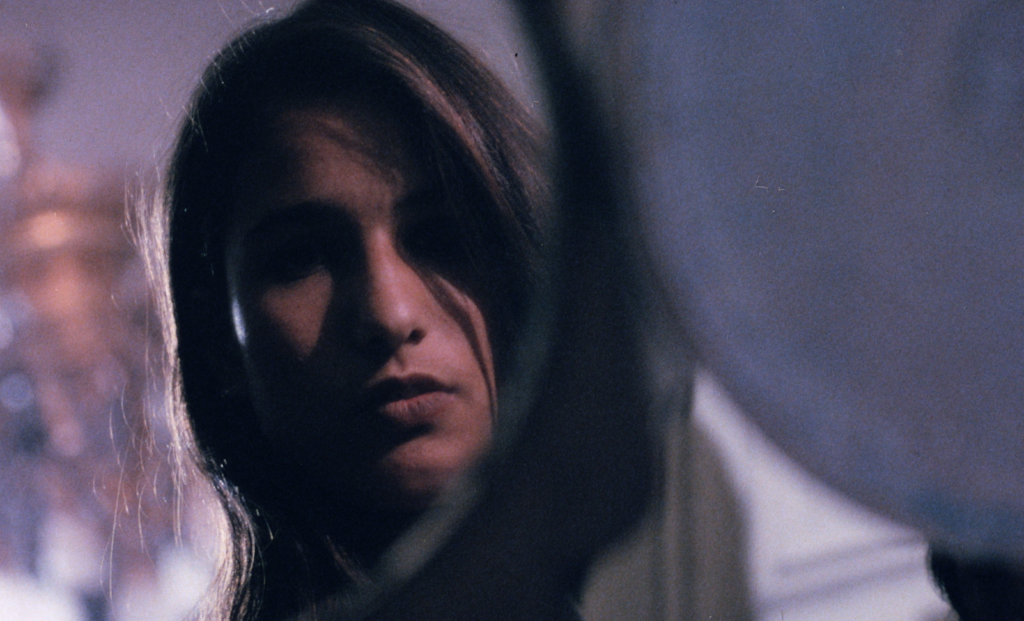
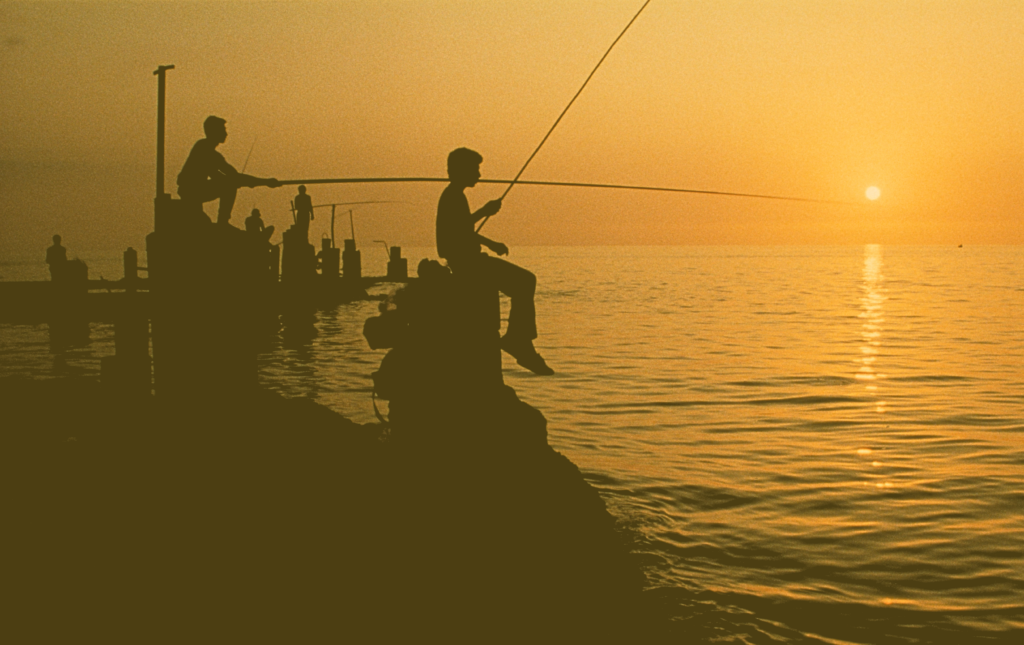
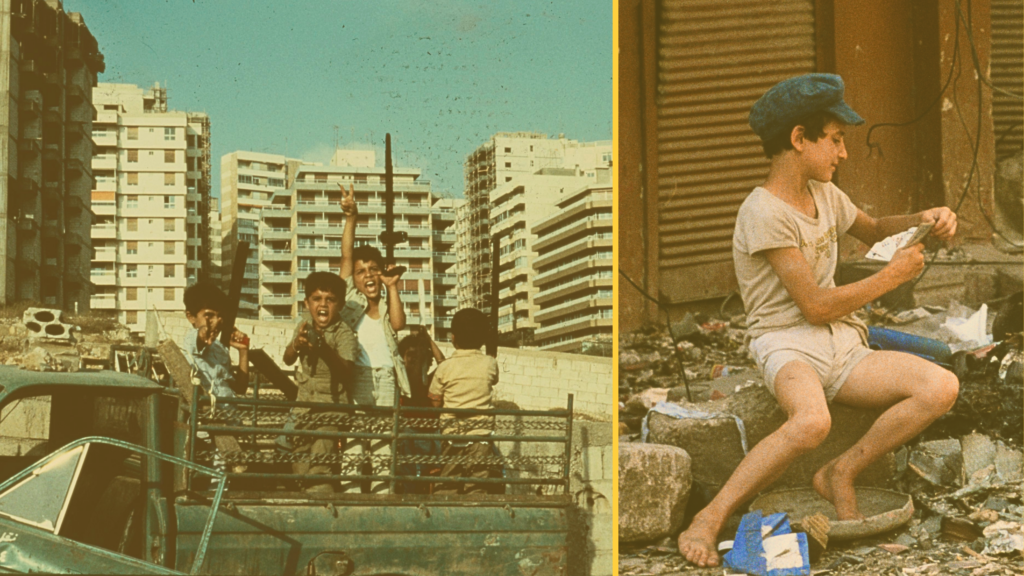
Through the story of a teenage girl discovering ways to assert her independence in a fragmented Beirut, Ghazl al-Banat offers a glimpse into a generation born into war, whose paths are forged amidst dividing lines, gutted buildings and absences. The film was screened at the “Quinzaine des Réalisateurs” section of the Cannes Film Festival in 1985, and marked a decisive step in the international recognition of Jocelyne Saab’s cinematic work.
By choosing a young girl as her main character, Jocelyne Saab continues to focus on childhood in the face of conflict, whilst opening up her filmmaking to new questions relating to the female body. She also continues to reject sensationalist portrayals of war, filming young people who carry on loving and dreaming despite the violence around them. True to her documentary style, she maintains a mobile camera that remains attentive to gestures and the presence of people.
198503
In Ghazl al-Banat, fiction serves to further explore the traces left by history, the lingering effects of war, and the possibilities for transmission offered by cinema. Beirut is no longer merely the setting for these events: the city becomes a character, shaped by the memories, wounds and aspirations of its inhabitants.
The film demonstrates the renewal of Jocelyne Saab’s cinematic language — which would gradually come to straddle the boundaries between documentary, fiction and the visual essay — based on a conviction that would remain with her until the end of her life: certain truths about war can only be conveyed through fiction, because images serve not only to document events, but also to preserve that which endures beyond history.
198504
1986-1989 4/9
1986-198901
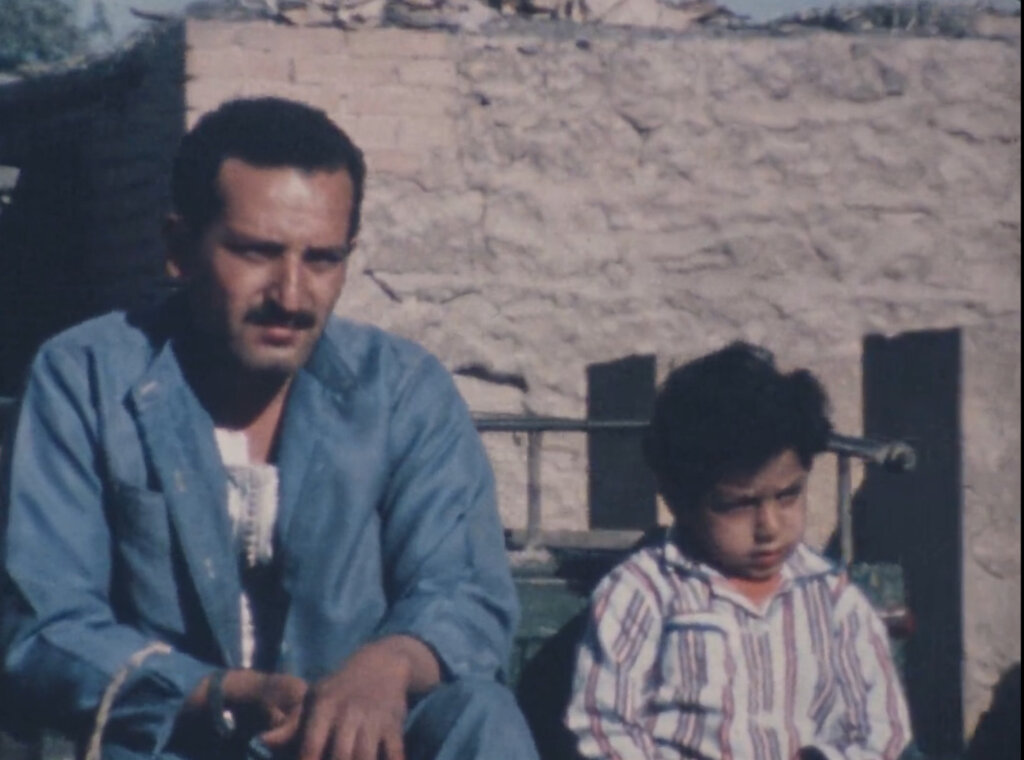
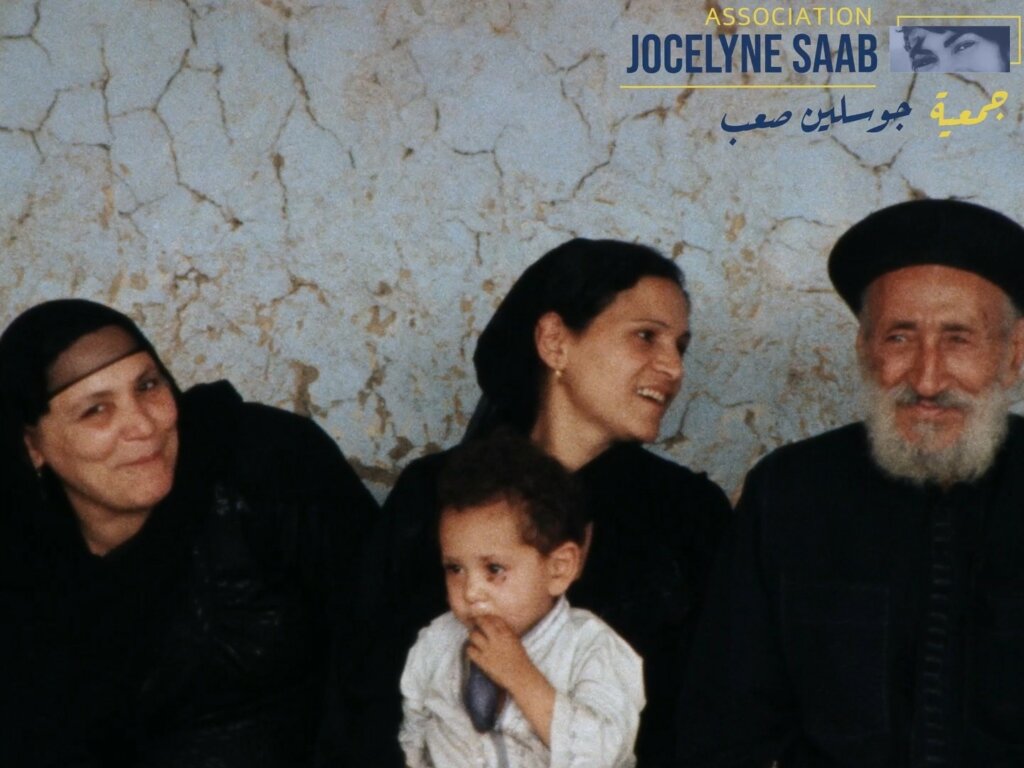
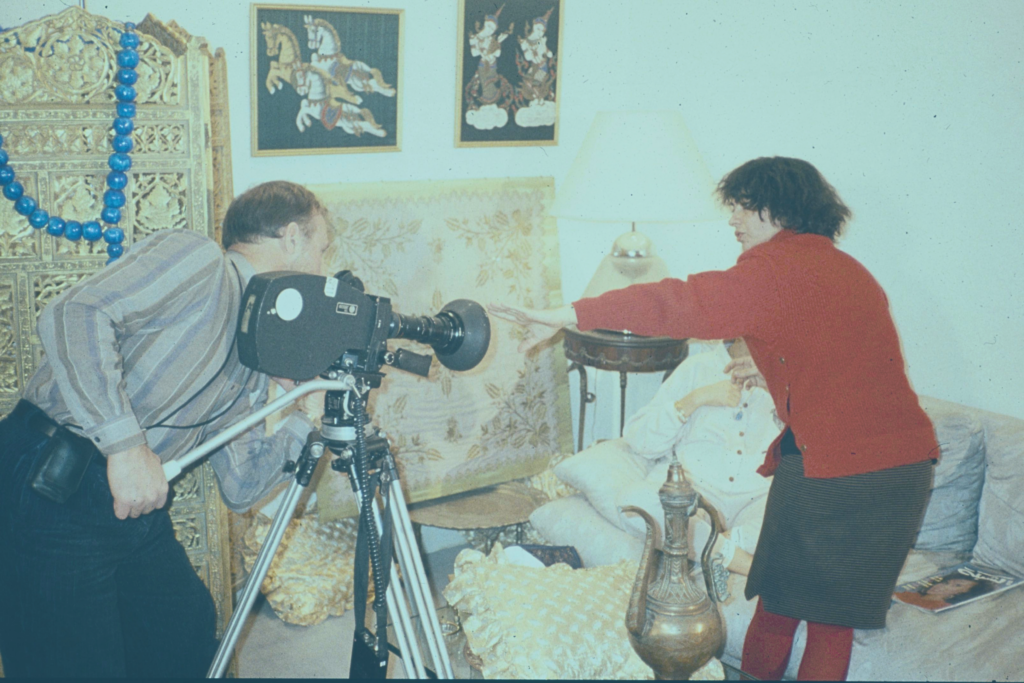
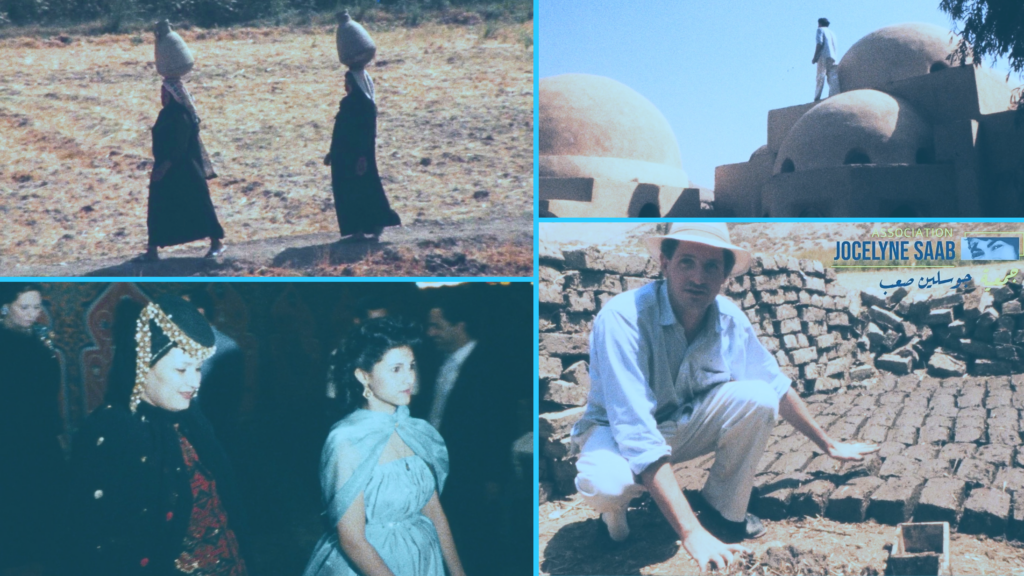
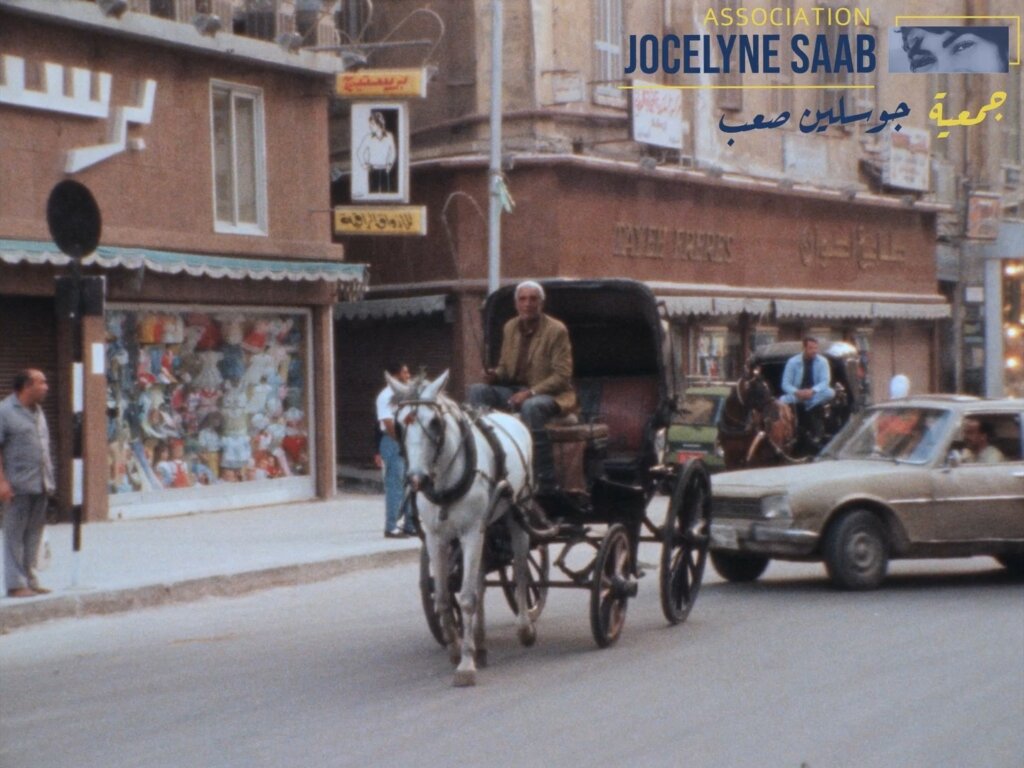
Jocelyne Saab’s return to Egypt in 1986, after seven years of being barred from the country, marked the opening of a new chapter in her work. This time, her focus was no longer on the urgency of current events, but on what constitutes the very heart of a society: the transmission of its beliefs, its skills, its folk traditions, its architecture, its cultural heritage and its collective memory. Commissioned by Antenne 2, the documentary series Egypte…Egypte? bears witness to this transition. In it, Jocelyne Saab adopts a sensitive approach to history through the places, customs and communities that continue to shape contemporary Egypt.
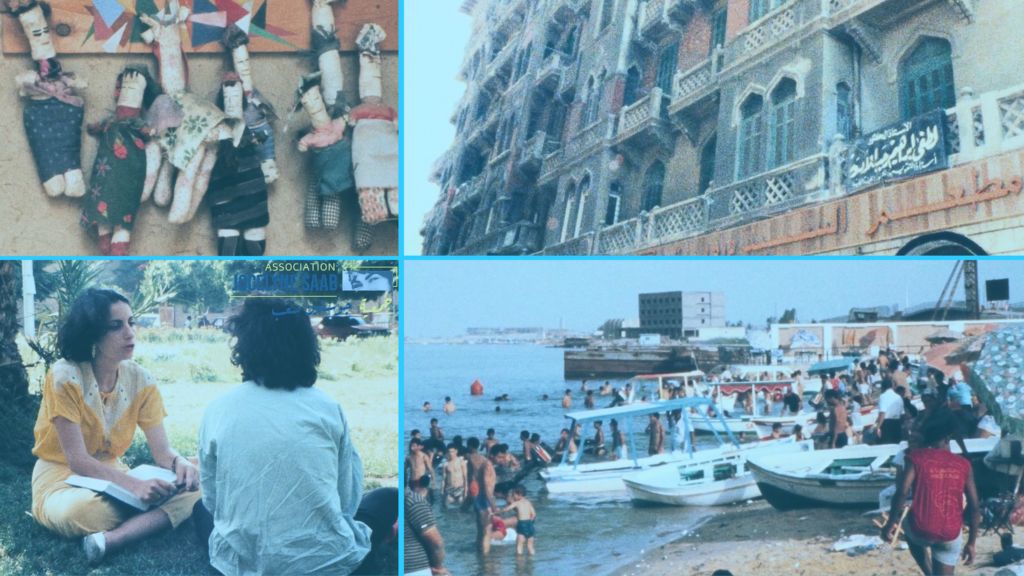
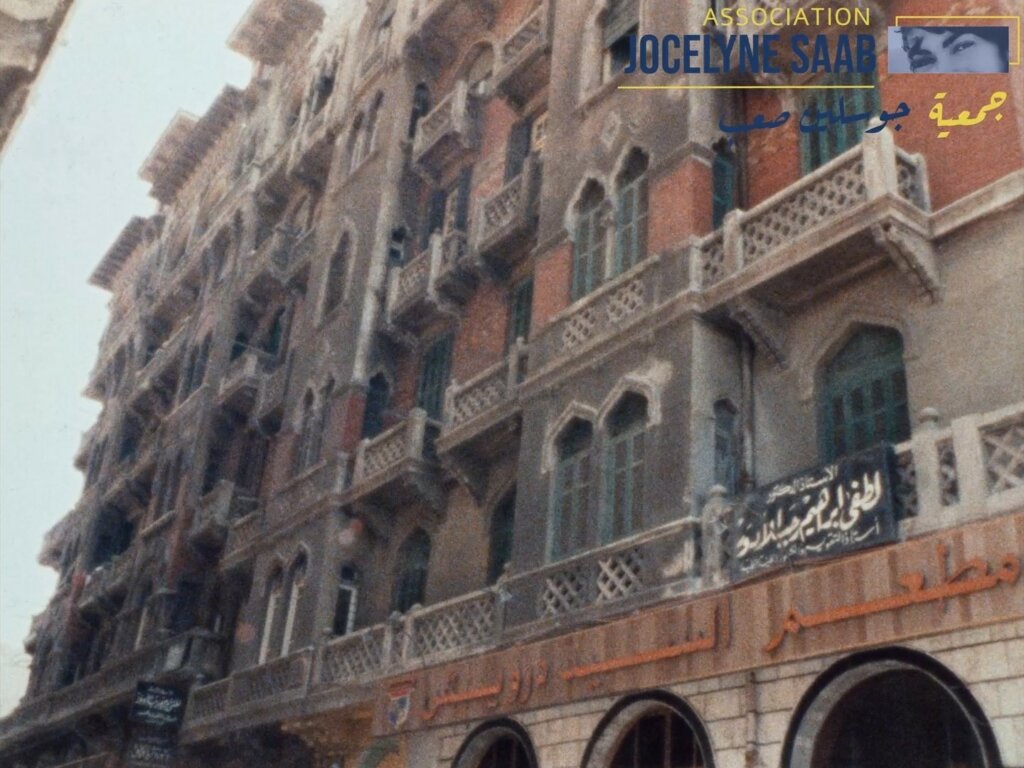
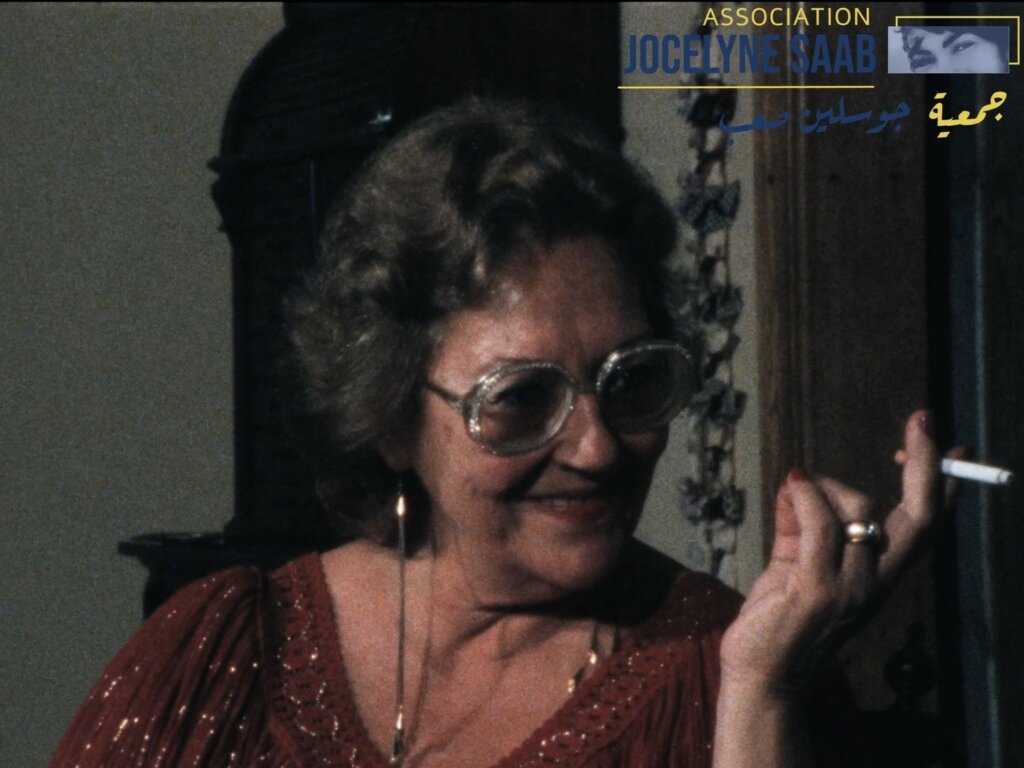
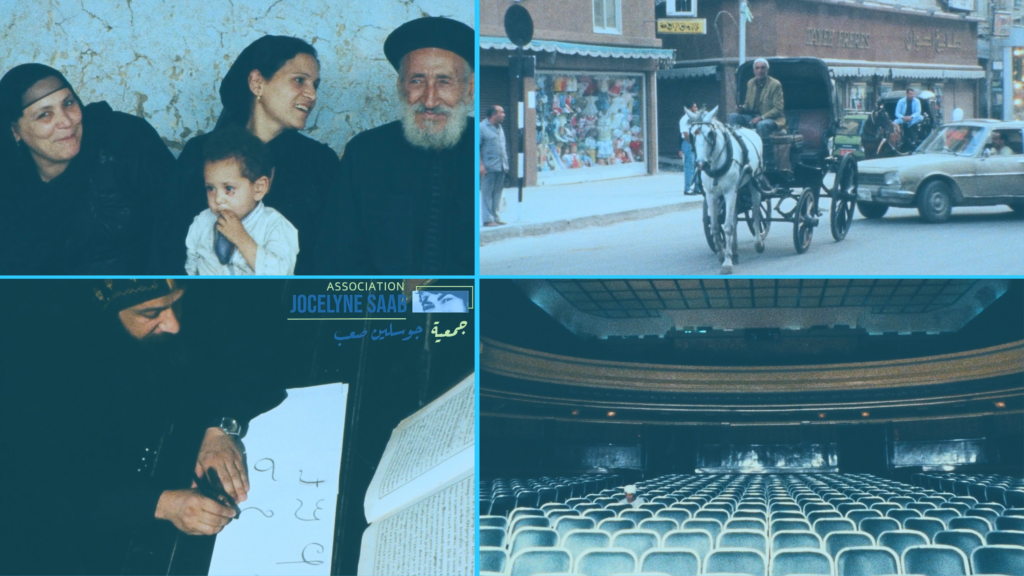
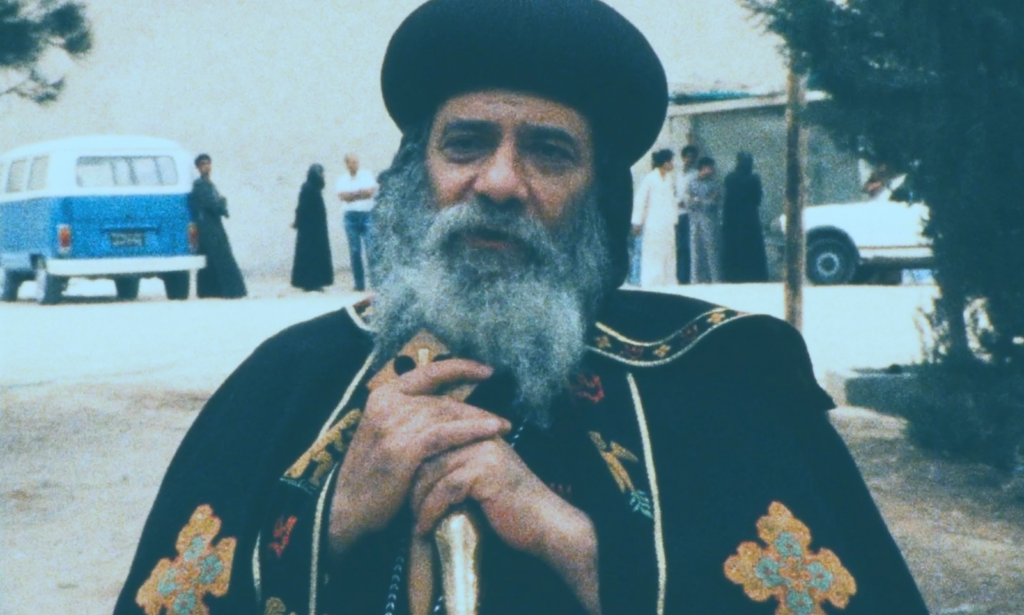
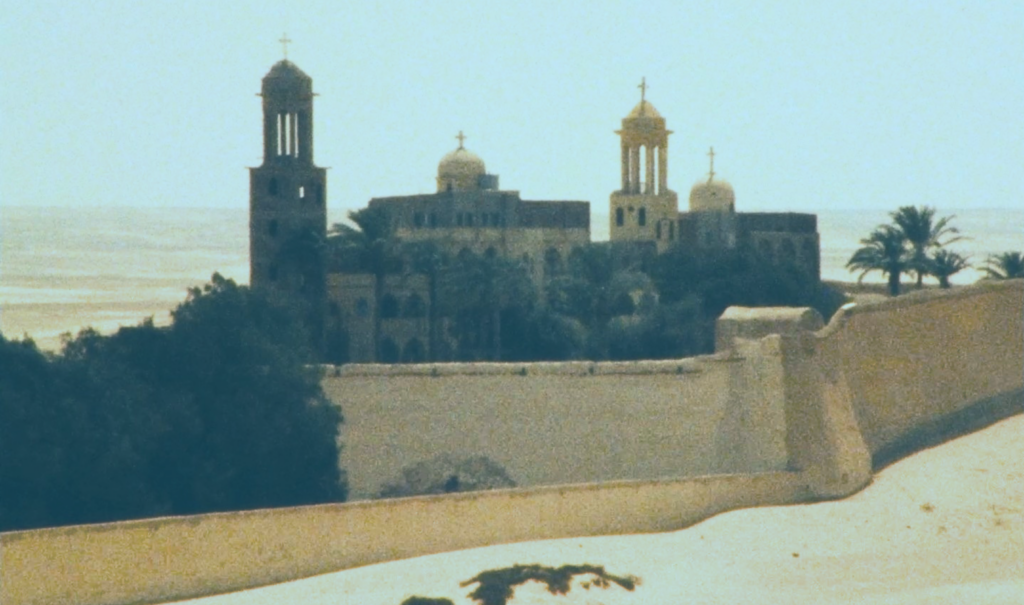
Comprising the documentaries Copts: Cross of the Pharaohs, Ghosts of Alexandria, The Love of Allah and The Architect of Luxor, the series offers an exploration of Egypt’s cultural geography. Indeed, each film highlights an identity, a territory or a way of inhabiting the world, through a series of encounters and journeys. In this way, Jocelyne Saab reveals an Egypt shaped by Mediterranean exchanges, ancient heritage, traditional customs and contemporary changes, all of which are embodied in its people, cities, buildings and social practices.
1986-198902
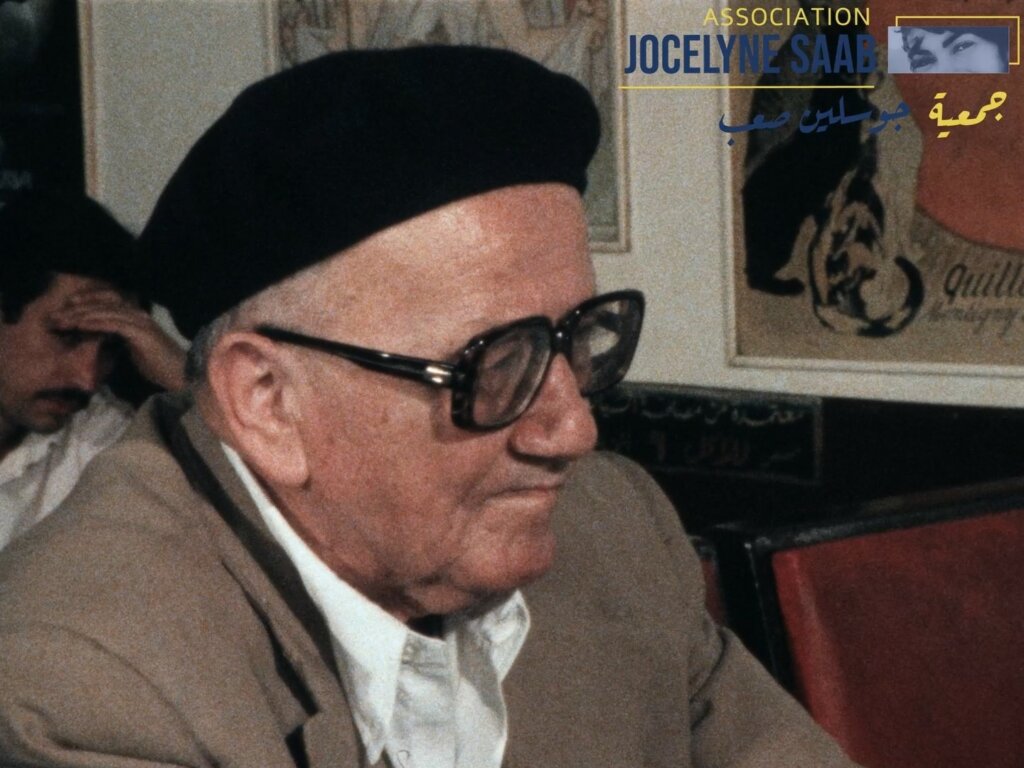
The four films reveal realities rarely depicted in Egyptian cinema and television of the 1980s. Coptes gives a voice to the oldest Christian community in SWANA and conveys the richness of its rituals, its heritage and its place in Egyptian history. Ghosts of Alexandria traces the legacy of a cosmopolitan city whose memory remains etched in its neighbourhoods, architecture and stories. While The Love of Allah examines the growing role of religion in public life and in people’s lifestyles following the socio-political upheavals of the 1970s in Egypt.
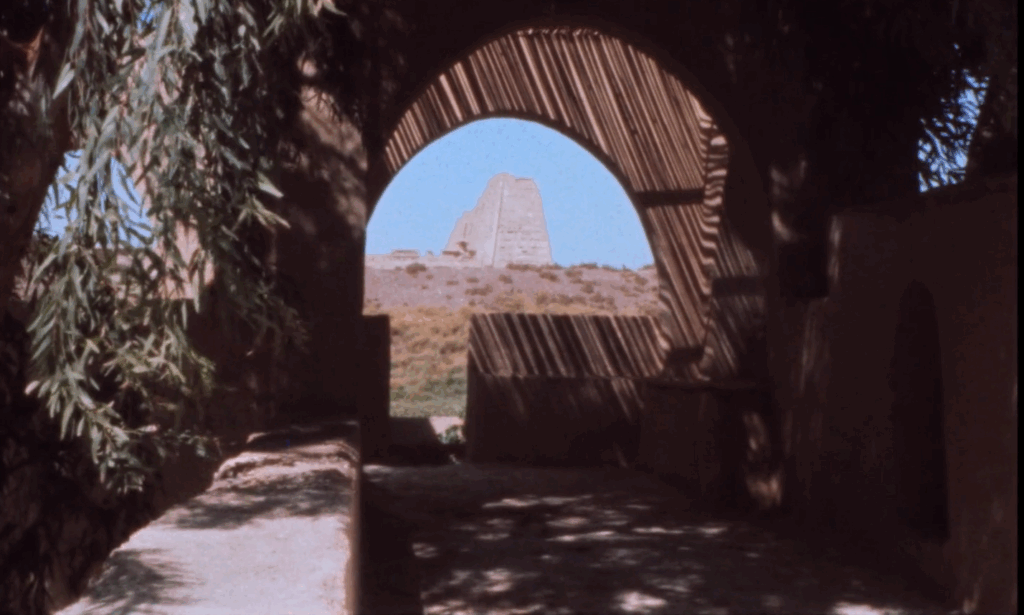
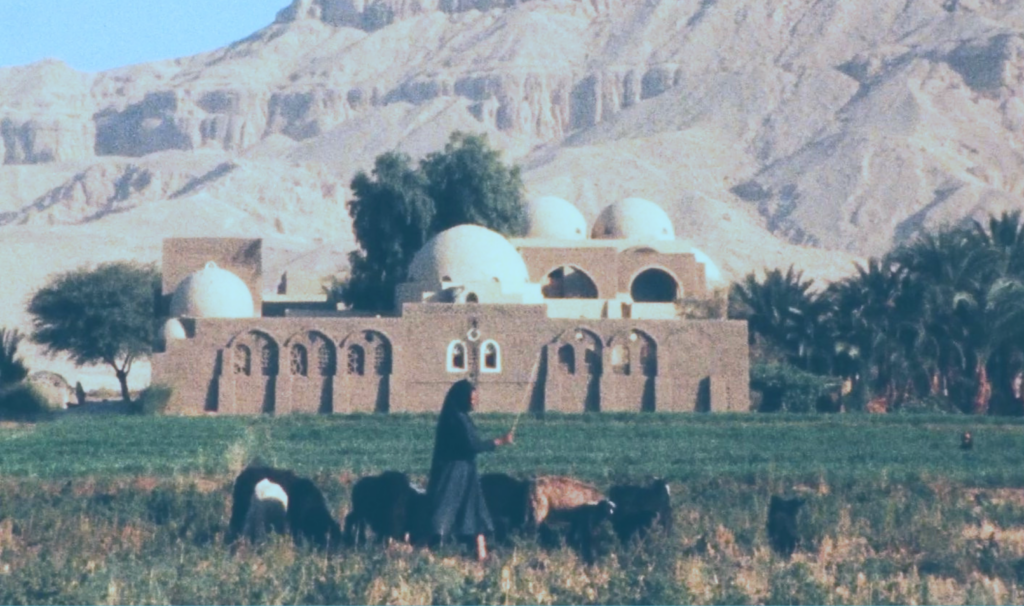
In The Architect of Luxor, Jocelyne Saab follows Hassan Fathy, a leading figure in 20th-century Egyptian architecture, nicknamed ‘the architect of the poor’. His work with local materials, vernacular techniques and architecture designed to meet the needs of residents echoes the filmmaker’s own focus on forms of creativity rooted in their local context. Through these four documentaries, Jocelyne Saab demonstrates that modernity can emerge from a dialogue between living heritage and innovation, where other forms of creativity develop on the fringes of dominant cultural models.
1986-198903
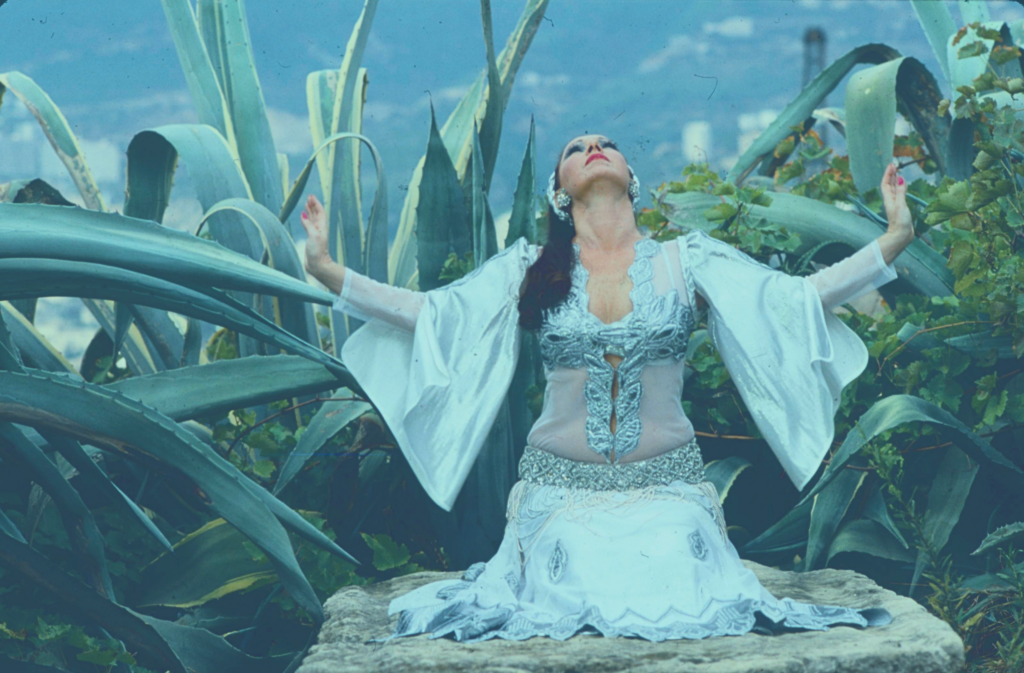
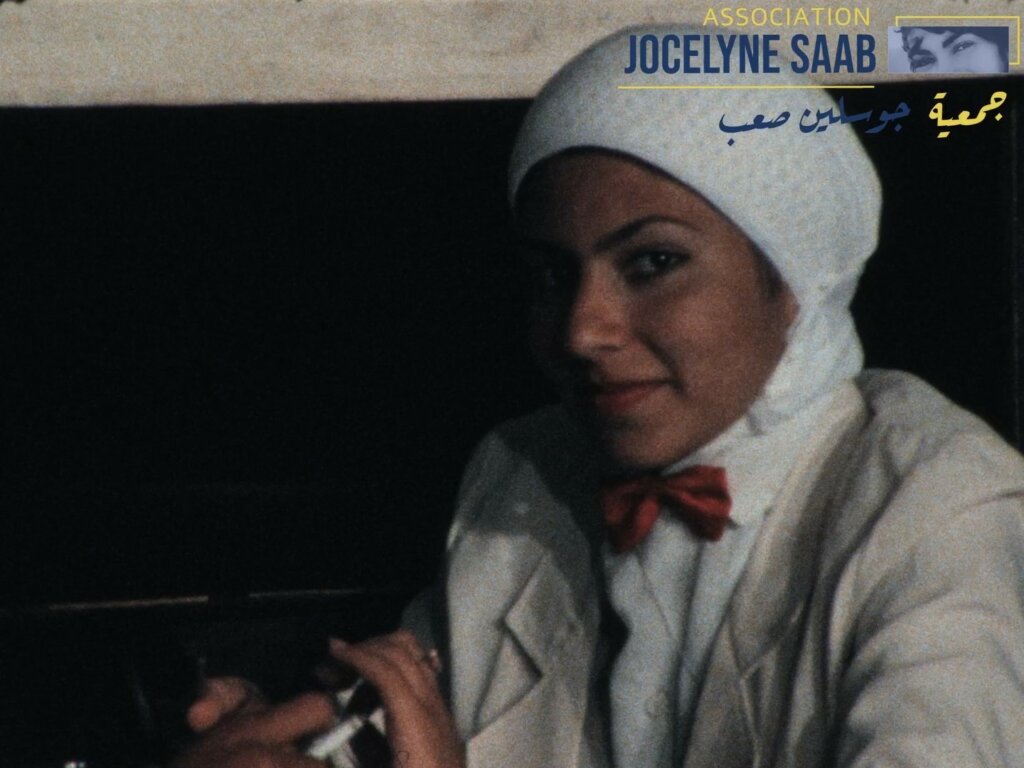
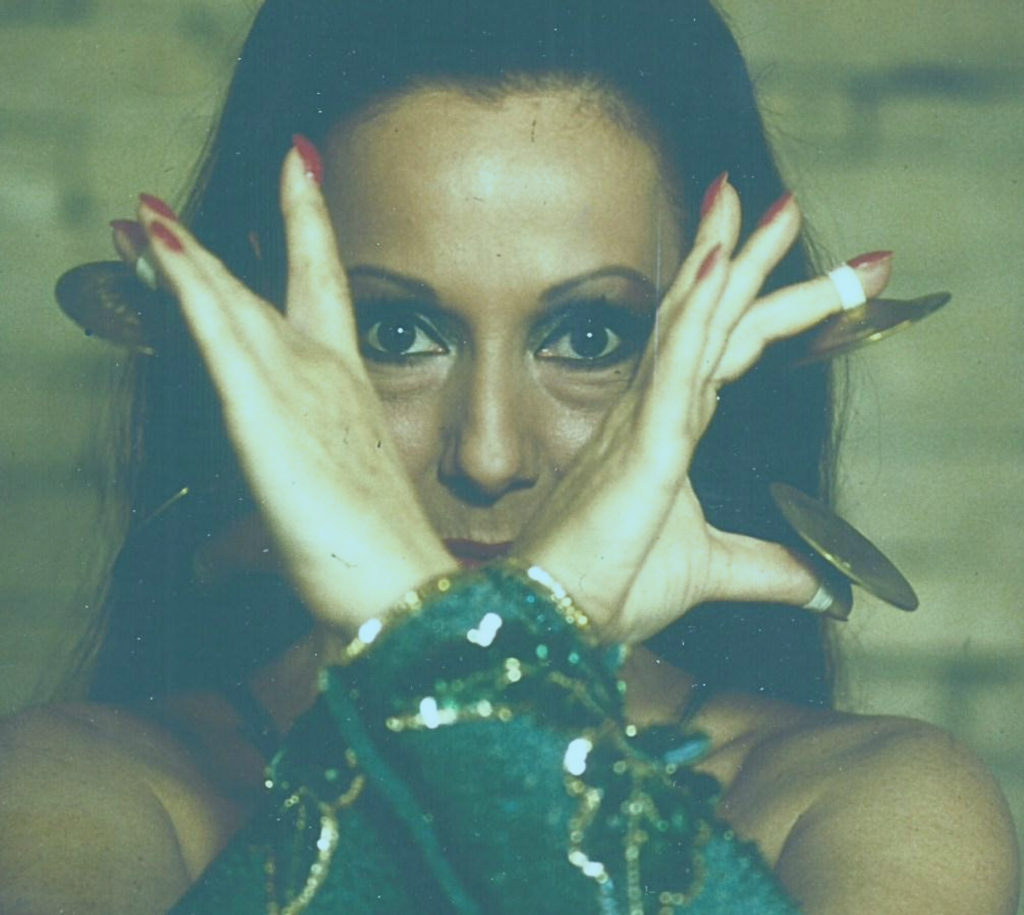
Jocelyne Saab continued this exploration of Egyptian cultural practices by directing Belly Dancers in 1989. Rather than filming belly dancing as a show intended for Western audiences, she focused on the women who practise it, their life stories, their training, their working conditions and their position in Egyptian society. The rehearsals, discussions, technical movements and stages are just as meaningful as the performances themselves, revealing dance to be a rigorous professional practice and a true cultural and artistic language.
In this documentary, the body expresses knowledge, discipline, a memory of movement and a collective history, passed down by those who embody it. In this way, Jocelyne Saab explores how certain practices are rendered invisible or disparaged, whilst revealing their essential role within Egypt’s cultural heritage. This focus on popular artistic expressions foreshadows the research she would go on to develop on the female body in Dunia (2005).
1986-198904
1988-1995 5/9
1988-199501
In the late 1980s, as the Taif Accords brought an end to fifteen years of civil war in Lebanon, Jocelyne Saab once again turned her attention to the lingering effects of the conflict: conflicting memories, wounds, societal transformations and the narratives that emerge in the aftermath of conflict. This period thus marked a significant shift in her work, which no longer sought merely to bear witness to history as it was being written, but to understand how it continues to inhabit individuals, bodies and the collective imagination, at a time when reconstruction is not merely a physical endeavour.
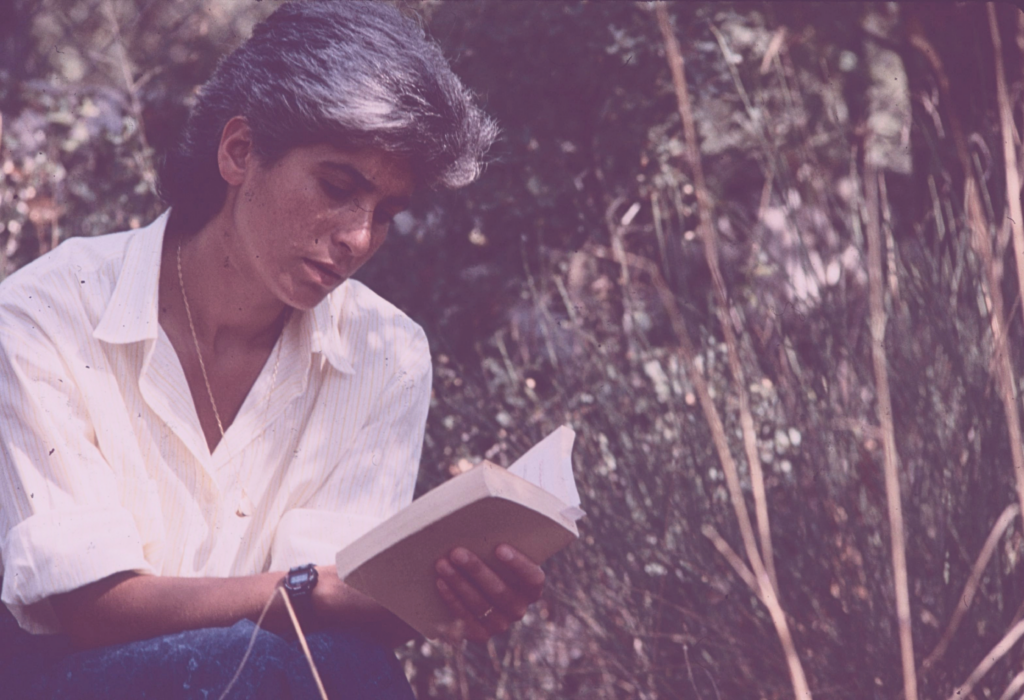
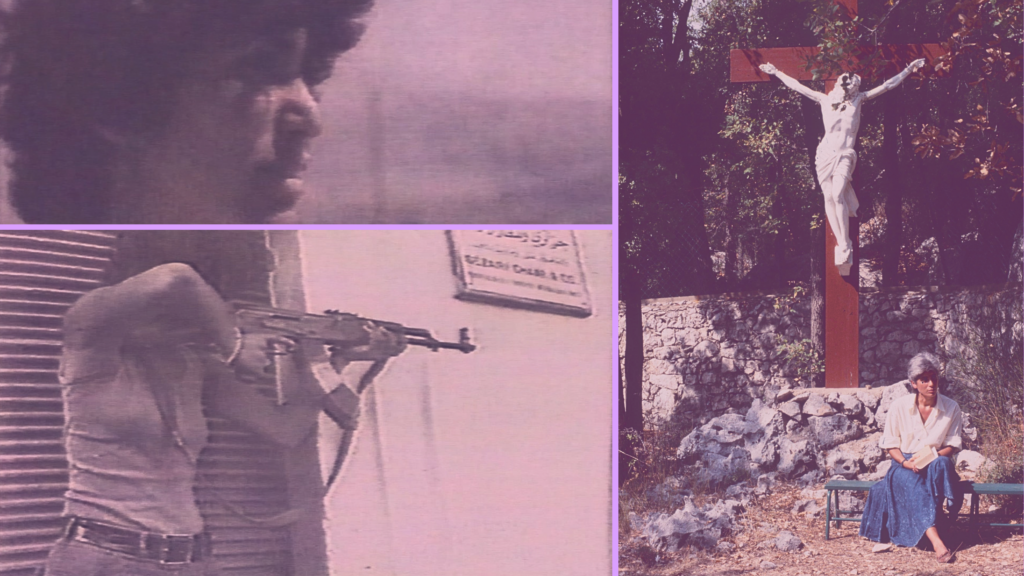
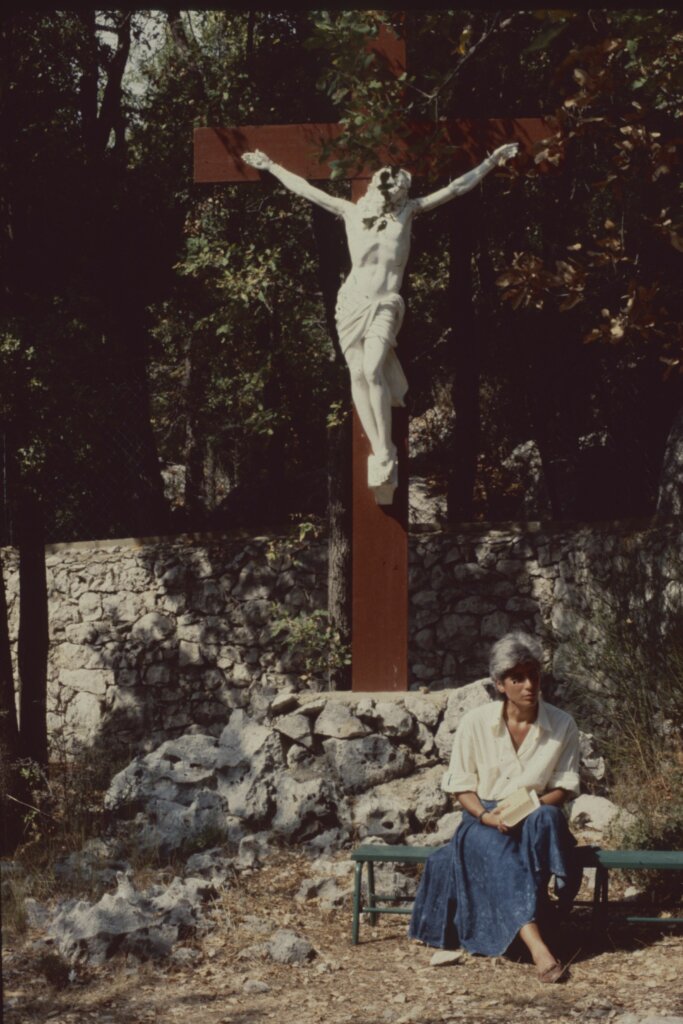
Made in 1988, the documentary La Tueuse paints a portrait of Jocelyne Khoueiry, a former figure in the Christian Phalangist militias, who took part in several armed operations during the civil war before withdrawing from political life to found a religious community. Rather than reconstructing her military trajectory, Jocelyne Saab explores the contradictions faced by a woman confronted with her own past, her convictions and her remorse. By giving a voice to a figure rarely portrayed in Lebanese cinema, she demonstrates that the country’s reconstruction also requires coming to terms with the complexity of individual memories.
1988-199502
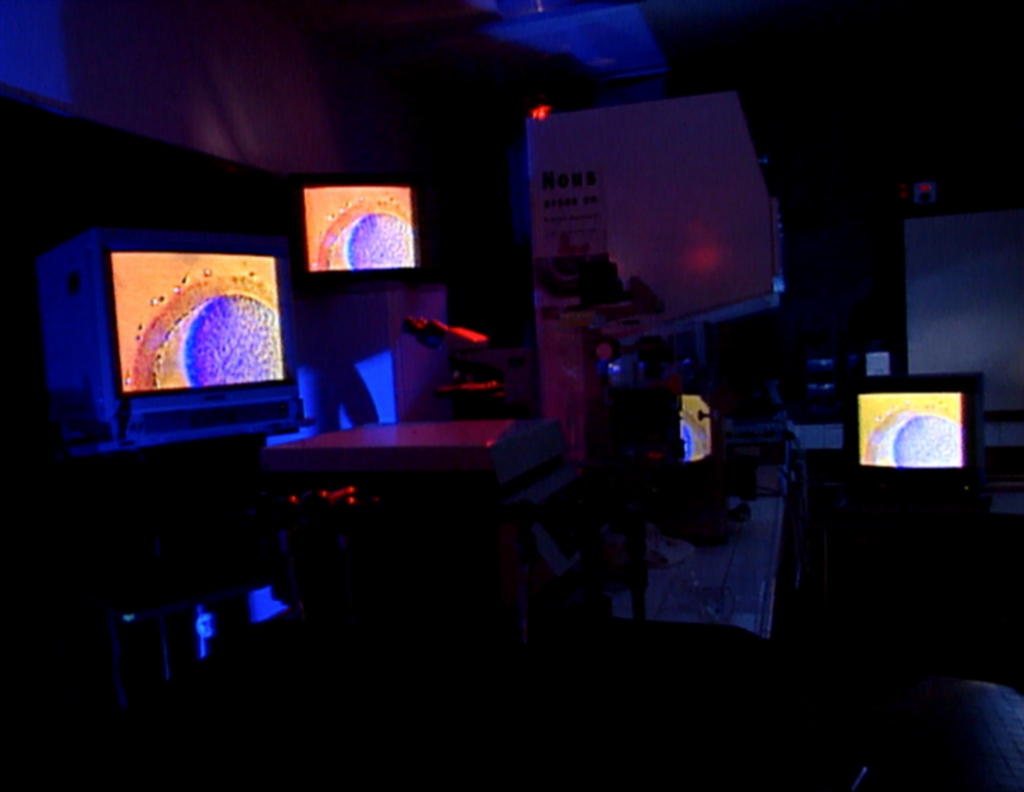
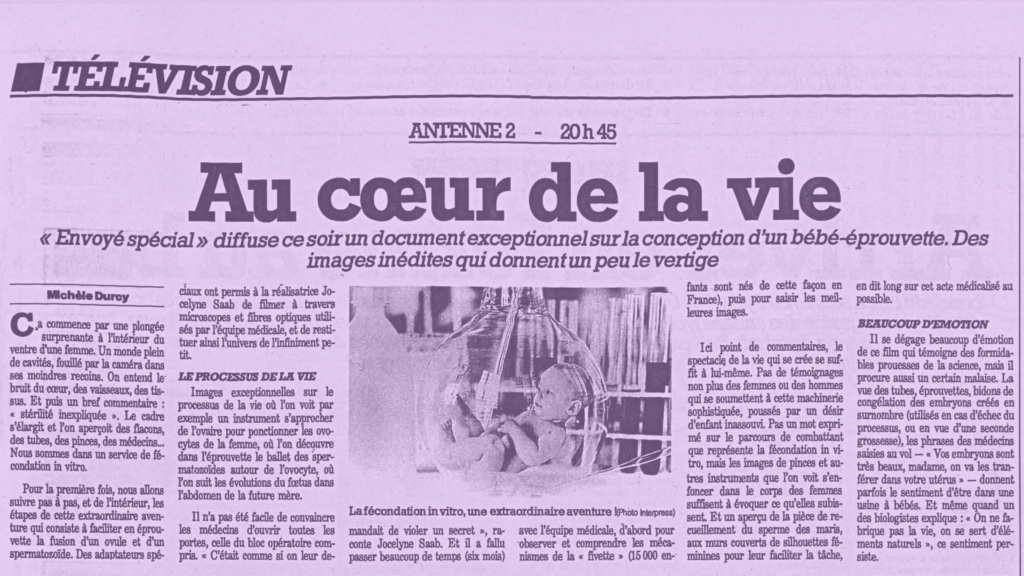
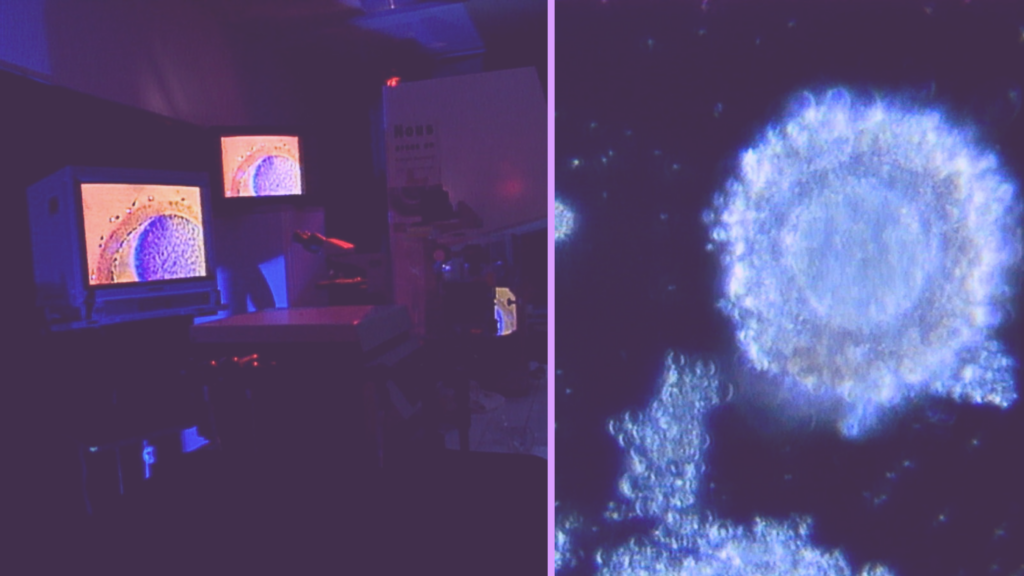
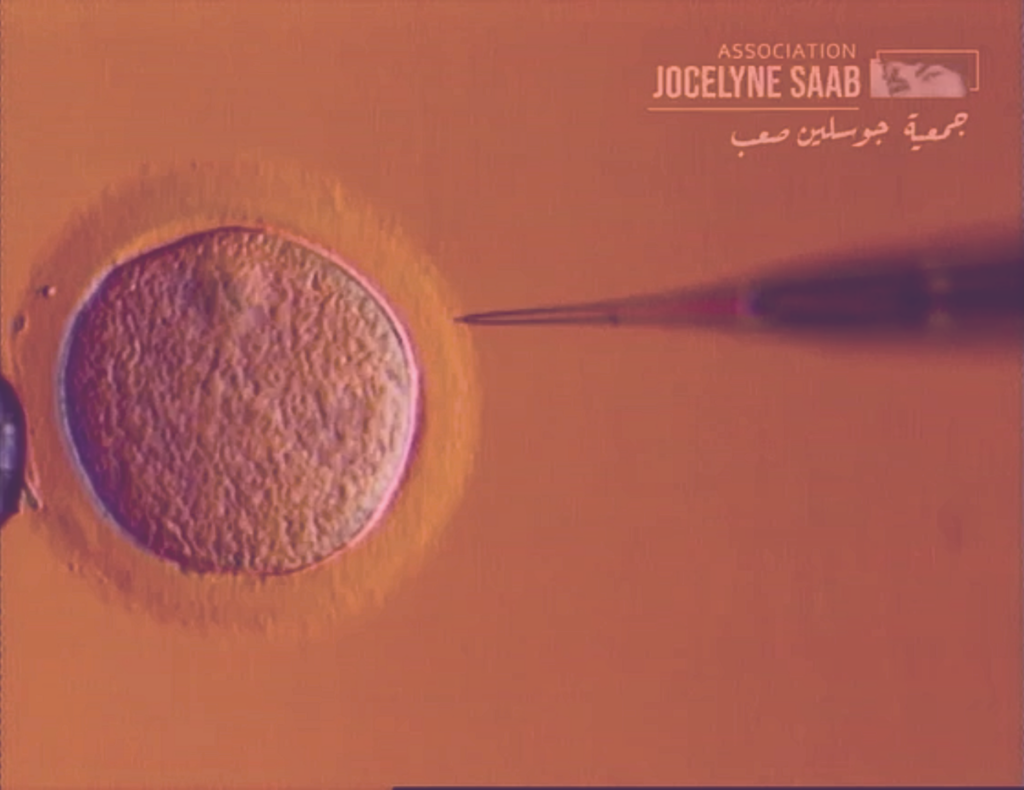
In 1991, Jocelyne Saab continued to broaden the scope of her filmmaking by directing Fecondation in Video. The documentary traces the early developments in assisted reproduction and explores the scientific, medical and ethical upheavals accompanying these new techniques. It gives a voice to doctors, researchers and couples undergoing these treatments, revealing both the hopes and the questions raised by a technology that is redefining our relationship with the body, parenthood and life itself.
Whilst Fecondation in Video may at first glance seem a far cry from her first documentaries, Jocelyne Saab remains attuned to the changes taking place within societies. Having previously filmed the human consequences of conflict, she now observes other forces that upend people’s lives, confirming the gradual broadening of her field of observation beyond war-torn territories.
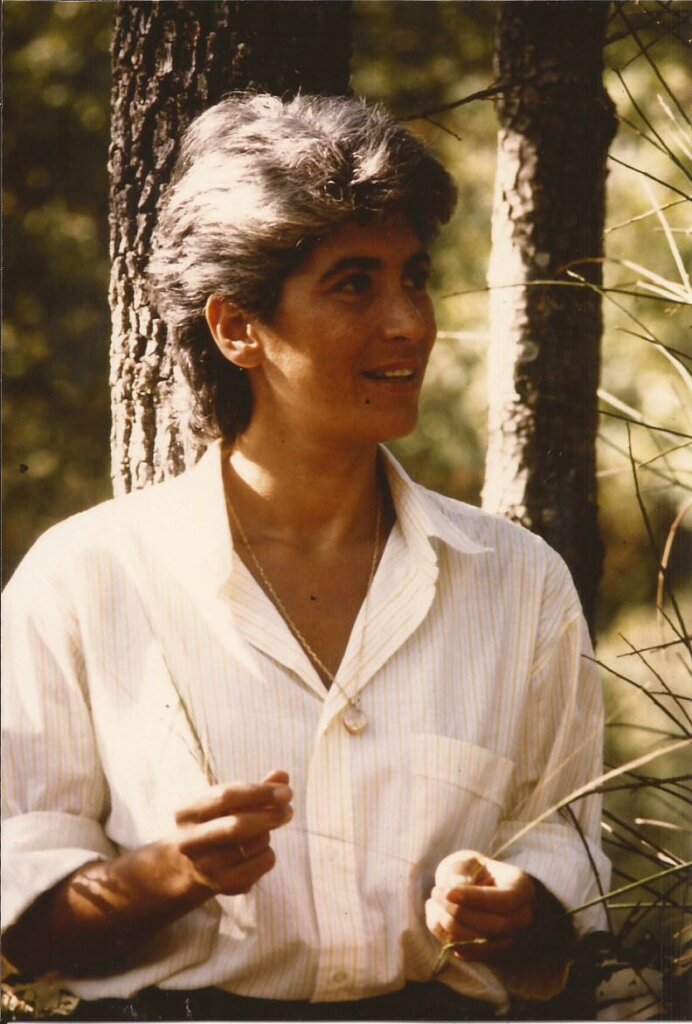
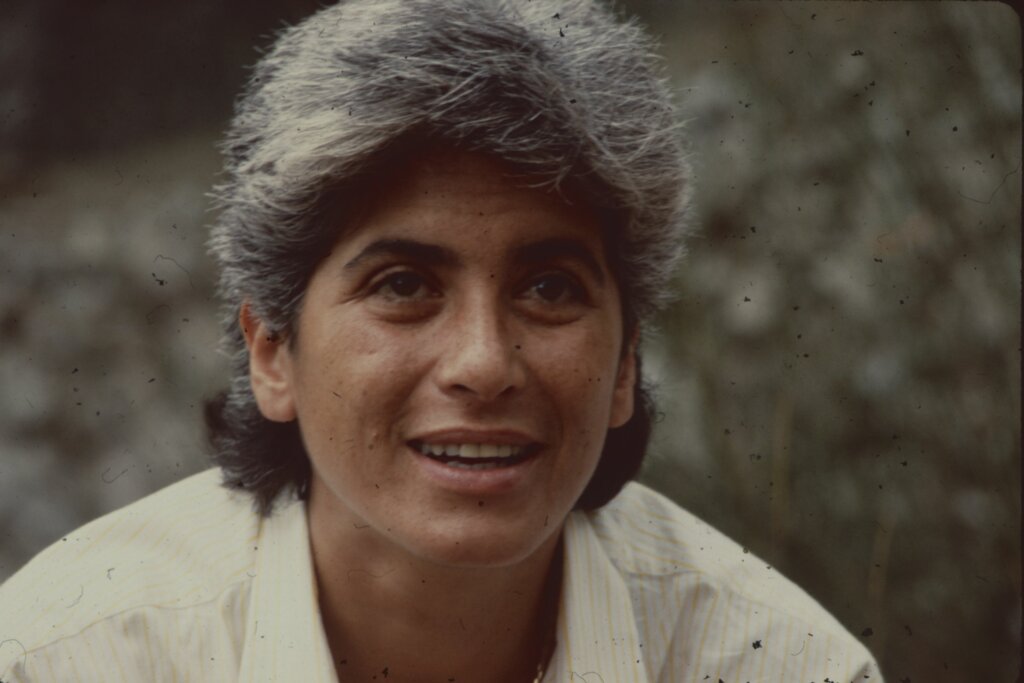
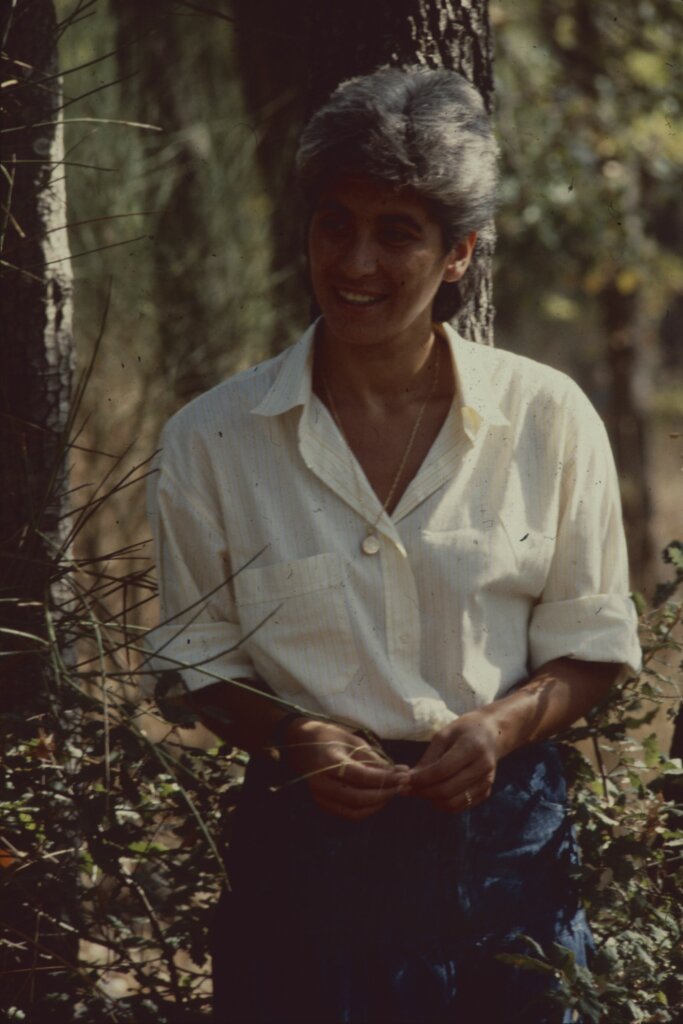
1988-199503
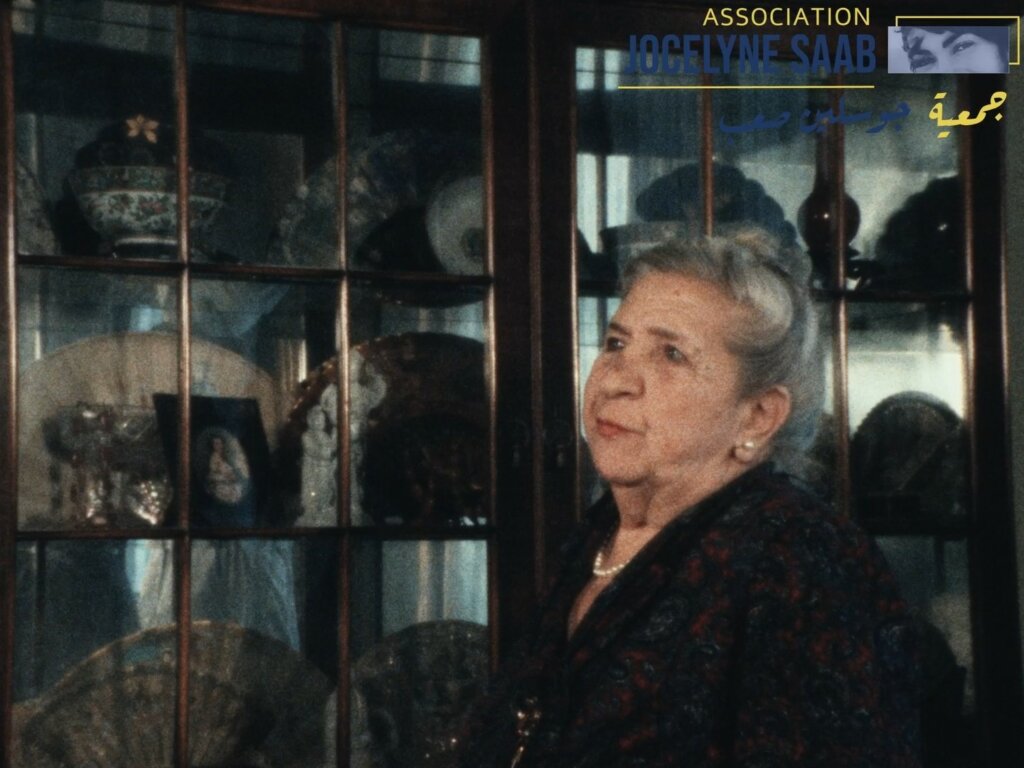
In the aftermath of the war, Jocelyne Saab was no longer content merely to direct films: she also set about preserving the images that tell the story of Lebanon. Whilst preparing her next feature-length fiction film, she embarked on an extensive research project focusing on films shot in the capital since the dawn of cinema. This work led to the compilation of an initial catalogue of over 250 films and launched the project to re-establish the Lebanese Film Archive, founded in 1961 but interrupted by the war. The preservation, circulation and transmission of films and archives are thus presented as essential conditions for Lebanon’s cultural reconstruction.
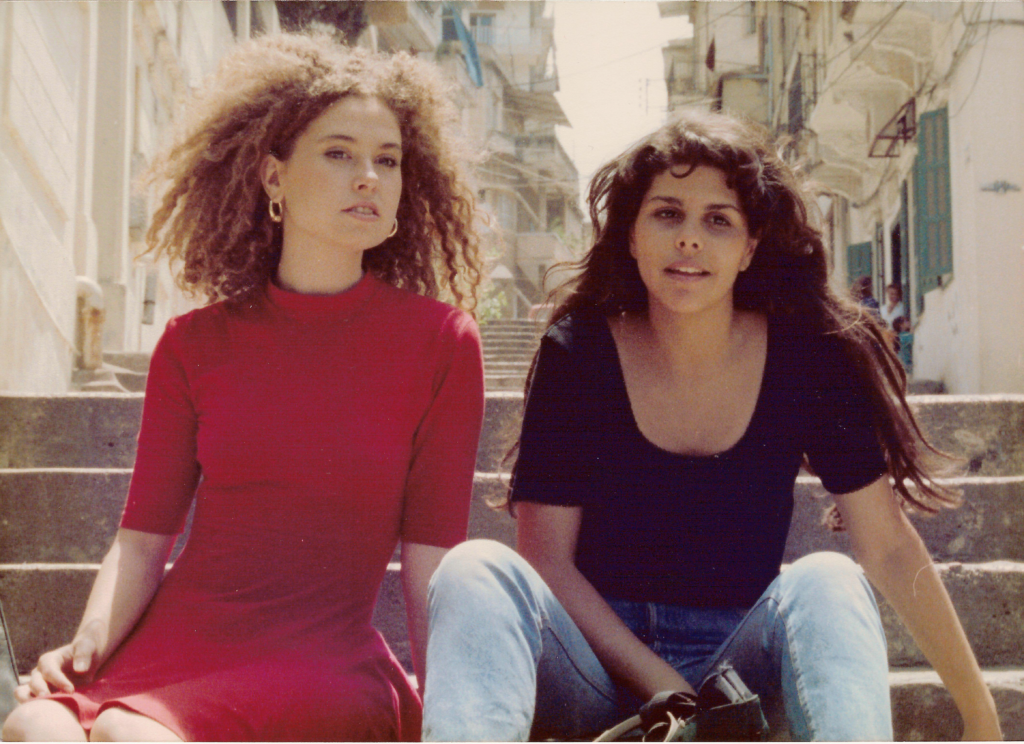
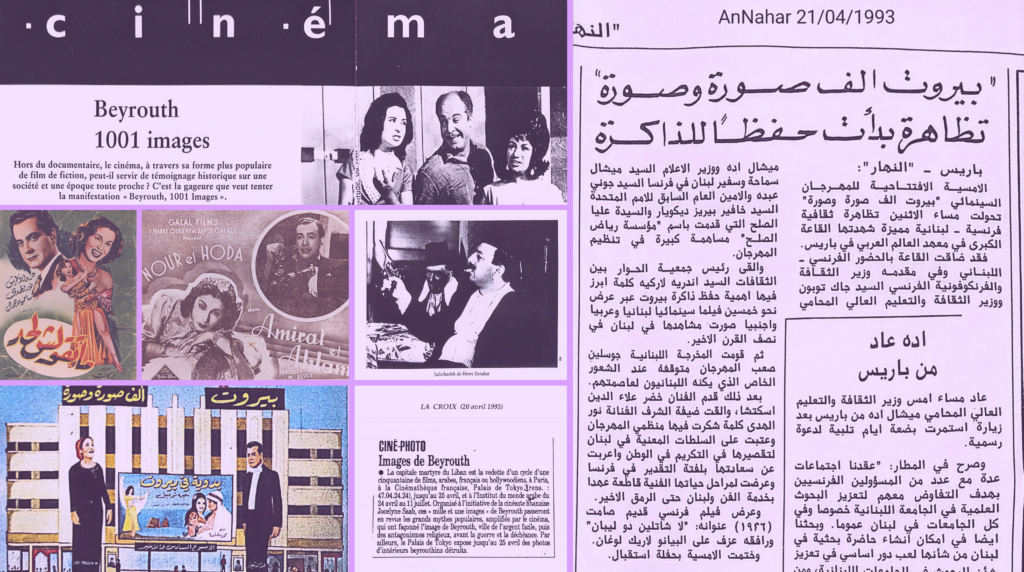
In 1993, Jocelyne Saab presented part of this research under the title Beyrouth, Mille et une images at the Cinémathèque Française and then at the Arab World Institute. This programme brought together around fifty Lebanese, Arab and international films that showcased the many, sometimes contradictory yet complementary, representations of Beirut throughout the 20th century. She then went on to direct Once Upon a Time in Beirut: The Story of a Star in 1994. The film follows two young women as they explore Beirut in search of images of their city, and presents cinema as a tool capable of preserving narratives that official history tends to erase.
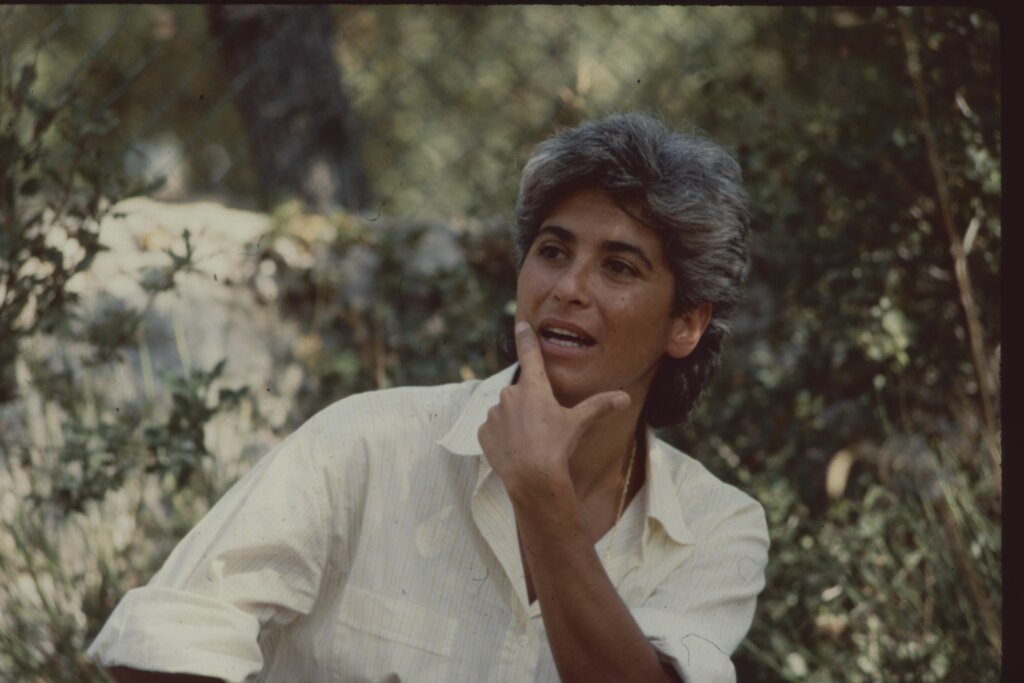
1988-199504
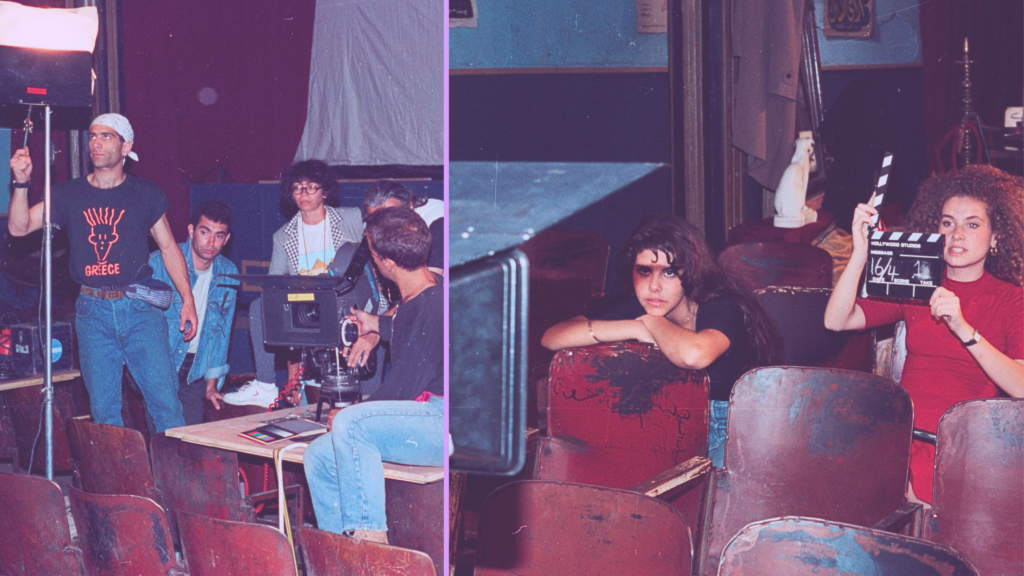
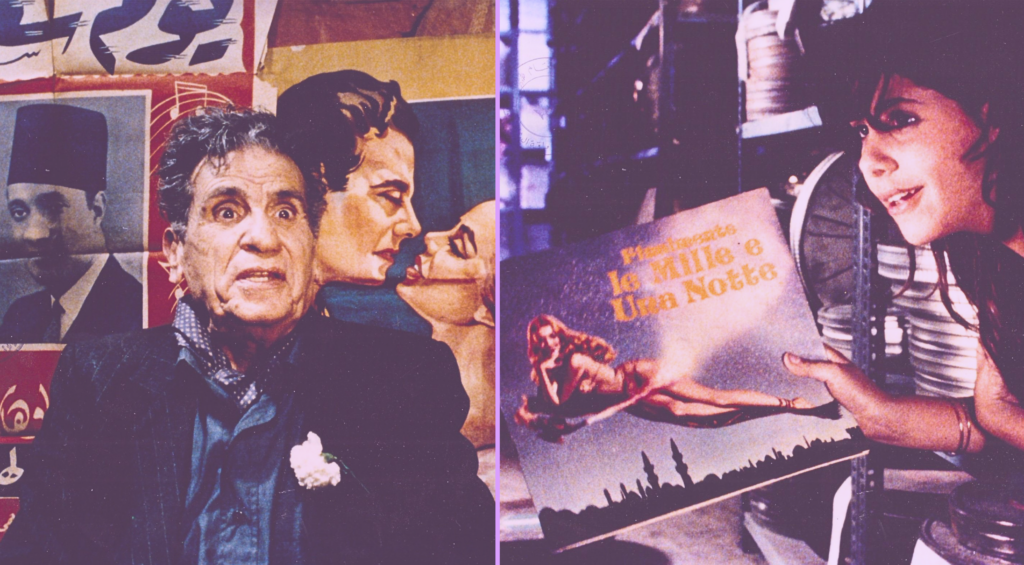
1997 6/9
199701
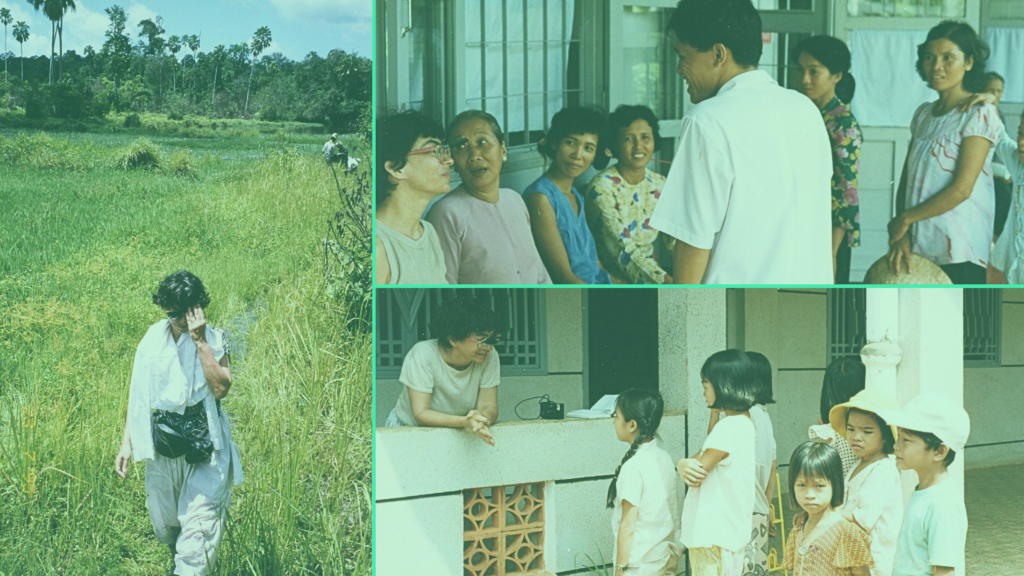
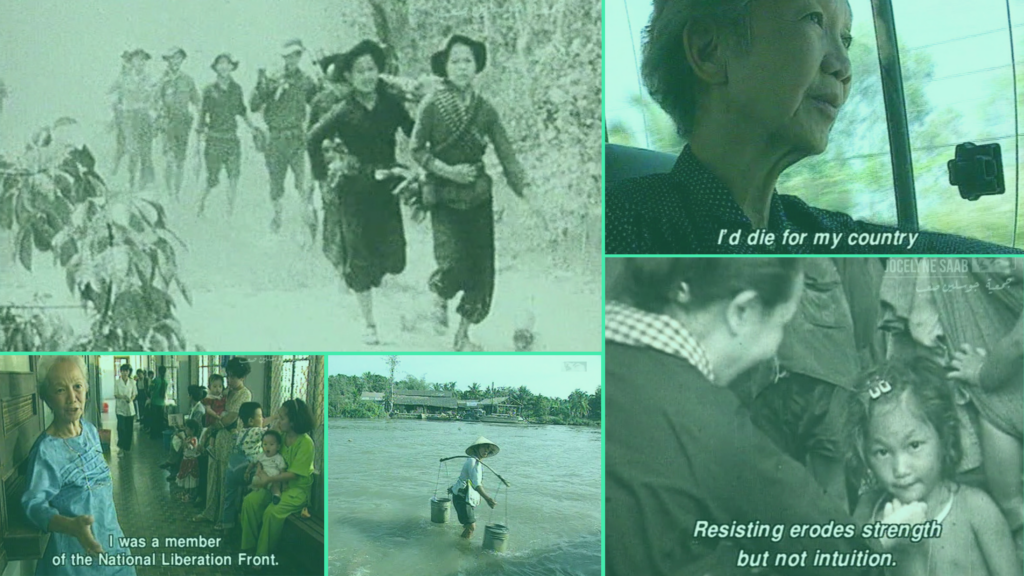
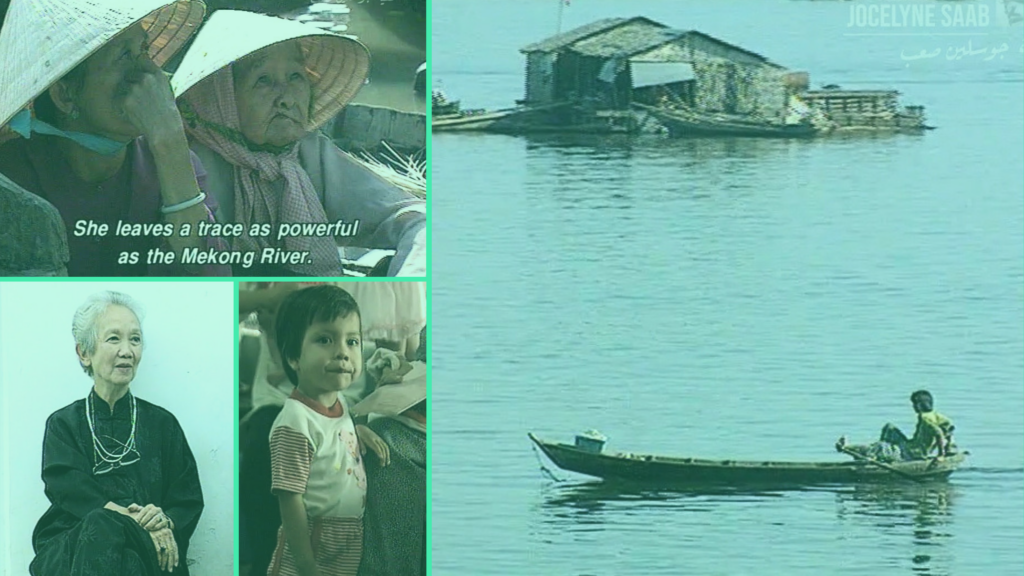
In 1997, Jocelyne Saab directed La Dame de Saïgon, a documentary broadcast on France 2 in July 1997, which was commissioned to explore contemporary Vietnam. Screened that same year at the États généraux du film documentaire in Lussas, the film went on to win the Prize for Best French Documentary, awarded by the Senate’s Audiovisual Committee, and then the Laurier award from the Club de l’Audiovisuel (Paris) in 1998.
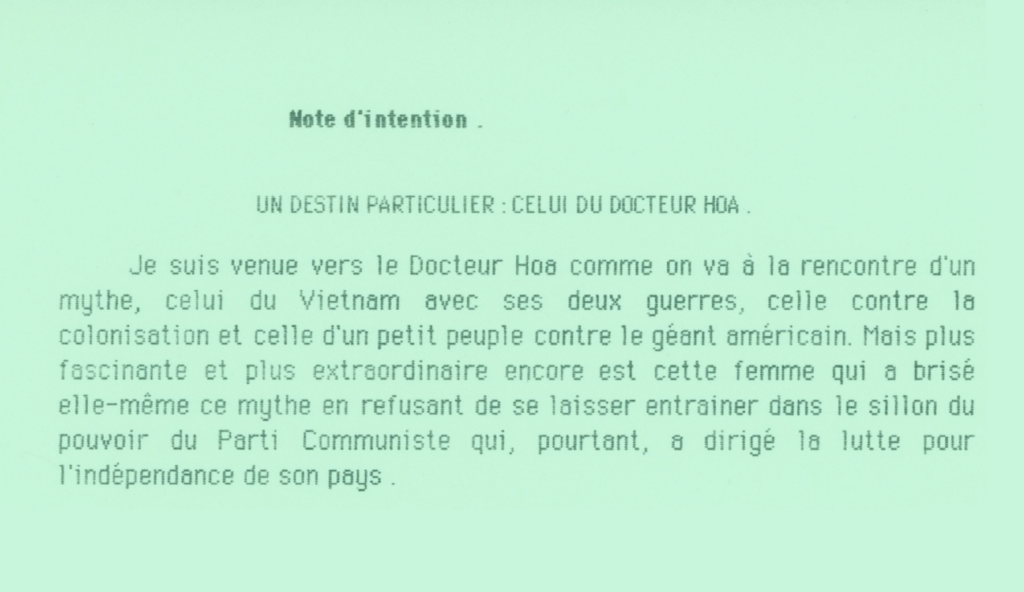
In her director’s statement, Jocelyne Saab explains that her initial plan was to film Vietnam, a country whose history had profoundly shaped her generation. But the filming took a different turn when she met Dr Nguyễn Thị Bình Hòa: ‘It is no longer Vietnam that interests me, but this woman and her story within History’. This shift in perspective becomes the film’s guiding principle: rather than presenting a general account of the country, La Dame de Saïgon explores the story through a singular trajectory.
199702
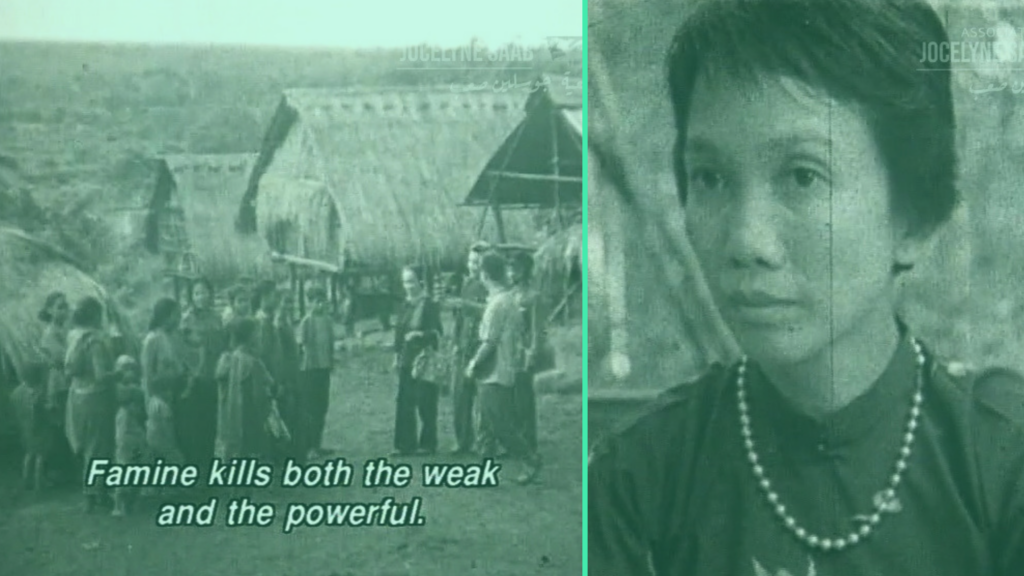
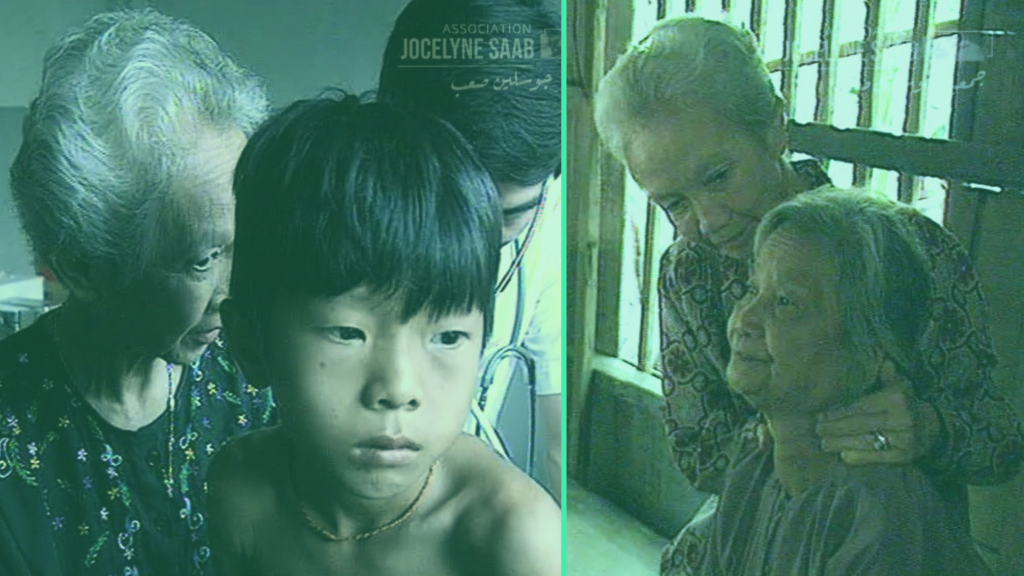
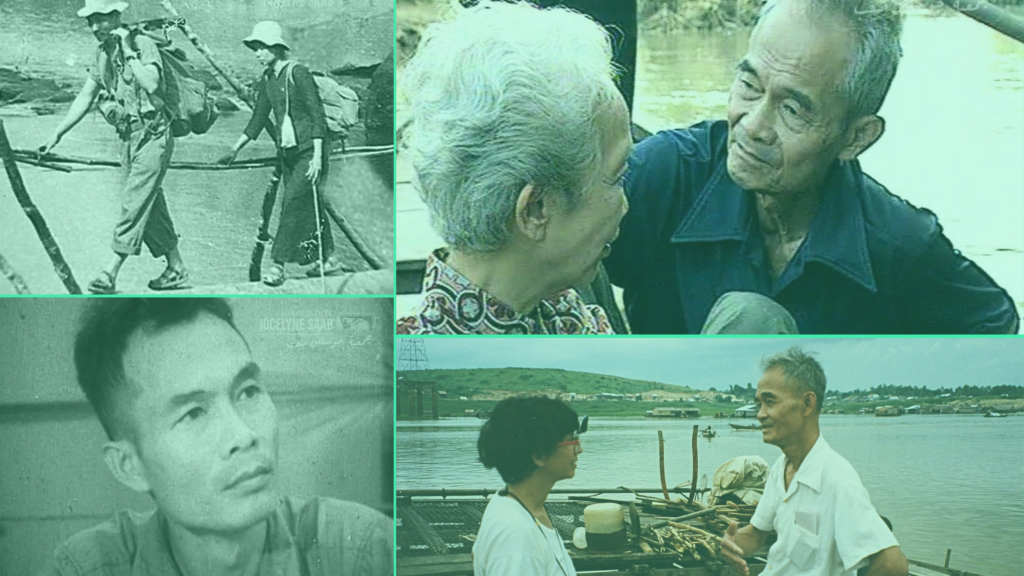
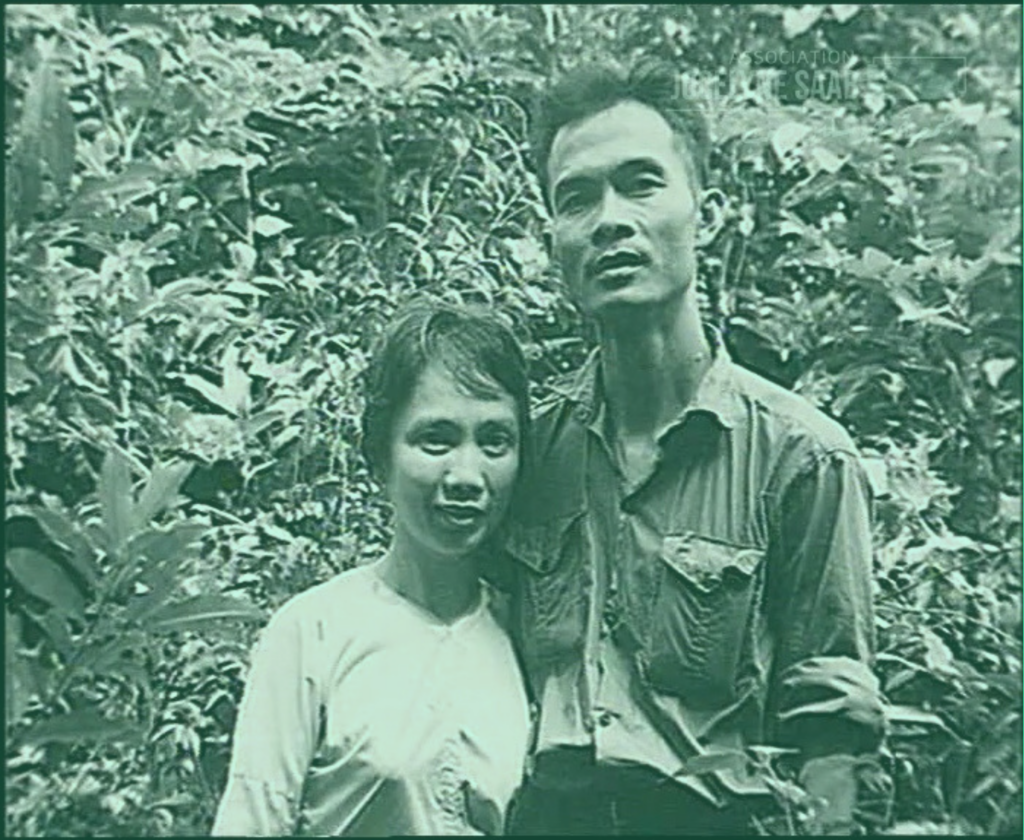
A former member of the Resistance, a doctor and a prominent figure in Vietnam, Dr Hoa dedicated her life to the struggle for her country’s independence before continuing her commitment to healthcare and culture. The documentary traces her life through her memories, her daily routine and the places that have shaped her existence. Jocelyne Saab creates not so much a biography as a portrait in which her personal experience sheds light on the country’s political and social transformations.
The statement of intent also highlights the importance attached to the intimate dimension of the narrative. Jocelyne Saab explores the relationship between Hoa and her husband Nghi, their years of separation during the war, the loss of their child, and the way in which these trials have shaped their commitment. Jocelyne Saab thus brings a fresh approach to documentary portraiture by weaving together political history and personal narratives.
199703
Through Dr Hoa’s life story, La Dame de Saïgon does not revisit the major events of the Vietnam War; rather, the documentary focuses on what remains of it in a life – the commitments and memories that it carries. Jocelyne Saab replaces the historical narrative with an embodied memory, constructed from the words, gestures and experiences of her main character. This focus on individual life stories characterises several of her films from the 1980s onwards, in which personal testimony becomes a way of conveying history without freezing its meaning.
In this film, Jocelyne Saab also revisits one of the key themes running through her work: her commitment to liberation movements and to those who lead them. However, nearly twenty years after her first documentaries on Lebanon, Palestine, Egypt, Iran and Western Sahara, her focus has shifted. She has chosen the portrait as a means of grasping history, but also as a way of exploring the women’s experiences that shaped that history.
199704
2005 7/9
200501
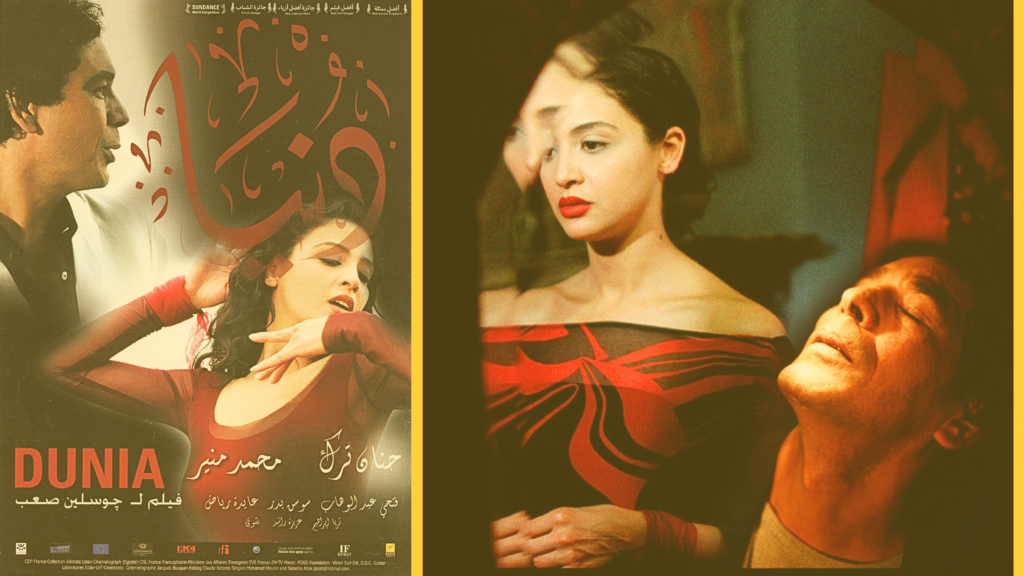
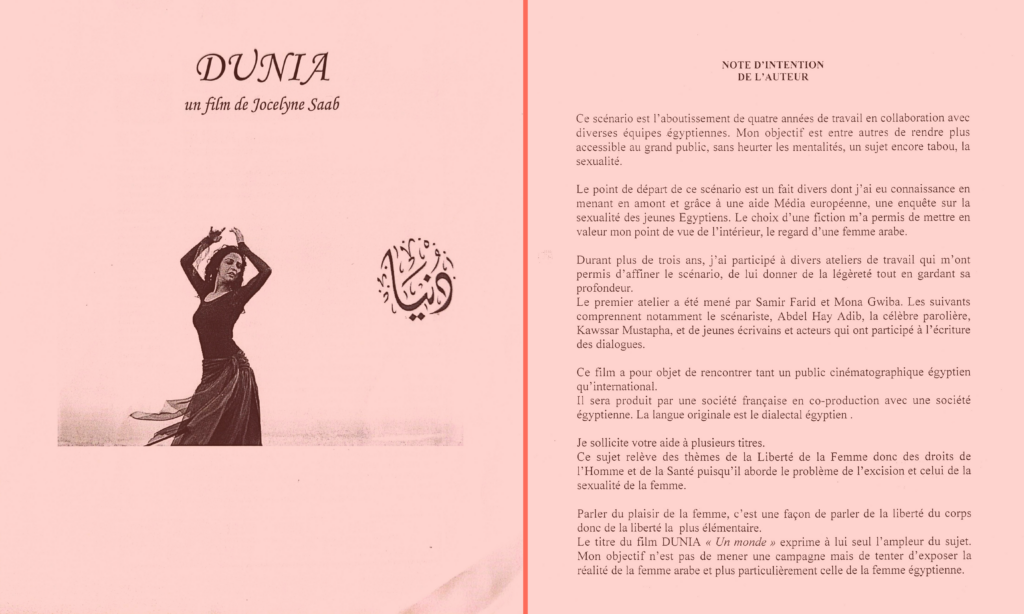
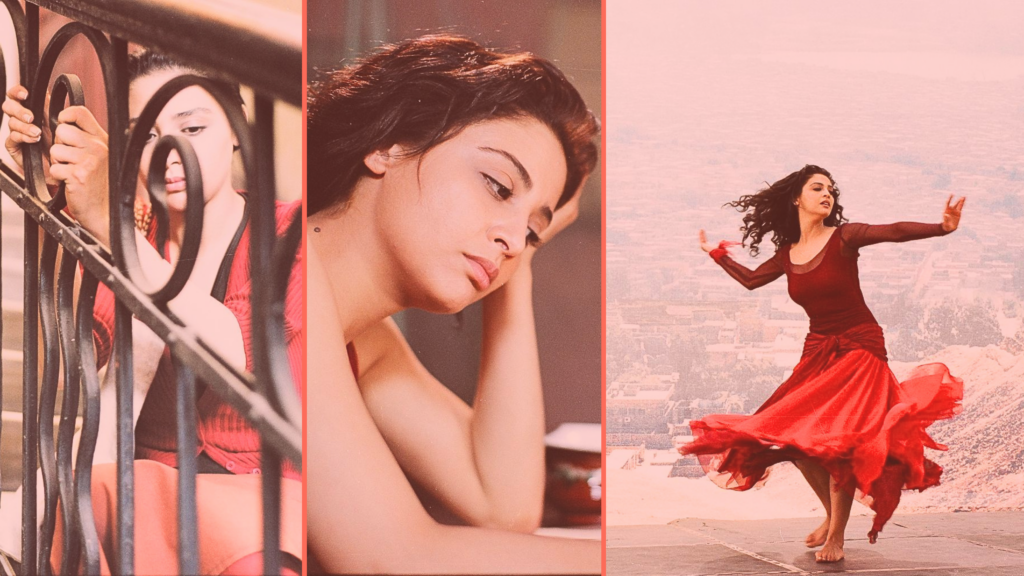
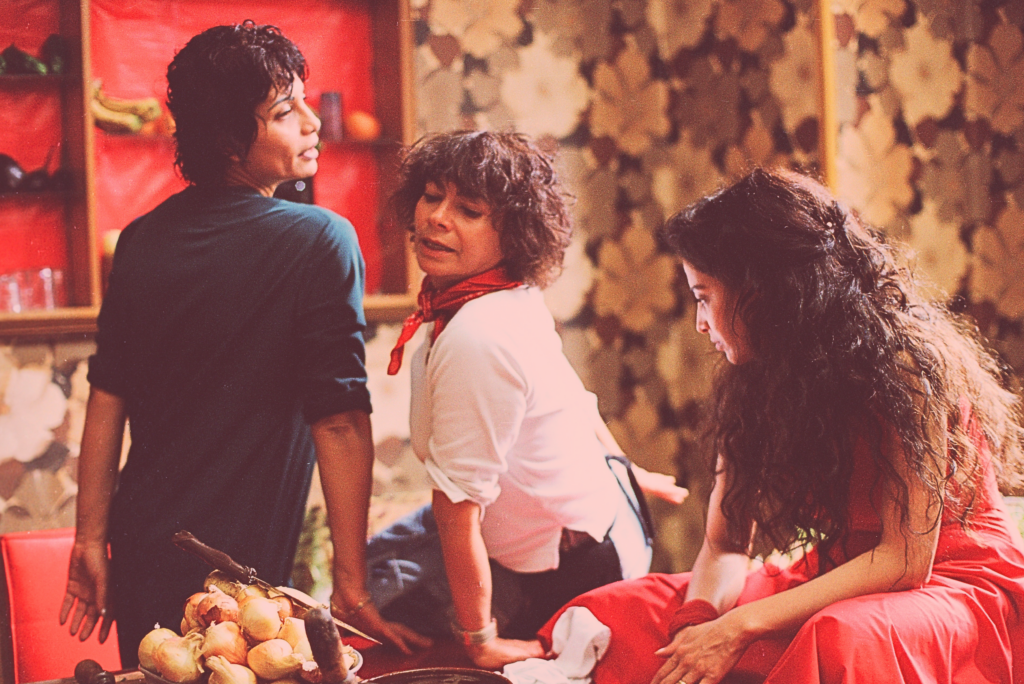
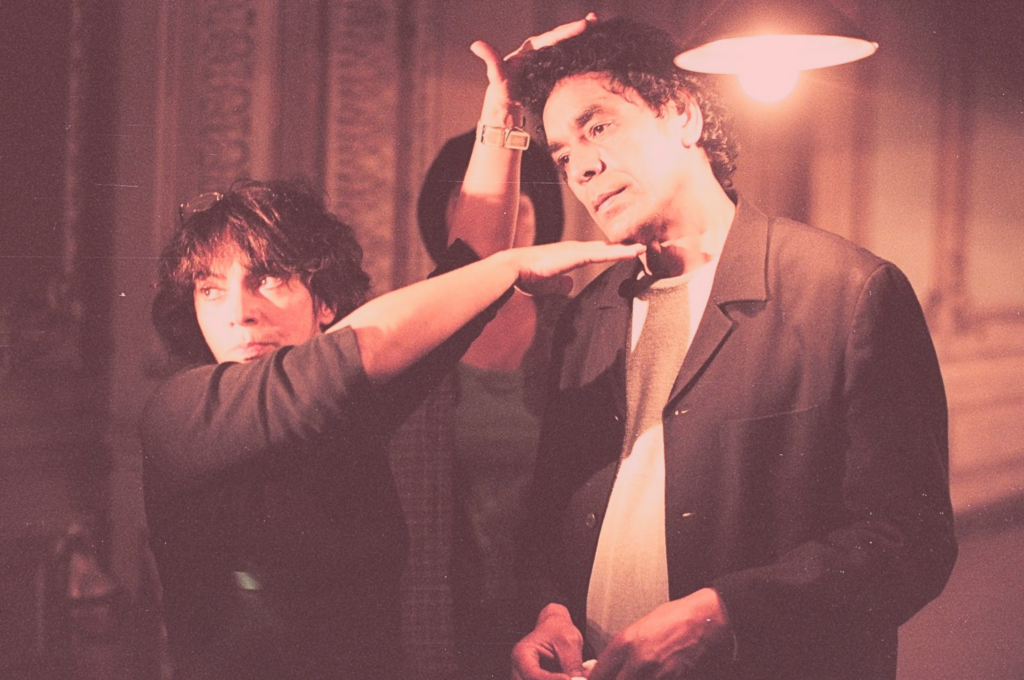
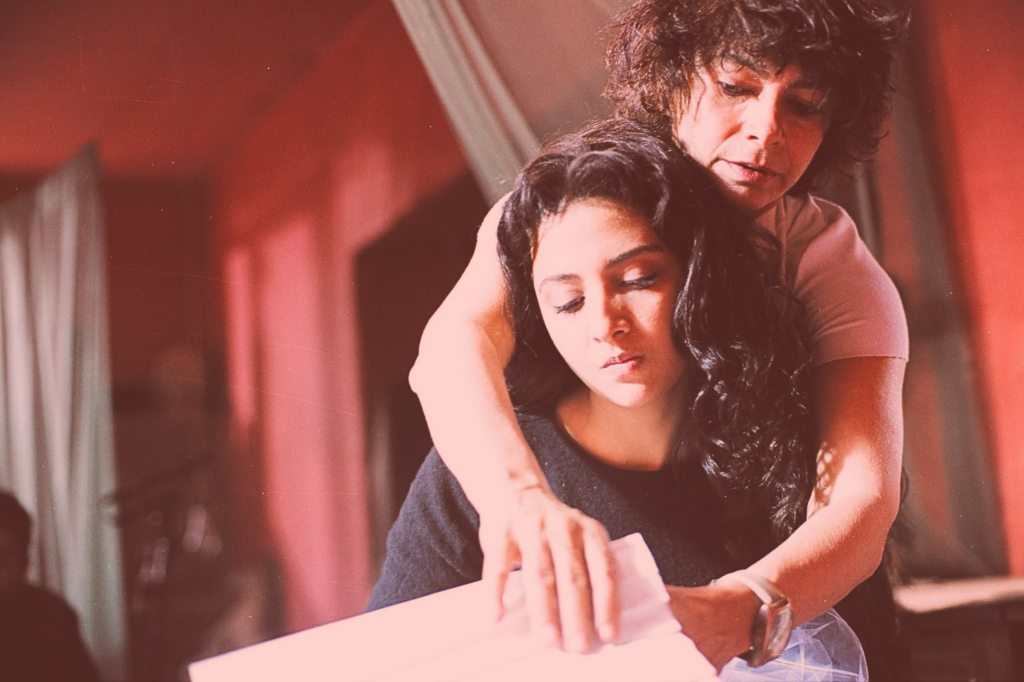
After several years devoted to documentary filmmaking, Jocelyne Saab returns to fiction with Dunia, Kiss me not on the eyes. The screenplay is the result of several years of research, carried out with various Egyptian teams, focusing in particular on young people’s sexuality. Supported by the European MEDIA programme, the project took shape through a series of workshops bringing together Egyptian critics, screenwriters, writers and actors. This collaborative writing process has helped to refine a narrative capable of addressing, in her own words (statement of intent), ‘a subject that remains taboo: sexuality’, whilst remaining ‘accessible to the general public, without offending sensibilities’. Fiction thus becomes a means of expressing ‘an Arab woman’s perspective’ on contemporary Egyptian society.
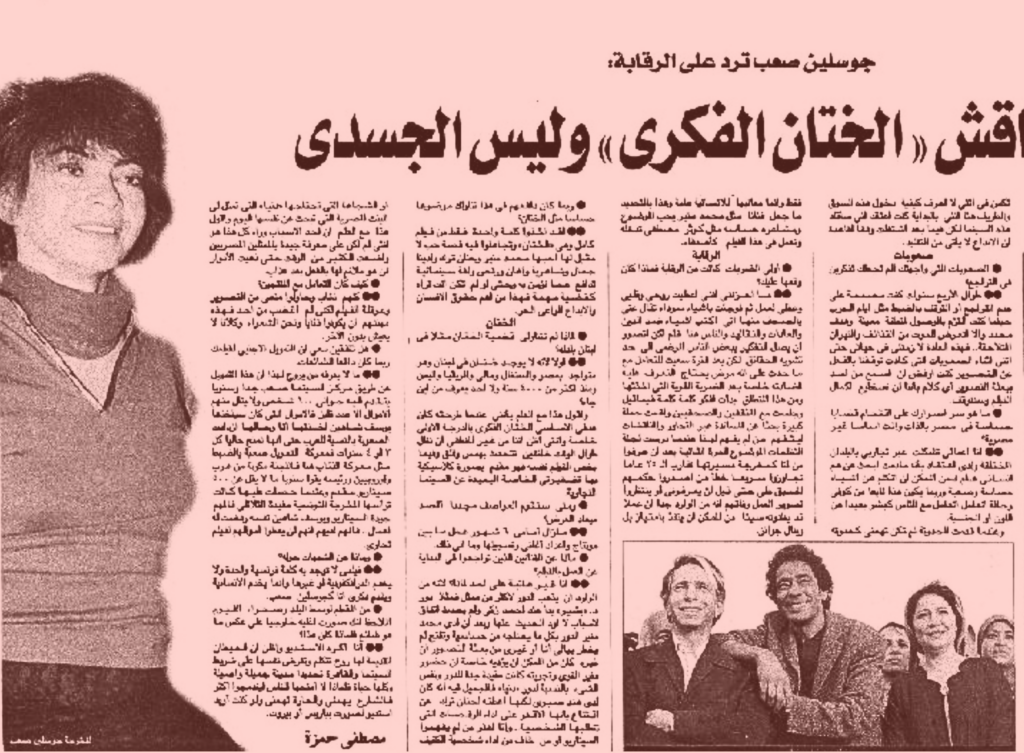
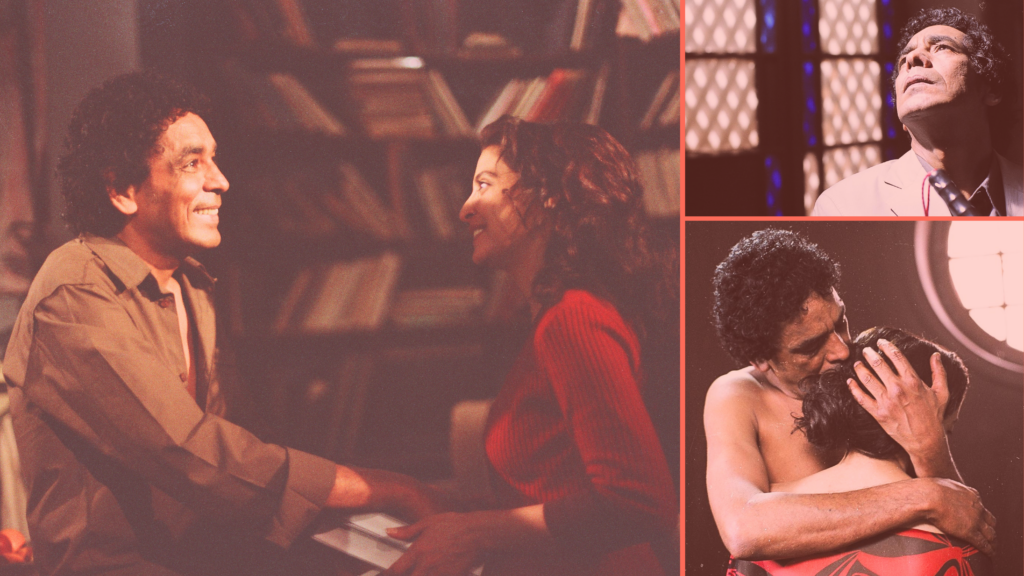
Before filming began, Dunia faced several rejections from the Egyptian censorship board. In 2003, the authorities deemed that the script “undermined Egypt and Islam”, “incited debauchery” and tackled a subject considered sensitive: female genital mutilation. Jocelyne Saab argued that “female genital mutilation is merely a dramatic device” and that her film did not seek to campaign on the issue, but rather to explore, more broadly, freedom, desire and the place of women in a changing society. Following an appeal to the appeals committee, the project was finally granted permission to film, bringing together a prestigious cast, including Hanan Turk, Mohamed Mounir and Ahmed Zaki, and a co-production involving France, Egypt and Lebanon.

200502
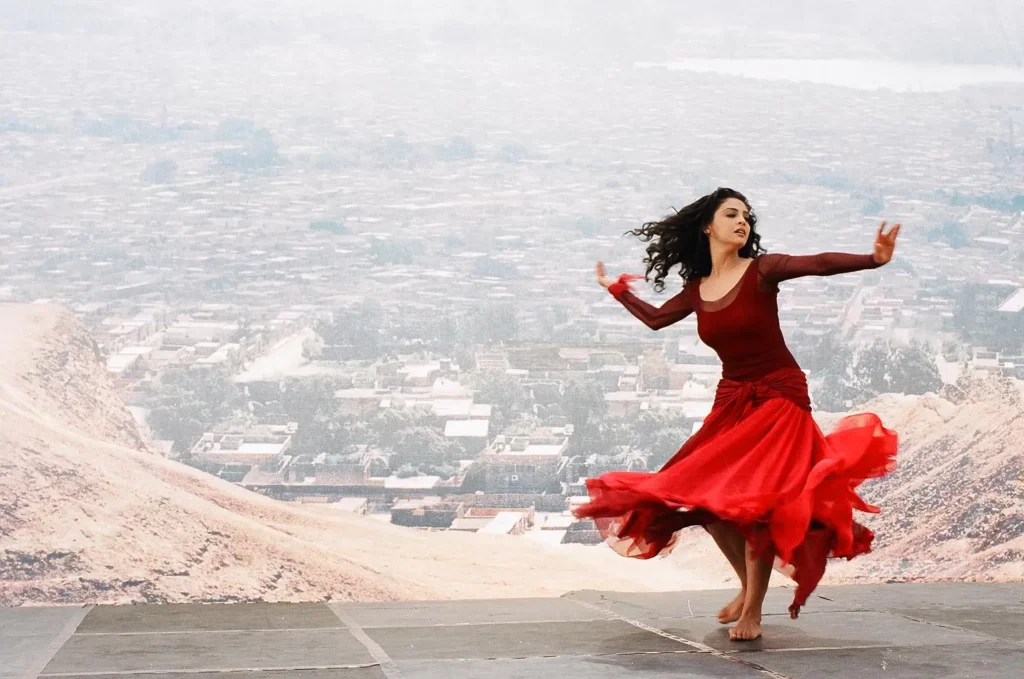
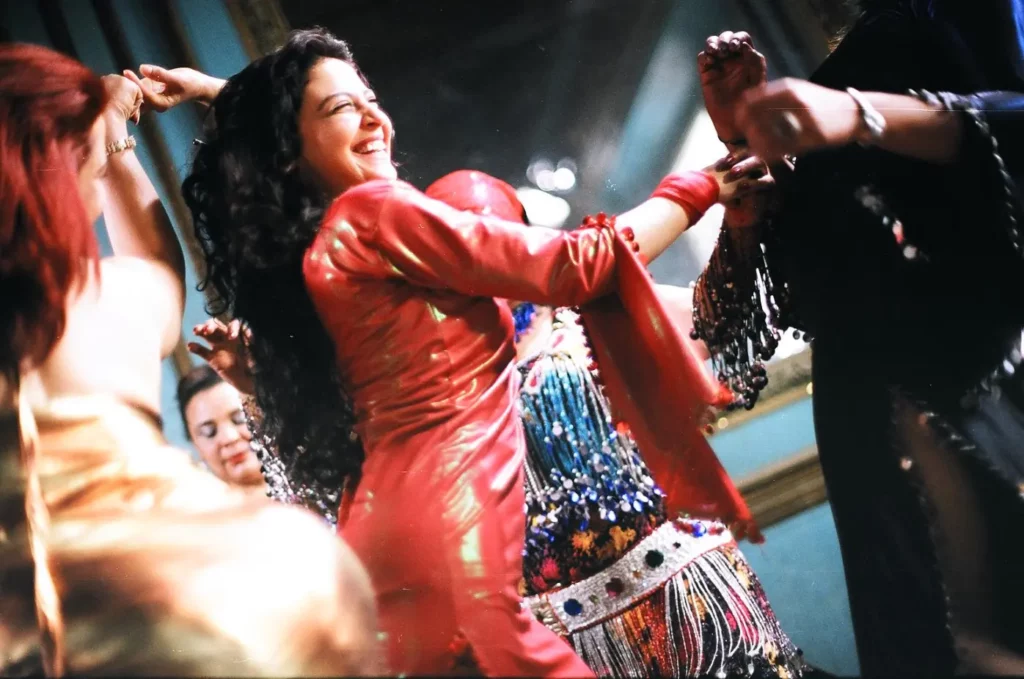
Dunia is a young student from Cairo who divides her time between university, where she studies Sufi poetry, and belly dancing, which she dreams will become her profession. In her director’s statement, Jocelyne Saab explains that the encounter between Dunia and Bachar, her teacher who has lost his sight, takes place within a shared world of passion: that of Sufi love poetry. Their relationship accompanies the journey of self-discovery of a young woman seeking to reclaim her body, her desires and her freedom. Thus, poetry, dance and sensuality are less themes than cinematic languages through which the director explores female emancipation.
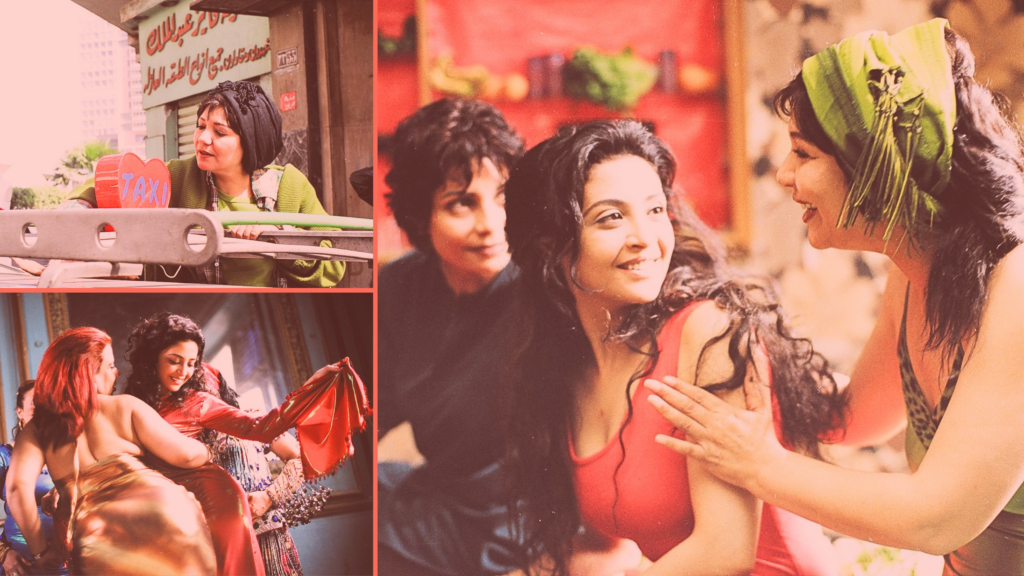
Several female characters revolve around Dunia – Inayate, Arwa and Jamalate – and embody the different experiences of women’s lives in Egypt. The sole female taxi driver, the left-wing academic and the lover each offer Dunia a way of coming to terms with social legacies, individual aspirations and societal changes. Female genital mutilation runs through their stories, but Jocelyne Saab offers a broader reflection on ‘freedom of the body’, regarded as ‘the most fundamental freedom’. She thus builds on the research she has been conducting since the 1980s into the female body, artistic practices and popular knowledge.

200503
Before its release in French cinemas in September 2006, Dunia enjoyed a successful international run. After winning the SOPADIN Award for its screenplay in 2003, the film was screened in competition in 2005 at the Cairo International Film Festival (its international premiere) and at the Montreal World Film Festival. In 2006, it went on to screen at the Sundance Film Festival, the Fribourg International Film Festival, the Singapore International Film Festival, the Milan International Film Festival, the Algarve Film Festival, the International Human Rights Film Festival (Switzerland), and the Carthage Film Festival.
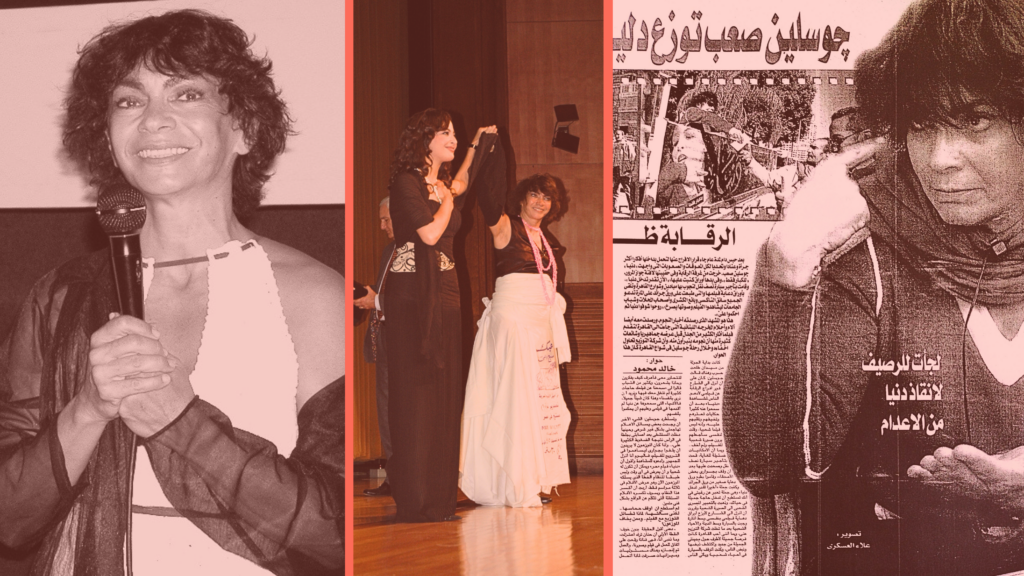
The reception of Dunia in Egypt was marked by fierce controversy. The film came under heavy criticism during its screening at the Cairo Film Festival, and its commercial release was ultimately cancelled. In order to allow the film to be shown, Jocelyne Saab complied with the demands of the Egyptian authorities, who insisted on the removal of a scene depicting female genital mutilation. To “pave the way for young people” by bringing to light issues that had long been ignored, she launched her own campaign on the streets of Cairo: she handed out leaflets, engaged with passers-by and invited the public to see the film, urging them, “Watch Dunia and judge me for yourselves.”
200504
2006-2013 8/9
2006-201301
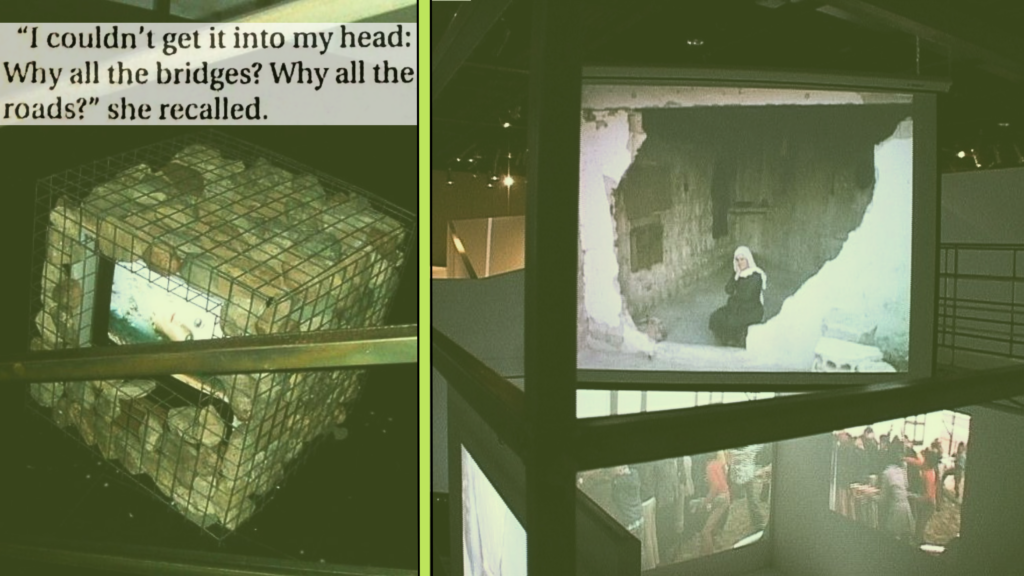
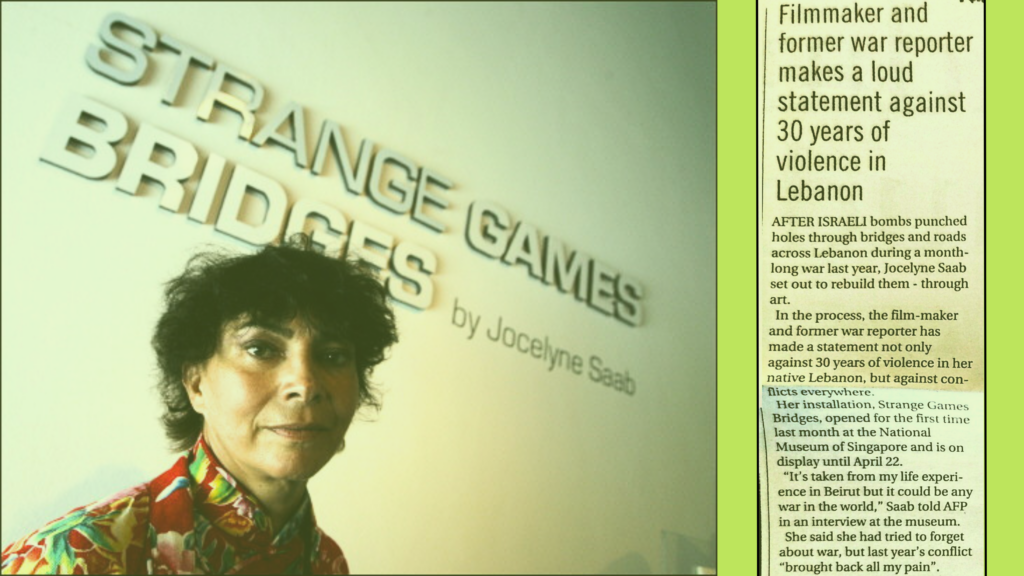
A few months after the release of Dunia, Lebanon was once again bombed by Israel during the summer of 2006. As she had done since the 1970s, Jocelyne Saab picked up her camera again to film the collapsed bridges, the cut-off roads and the landscapes torn apart by war. However, after more than thirty years spent documenting conflicts, she felt the need to shift her work towards other artistic forms: forms that allow audiences to physically experience the images and to construct their own journey through memory.
This concept gave rise to the installation Strange Games and Bridges, exhibited in 2007 at the National Museum of Singapore. The work takes the form of a vast hanging garden covering nearly 150 m², spanned by a 42-metre-long metal footbridge. Twenty-two screens simultaneously display the footage she shot during the Lebanese Civil War and that filmed during the 2006 bombings. Jocelyne Saab describes the installation as an ‘archaeological excavation site’ where the destruction of Beirut echoes across time. This work marks a major shift: the narrative is no longer constructed through editing, but by the visitor themselves, who is invited to move between images of the past and those of the present.
2006-201302
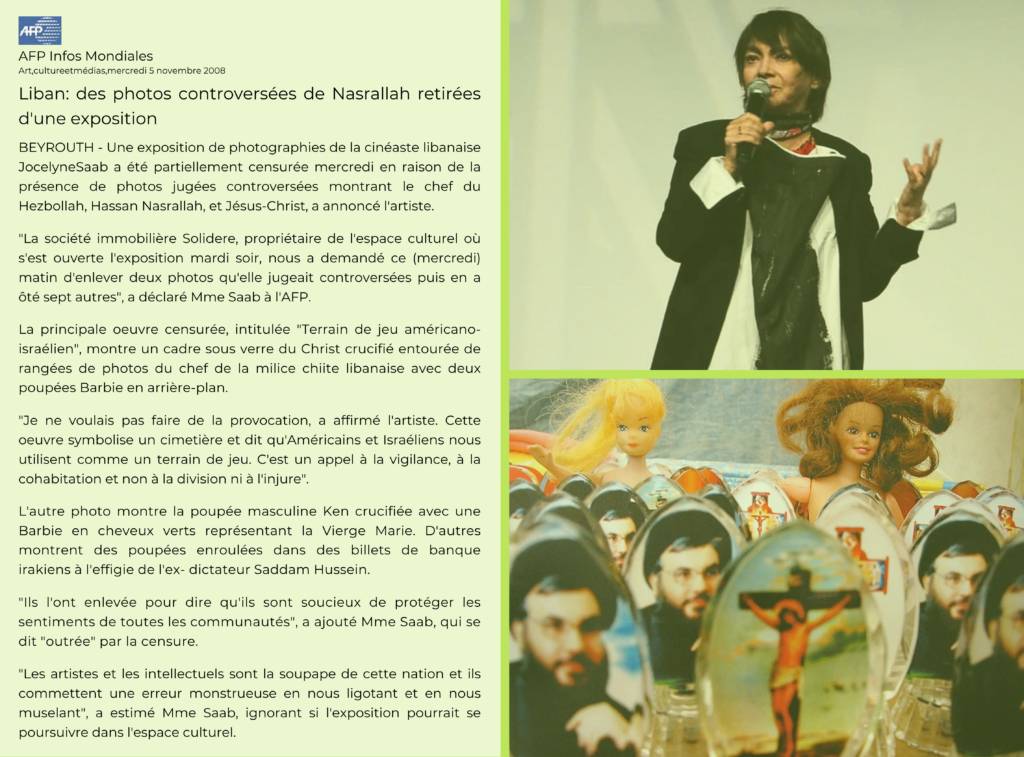
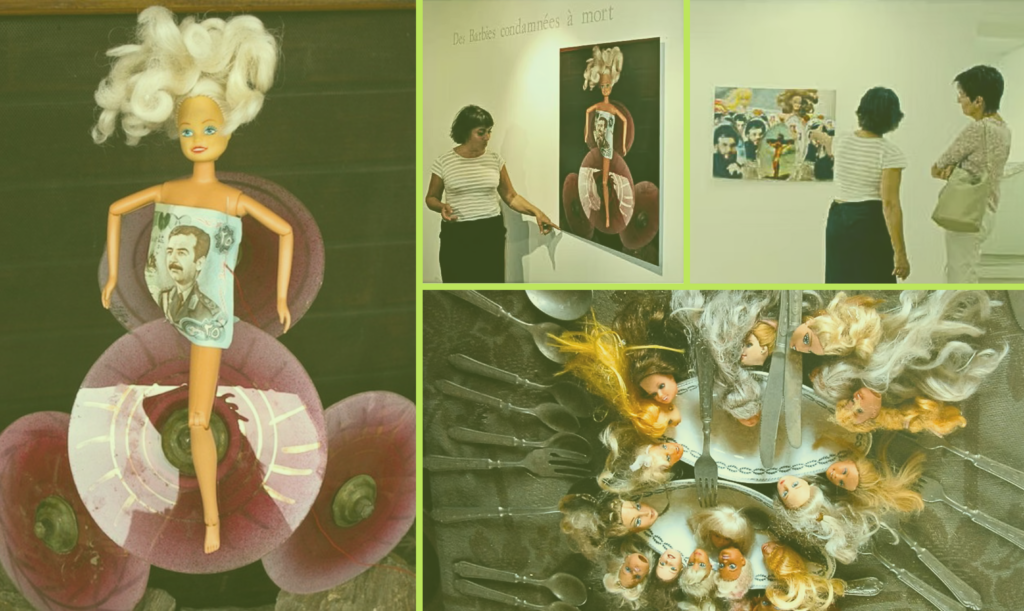
That same year, Jocelyne Saab developed several photographic series, exhibited under various titles in Dubai, Beirut, Tripoli, Paris, Lyon, Brussels and Florence. Among these, the series Le Revers de l’orientalisme (Marilyn and the Arabs / Transmission interrompue) took shape in Cairo, where the filmmaker collected old Barbie dolls from the souks. By photographing them, following in the footsteps of Edward Said, she examines the fantasised images of the West that circulate in certain Arab societies, in order to question imported cultural models and the way in which female bodies remain trapped within contradictory representations.
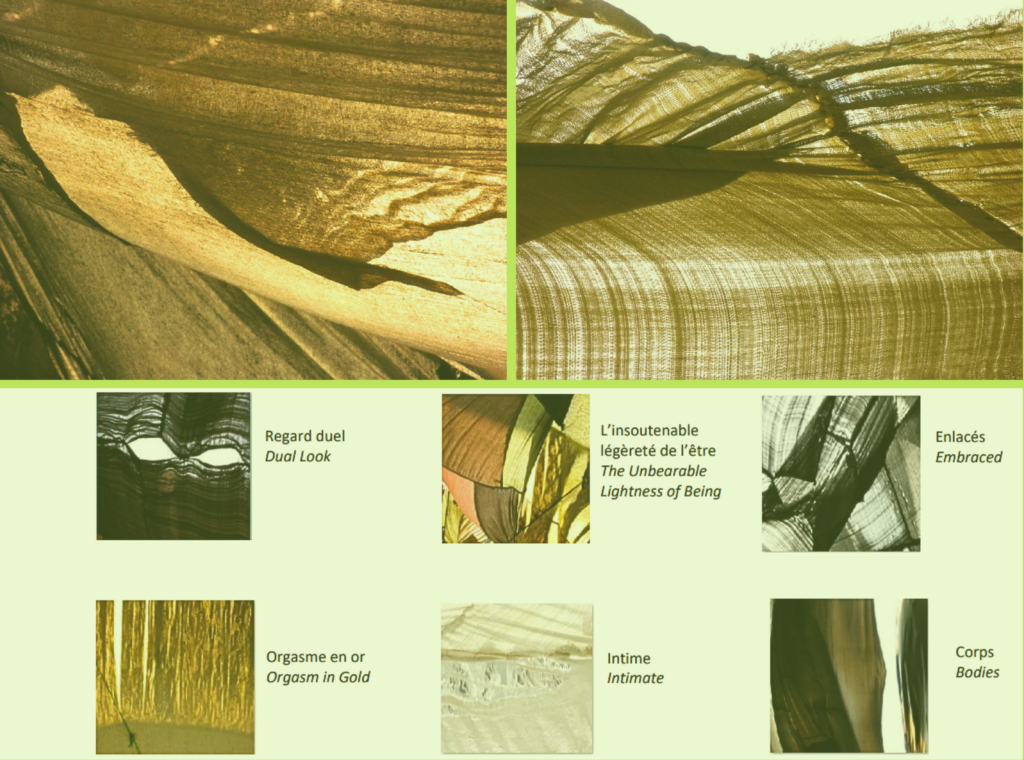
Travelling through the desert, Jocelyne Saab then photographed the fabrics of nomadic tents, the folds of the cloth, the knots and the play of light, thus creating the photographic series Architecture molle. In it, she captures the sensuality inherent in the materials, landscapes and architecture of Arab societies, in contrast to discourses that tend to erase it. Her photographic series, which invite reflection on images, cultural heritage and fragmented memories, were notably exhibited in 2008 at the AGIAL gallery in Beirut under the title Sens, icons and sensitivity. However, some of the images in the exhibition were censored by the local authorities.
2006-201303
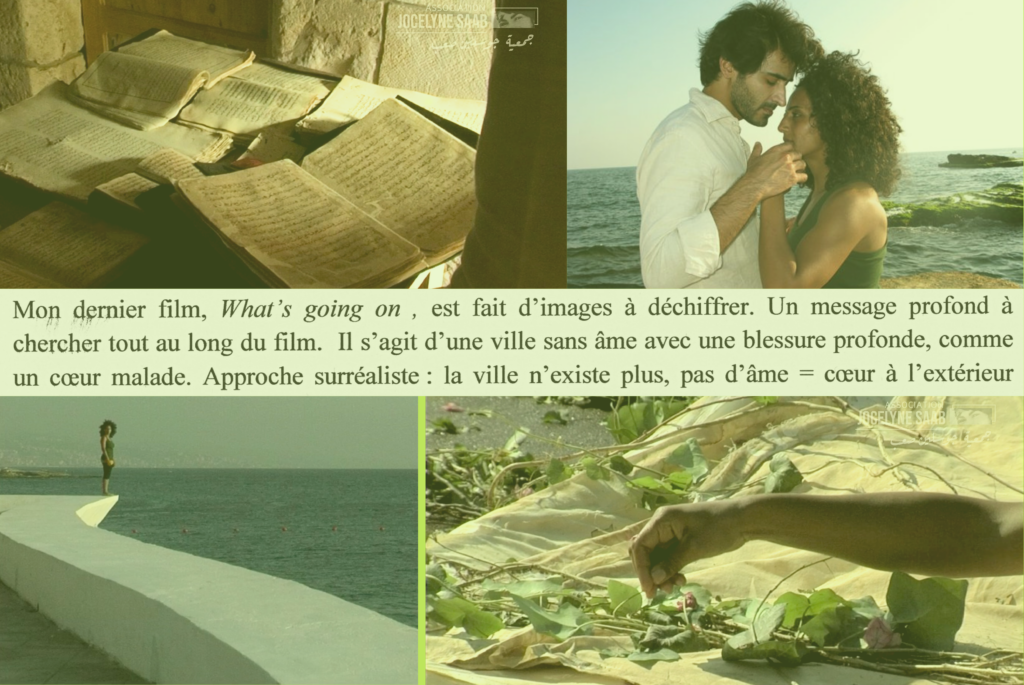
In 2009, Jocelyne Saab directed What’s Going On?, a new feature-length fiction film co-written with Joumana Haddad. The film takes the form of a cinematic essay and is a direct continuation of her artistic exploration begun in 2006: a writer crafts and weaves her texts around the inhabitants of Beirut, before encountering a dancer filmed as a “metaphor to speak of the lost soul of the city of Beirut”. Its fragmentary structure creates a dialogue between literature, dance, architecture and memory, embracing a city whose rapid reconstruction threatens to erase the traces of its history.
In 2013, Jocelyne Saab went on to produce Café du Genre, a series of six video portraits commissioned for the exhibition Au Bazar du Genre. Féminin – Masculin en Méditerranée at the MUCEM in Marseille. In it, she portrays artists, writers, choreographers and activists from various countries — Walid Aouni, Adel Siwi, Wassyla Tamzali, Joumana Haddad, Alexandre Paulikevitch, Cuneyt Cebenoyan and Melek Özman — whose life stories explore the relationships between creativity, gender, sexuality and freedoms. Jocelyne Saab aims to ‘reverse the gaze’ directed at women in the Mediterranean region and to understand ‘how women’s bodies have become a thing, a political object’. This approach directly echoes the research carried out in Les Almées, Dunia and What’s Going On?, and weaves together memories and commitments to map out an alternative cultural geography of the Mediterranean.
2013-2018 9/9
2013-201801
In 2013, at a time when the Arab Spring uprisings, the war in Syria and political tensions were affecting Lebanon, Jocelyne Saab founded the Cultural Resistance International Film Festival of Lebanon in Tripoli. Having documented conflicts, exile and struggles, she aims to promote the circulation and transmission of cinema from Asia and the Mediterranean region through the festival, which then expanded to Beirut, Saïda, Tyre and Zahle until 2015. True to her multidisciplinary approach, Jocelyne Saab also launched the future International Biennale for Cinema and the Arts in Lebanon in 2016. Centred on the theme ‘A Break with the Representation of Reality’, the competition took place within the unfinished structures of the Tripoli International Fair, designed by the architect Oscar Niemeyer.
It was also during this period that recognition of Jocelyne Saab’s work took on a new dimension. Olivier Hadouchi and Nicole Brenez organised the first retrospective of her films at the Cinémathèque française, entitled “Les astres de la guerre”. That same year, Nicole Brenez noted that Jocelyne Saab’s work “in the service of the destitute, displaced peoples, exiled combatants, cities at war, and the voiceless underclass […] carried out in complete independence […] now demands to be restored and preserved”. These early efforts found symbolic resonance when the filmmaker was appointed an Officer of the Order of Arts and Letters in 2016: “Today more than ever, the title bestowed upon me proves that the vigilance of filmmakers and artists is indispensable.”
2013-201802
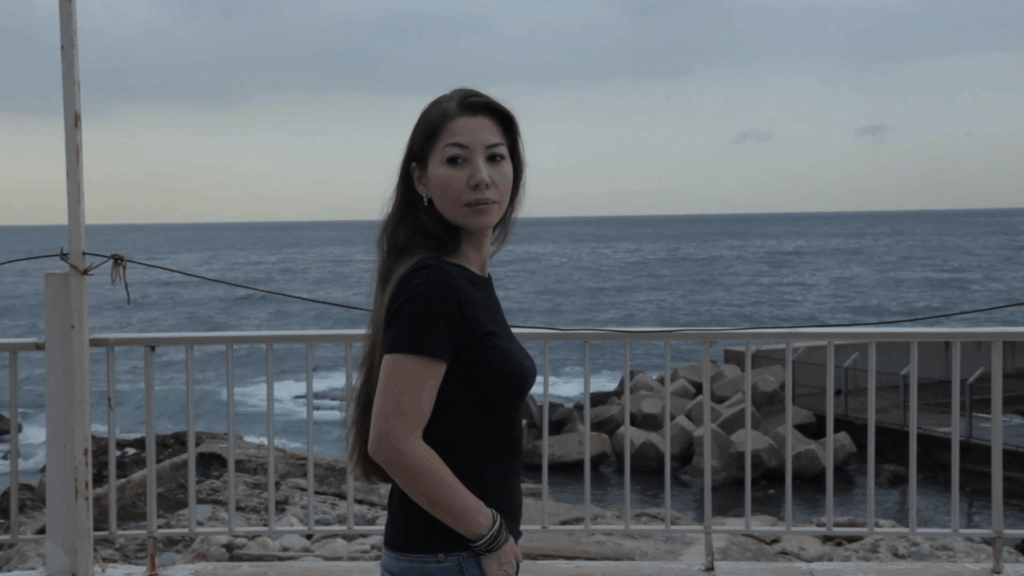
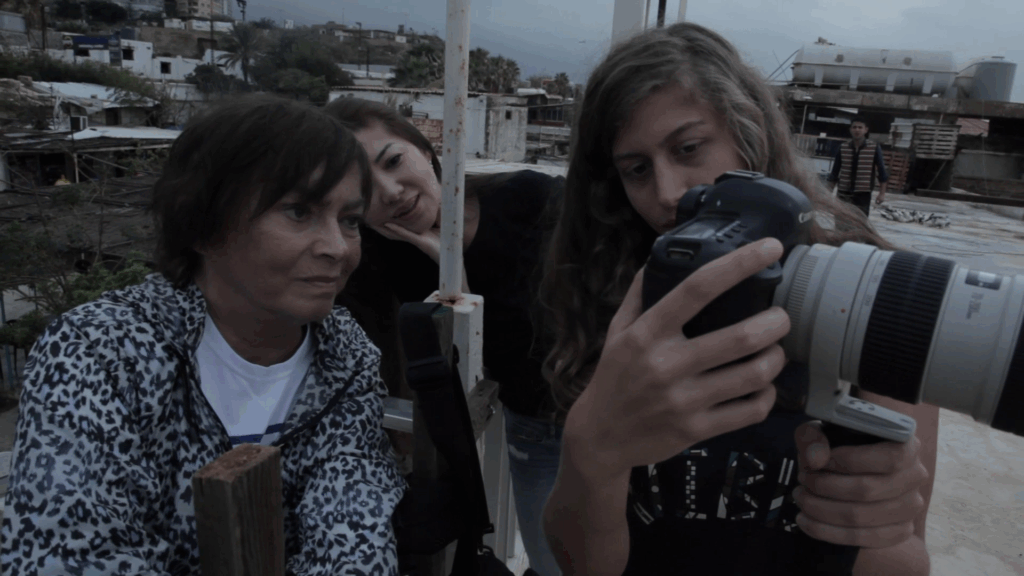
In 2015, Jocelyne Saab accompanied a friend on a humanitarian mission to the refugee camps in the Bekaa Valley, near the Syrian border. She quickly began to consider shifting the perspective on these populations, who had been rendered invisible by the constant repetition of media images: “We are bombarded with war photos every day, to such an extent that we look at them without really seeing them.” Through a succession of static shots, slow-motion sequences and photographs, she constructs “a sort of grimly realistic fiction” lasting six minutes. The film was accompanied by an exhibition at the Institut français in Beirut in 2017, in which the photographs—embellished with gold leaf and paint—transform refugee children into icons embodying dignity.
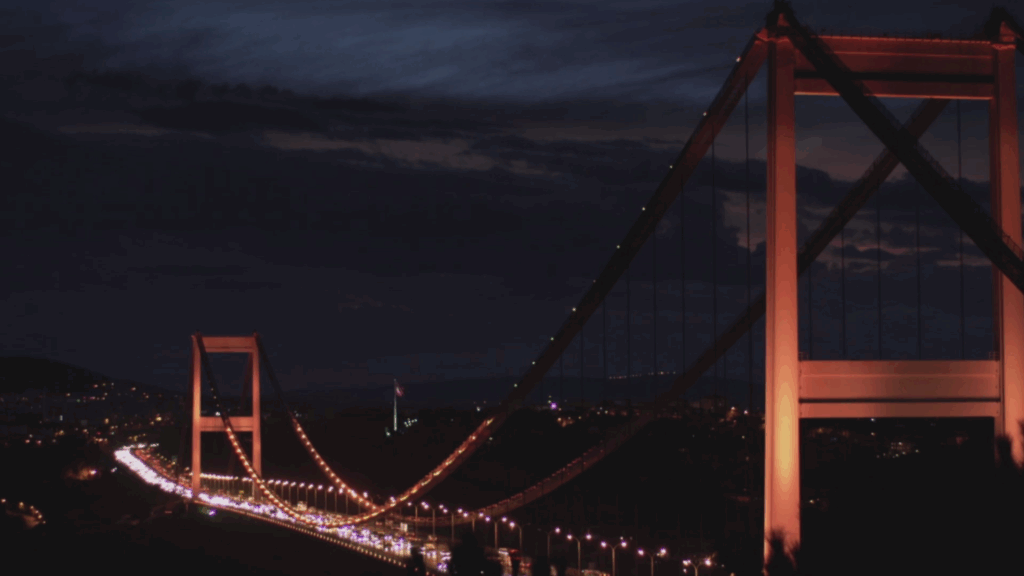
Made in Istanbul the same year, Imaginary Postcard takes the form of a filmed letter addressed to the writer Orhan Pamuk. Whilst the camera looks out over the Bosphorus from the bridge linking the European and Asian shores of Istanbul, Jocelyne Saab recounts the plight of Syrian refugees crossing a border that could close at any moment. As part of the Lebanon Contemporary Art Biennale, the two short films are brought together at the MACAM in Alita, during the retrospective exhibition Jocelyne Saab: Against the Tide, curated by Mathilde Rouxel in 2018. The interplay between Jocelyne Saab’s films, photographs, installations, archives and visual artworks presents a body of work that moves fluidly from one language to another, renewing our perception of reality: ‘art is a kind of drift […] one artistic discipline gives birth to another, and so on’.
2013-201803
Despite the illness that was weakening her, Jocelyne Saab devoted the final months of her life to writing a project on the life of Mei Shigenobu, daughter of Fusako Shigenobu, founder of the Japanese Red Army. The film was intended to recount her clandestine childhood in Lebanon, within the Popular Front for the Liberation of Palestine, using a mix of archive footage, testimonies, drawings and excerpts from other films. Unable to continue due to her illness, Jocelyne Saab chose to preserve this research in the form of a short film: *My Name is Mei Shigenobu*, completed a few months before her death.
It was also in 2018 that the photography book Zones de guerre was published by Editions de l’OEil. In his essay Les Bris du temps, Elias Sanbar writes that this book “goes beyond its subject matter – the life and experiences of its author, a sort of panoramic view of a tragic period in twentieth-century history – to become a living sequence of shifting scenes.” The book highlights that Jocelyne Saab’s images constitute an indispensable record in the face of history’s violence and acts of forgetting, through a body of work that has never drawn a distinction between documentary and fiction, cinema and the visual arts, or politics and aesthetics. In this sense, the Jocelyne Saab Association has been continuing this work of preservation and transmission since 2019. It restores and distributes her films, and offers training in digital restoration, to sustain the links forged by Jocelyne Saab between images, history and cultural resistance.
Explore the places where Jocelyne Saab's films have been projected around the world.