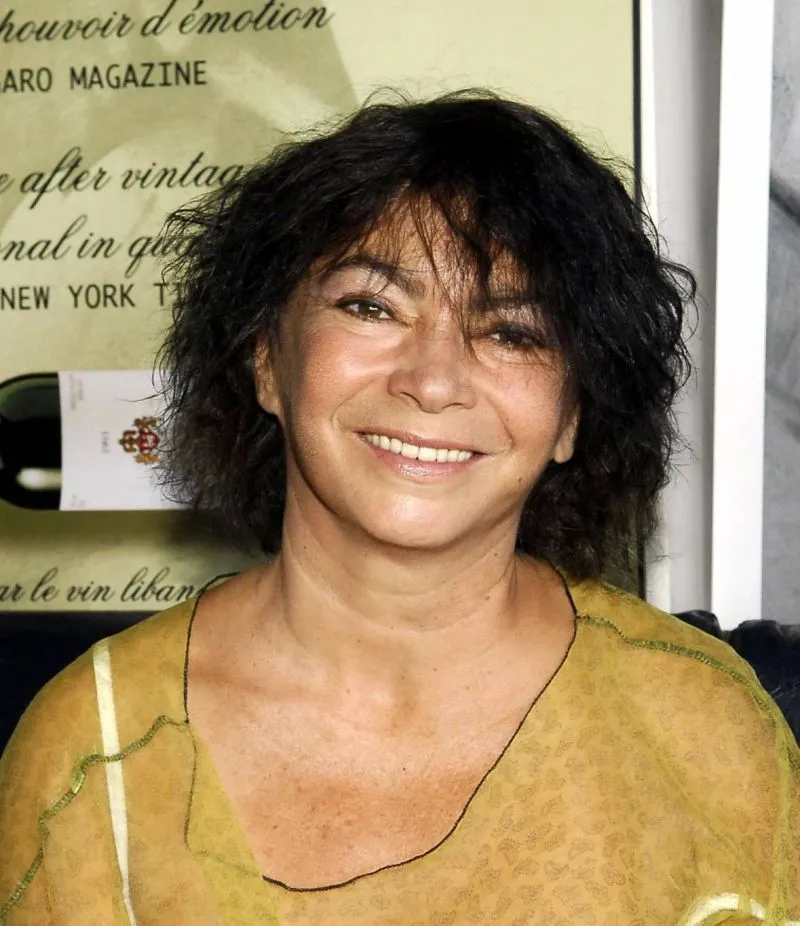
Jocelyne Saab was a filmmaker and photographer. She was born in 1948 and grew up in Beirut.
In 1973, she became a war reporter in the Middle East, covering the October War for Magazine 52, the magazine of the third television channel in France.
In 1975, she directed her first feature-length documentary, Lebanon in Turmoil, which was released in cinemas in Paris and distributed by Pascale Dauman.
She then went on to cover the Lebanese Civil War for fifteen years, during which time she directed almost thirty films, including Beirut, Never Again, broadcast on France 2 in 1976, Letter from Beirut and Beirut, My City, broadcast on France 3 between 1978 and 1982.
In 1977 both Egypt, The City of the Dead and The Sahara is Not for Sale were shot and released in cinemas in Paris.
In 1981, during the days following the Iranian revolution, she shot Iran, Utopia on the Move, which received several international prizes.
In 1998, she went to Vietnam and directed The Lady of Saigon, which was awarded the title of Best French Documentary by the French senate. It was broadcast on France 2 and in many international festivals.
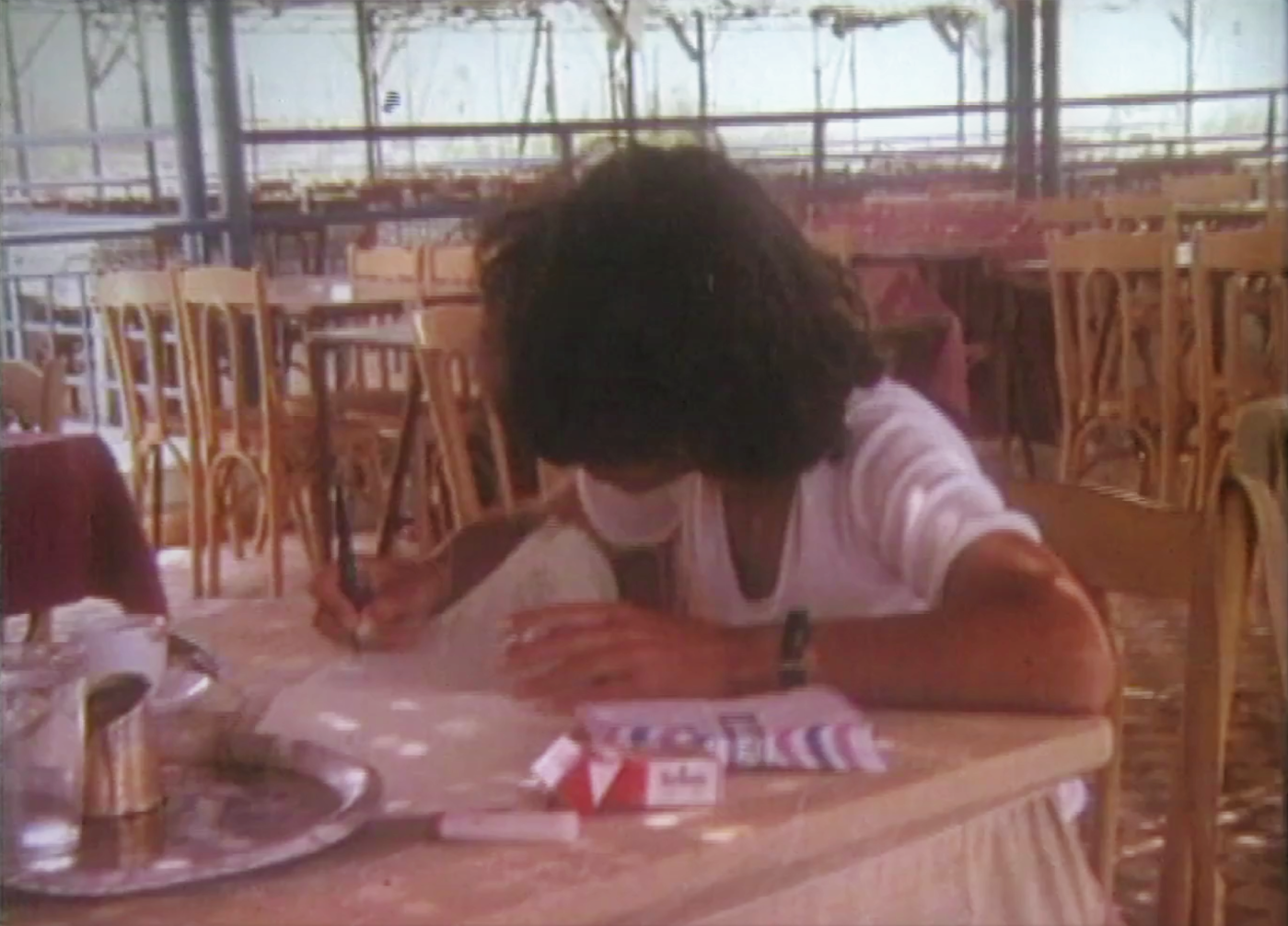
During a period of less than thirty years, Jocelyne Saab directed thirty documentaries that were awarded prizes in European and international festivals.
However, her filmography is not limited to documentaries: in 1981, Jocelyne Saab had her first opportunity to turn to fiction as Volker Schlöndorff's assistant director for his film Circle of Deceit, shot in Beirut during the war.
In 1985, she went on to direct her own first feature film, A Suspended Life, selected during the Directors' Fortnight at Cannes the same year and released in three cinemas in Paris.
In 1993, she dedicated a docufiction to the centennial anniversary of cinema, Once Upon a Time, Beirut: Story of a Star, which is made up mostly of archival images and rushes from old films set in Beirut before the Civil War. The film was broadcast on ARTE.
In 2005, her film Dunia, shot in Egypt and produced by Catherine Dussart, which deals with pleasure as a central theme, provoked a scandal which resulted in Saab being sentenced to death by Egyptian fundamentalists.
Nevertheless, the film was praised in many international festivals, and was amongst the feature films competing at the Sundance Festival in the US. Five years later, Dunia had become a cult film in the Arab world.
In 2007, Jocelyne Saab turned to contemporary art, and put together her first video installation on twenty-two screens at the National Museum of Singapore. A retrospective look at the entirety of her works on the war, it is entitled Strange Games and Bridges.
Shortly after, she exhibited her first photographs at the Abu Dhabi fair in 2007, followed by exhibitions at the Art-Paris fair and in galleries in Abu Dhabi and Beirut in 2008.
In 2009, she finished a new feature film, What's Going On?, shot in her city of birth. In it, she questioned the possibility of Beirut's rebirth, and more generally the process of creation in all its depth.
In 2013, she taught at IESAV, the Institute of Performance and Audiovisual Studies in Beirut, where she directed a feature film with students about the charismatic figure of Henri Barakat.
In 2013, she directed six films on the theme of sex and gender in six cities in the Levant, reunited under the title Café du Genre for the exhibition Au Bazar du Genre at the MuCEM in Marseille.
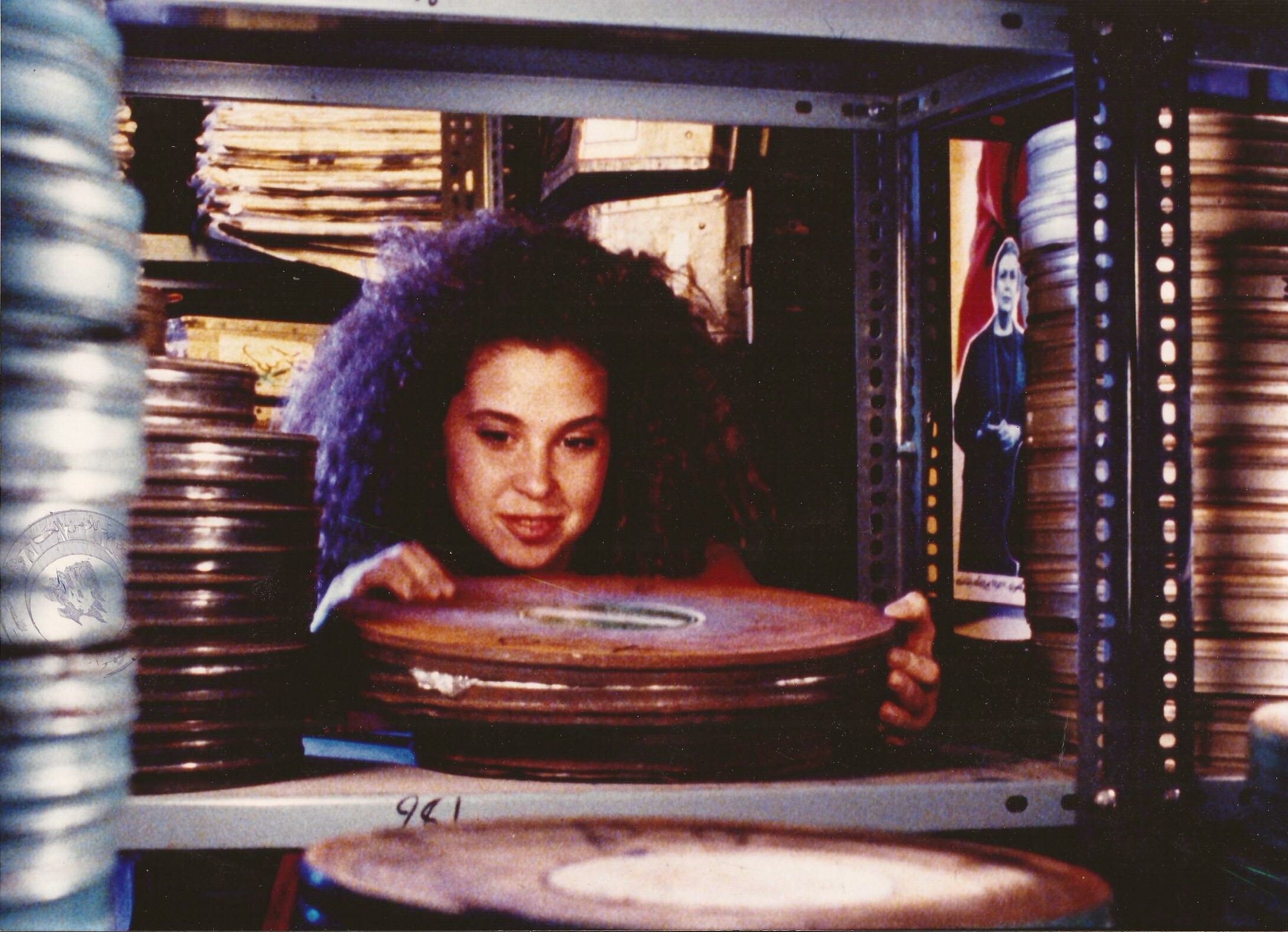
Throughout her life, she organized a number of significant events. In 1992, she engaged in the rebuilding of the Lebanese Film Archive. To this end, she catalogued over 250 films that mention Beirut and Lebanon before, during and after the War.
She was awarded the title of Knight of the Order of Arts and Letters for this monumental work, which she achieved while simultaneously editing her own film, Once Upon a Time, Beirut. The film used footage from the archives and stands as a testament to the depth of her involvement in the project.
Using the same archives, she also organized the cycle of projections "Beirut, One Thousand and One Images" at the Arab World Institute in 1993, an event that presented all the Arab films selected to be included in the Lebanese Film Archive.
In 2013, she founded the International Festival of Cultural Resistance, of which she was also president and artistic director. She used the festival to screen Asian and Mediterranean films that through their plot pose questions about the situation in contemporary Beirut and its history.
A cinema that heals the country's wounds and makes us think about the possibility of peace and respect between communities. This festival spread across the entire Lebanese territory.
Towards the end of her life, she directed a last series of photographs, One Dollar a Day, and several artistic videos: One Dollar a Day and Imaginary Postcard in 2016, and My Name is Mei Shigenobu, which was released posthumously in 2019.
During her last years, she was working on a documentary about the hidden life of Mei Shigenobu, Shigenobu, Mother and Daughter.